Why It’s Usually Not Recommended in North Texas
As lawns in North Texas begin to wake up from winter dormancy, many homeowners consider scalping their lawn in early spring to speed up green-up. While this approach is often discussed, scalping your lawn in spring is usually not recommended for North Texas lawns and can delay recovery rather than improve it.
The reason comes down to timing. In early spring, warm-season grasses are still transitioning out of dormancy and rebuilding energy reserves, not actively growing yet. Cutting grass too low during this phase removes valuable leaf tissue and places unnecessary stress on turf just as it’s trying to recover.
Some turf care sources recommend scalping only when grass is fully dormant, typically in late winter before spring green-up begins. Once grass starts actively growing, aggressive height reduction becomes far more harmful than helpful.
A better guide than the calendar is soil temperature. Warm-season grasses don’t begin sustained growth until soil temperatures consistently reach around 65°F. Until then, turf relies on stored energy and is more sensitive to stress from aggressive mowing.
Understanding this timing helps prevent common spring lawn mistakes and supports healthier, more uniform growth throughout the season.
What Does It Mean to “Scalp” a Lawn?
Scalping a lawn means cutting the grass significantly shorter than its normal mowing height, often removing most — or nearly all — of the green leaf blade. When this happens, the soil surface becomes exposed and the lawn can appear thin, brown, uneven, or stressed until new growth has time to recover.
The practice is often discussed in early spring because lawns are transitioning out of dormancy and still contain dormant or dead material from winter.

Some homeowners believe scalping will:
- Remove dead or dormant winter grass
- Speed up spring green-up
- “Reset” the lawn for the growing season
While these assumptions are common, timing, grass type, and overall lawn health matter far more than how short the grass is cut. In many cases, cutting too low too early creates additional stress and delays healthy spring recovery rather than improving it.
Why Scalping Your Lawn in Spring Is Usually a Bad Idea

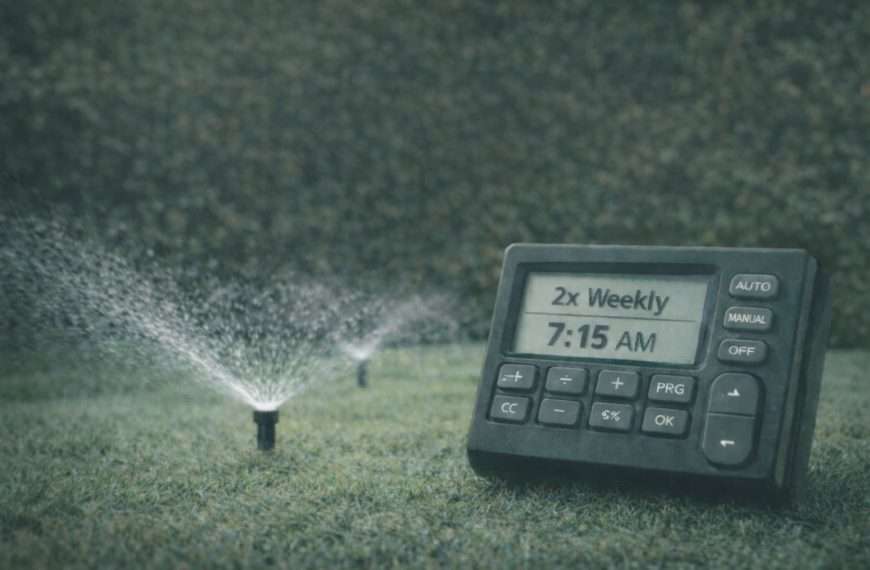
In early spring, warm-season grasses common in North Texas — including Bermuda, Zoysia, and St. Augustine — are transitioning out of dormancy, not actively growing at full strength yet. During this phase, grass plants are rebuilding energy reserves and preparing for new top growth. Proper watering timing matters in early spring. Following a lawn watering schedule for Dallas helps turf recover without added stress.
Scalping at this stage can be harmful because it:
- Removes leaf tissue needed for photosynthesis
- Forces the plant to rely heavily on stored energy reserves
- Slows overall recovery and delays consistent green-up
Instead of encouraging growth, cutting too low too early often weakens turf just as it needs stability the most.
2. It Increases Stress at the Wrong Time
Spring weather in North Texas can be unpredictable, with fluctuating temperatures, strong winds, and inconsistent rainfall. When grass is scalped too early, it loses much of its natural protection just as environmental stress is increasing.
Cutting grass extremely short in early spring can:
- Expose soil to rapid temperature swings
- Increase moisture loss from both soil and roots
- Leave turf more vulnerable to disease and stress-related damage
Rather than helping the lawn transition smoothly into the growing season, early scalping often creates conditions that slow recovery and require more inputs later to correct.
3. Scalping Encourages Weeds

One of the biggest downsides of scalping a lawn in early spring is the increased risk of weeds. When turf is cut too short, it thins out the lawn canopy and exposes bare soil — exactly what weed seeds need to germinate.
Early scalping can:
- Allow more sunlight to reach weed seeds in the soil
- Reduce turf density that normally helps crowd weeds out
- Give fast-growing spring weeds a competitive advantage
Instead of producing a cleaner lawn, early scalping often leads to more weed pressure throughout the season, requiring additional treatments and ongoing correction later in spring and summer.
4. Uneven Growth Becomes More Visible
Scalping a lawn in early spring often exposes underlying issues that are less noticeable when turf is maintained at a healthy mowing height. Low spots, compacted soil, thin areas, and uneven growth patterns become more visible once most of the grass blade is removed.
Early scalping can:
- Emphasize uneven grades and depressions
- Highlight thin or stressed areas of turf
- Lead to patchy regrowth as different sections recover at different rates
As the lawn grows back unevenly, homeowners are often tempted to continue cutting lower in an attempt to even things out, which can compound stress and delay uniform recovery.
Are There Any Situations Where Scalping Makes Sense?
While scalping is generally not recommended in spring for most North Texas lawns, there are a few very limited situations where a controlled height reduction may be appropriate. These cases are the exception rather than the rule and depend heavily on grass type and timing.
Scalping may be considered when:
- Bermuda grass is fully dormant, not actively greening up
- The work is done in late winter, before spring growth begins
- Mowing height is reduced gradually rather than aggressively
Even in these scenarios, scalping should be followed by proper fertilization timing, consistent watering, and a quick return to a normal mowing height. Scalping is not recommended for St. Augustine and is rarely beneficial for most Zoysia lawns in spring.
What to Do Instead of Scalping in Spring

A healthier approach for North Texas lawns is to help turf transition into the growing season gradually, rather than shocking it with aggressive cuts. Spring lawn care should focus on consistency, timing, and patience.
Instead of scalping, consider the following:
- Lower mowing height gradually, only slightly below winter settings
- Avoid removing more than one-third of the grass height at any one mowing
- Increase mowing frequency rather than cutting lower
- Allow grass to green up naturally as soil temperatures rise
This approach supports stronger root development, more uniform growth, and better resilience heading into warmer months. Learn more about spring lawn care timing in our Spring Lawn Care Dallas guide.
The Bottom Line for North Texas Lawns
For most North Texas lawns, scalping in spring does more harm than good. While cutting grass extremely short may seem like a quick way to jump-start green-up, it often increases stress, encourages weeds, and leads to uneven recovery.
A gradual, well-timed approach to spring lawn care — focused on proper mowing height, irrigation, and seasonal timing — produces healthier turf and more consistent results throughout the growing season.
If you’re unsure how your lawn should be handled this spring, a professional consultation can help prevent common mistakes and set your property up for healthier growth throughout the year. You can contact our team here to schedule a consultation and get guidance tailored to your North Texas lawn.