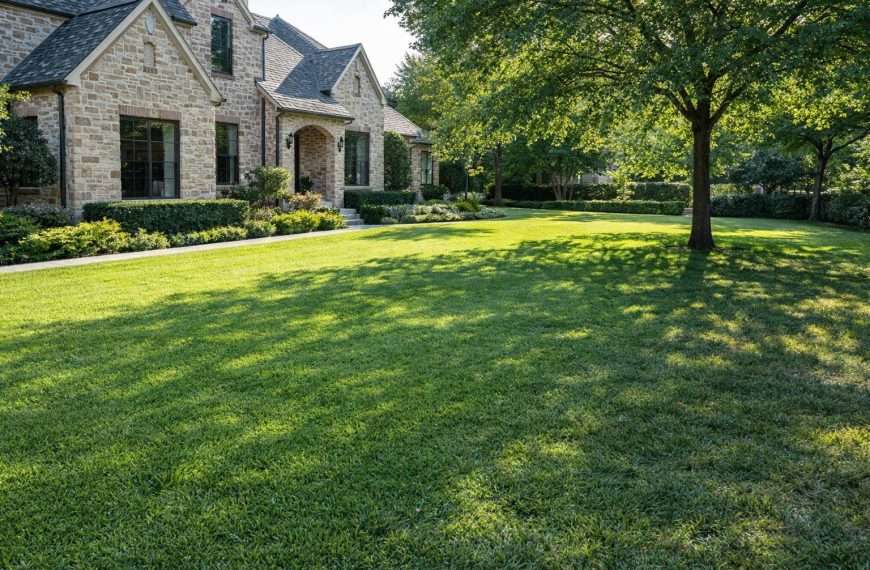
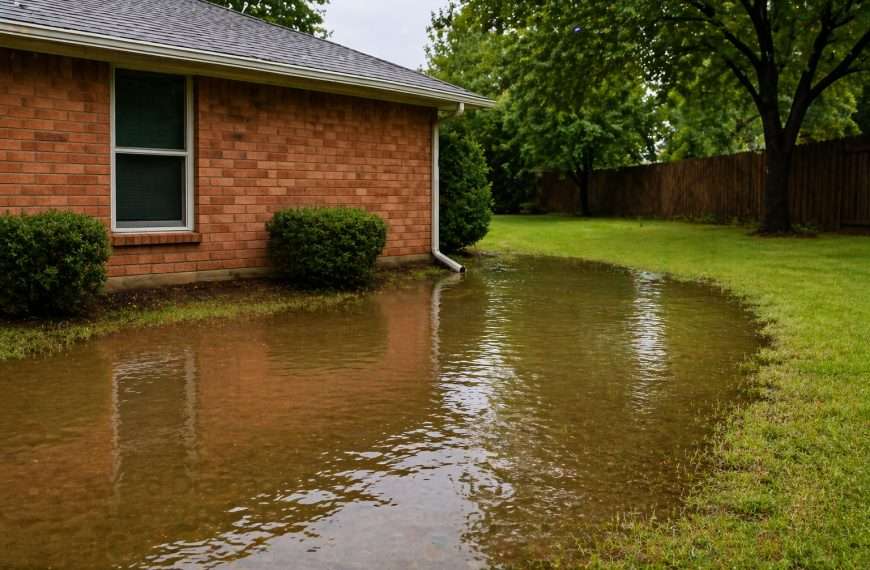
When a homeowner starts planning a major outdoor project, the difference between landscape design vs landscape architecture matters more than most people realize. These two professions overlap in visible ways, but they differ significantly in education, licensure, project scope, and cost, and hiring the wrong one can mean paying for expertise you don’t need or missing expertise you do.
For residential properties in Dallas, particularly in established neighborhoods with mature trees, existing irrigation, and layered planting beds, the distinction has real practical consequences. A landscape designer and a landscape architect bring different tools to the table, and the right choice depends on what your project actually requires.
At Greenform Landscapes, we work across the full range of residential landscape projects in Dallas, from targeted design updates to complete property renovations. This article breaks down the key differences between these two professions so you can make a clear, informed decision before your next project moves forward.
Why this difference matters before you hire anyone
Most homeowners treat landscape design and landscape architecture as interchangeable titles, but they carry very different meanings in terms of training, legal authority, and project scope. Hiring based on title alone, without understanding what each professional can actually do, leads to mismatched expectations, wasted budget, and in some cases, work that requires revision before it can move forward.
The cost and scope gap is larger than most people expect
When you compare landscape design vs landscape architecture across a range of real residential projects, the cost difference can be significant. Landscape architects typically charge higher fees because their training includes engineering principles, grading, drainage systems, and structural elements that require licensure to design. Landscape designers, on the other hand, focus on the visual and horticultural side of a project, and their fees generally reflect a narrower scope of work.
Paying for a licensed landscape architect when your project only involves planting beds and a new lawn is a common way homeowners overspend on professional fees.
For a project that involves grade changes, retaining walls, or drainage infrastructure, a landscape architect’s structural knowledge is not optional. But for a property that needs a redesigned planting plan, better seasonal color, or a refreshed front entry, a skilled landscape designer delivers the same outcome at a lower cost.
Legal authority determines what gets signed and permitted
This is the part that catches most homeowners off guard. In Texas, landscape architects are licensed professionals regulated by the Texas Board of Architectural Examiners. That license allows them to stamp and seal drawings that require professional sign-off for permits, particularly on projects involving significant grading, structural elements, or commercial construction.
Landscape designers in Texas do not hold a state-issued license in the same way. They can plan, design, and manage residential projects, but they cannot legally stamp permit drawings for work that requires a licensed professional’s seal. For most residential projects in Dallas, this distinction never becomes an issue. For larger projects that cross into engineering or structural territory, it matters considerably.
Understanding this boundary before you hire anyone means you can match the professional to what your specific project actually requires. If your project involves drainage correction, significant elevation changes, or a new structure like a covered outdoor space, verify early whether the work requires a licensed stamp. If it does not, you may have the flexibility to work with a highly qualified designer who handles exactly this type of residential project every day.
What a landscape designer does in real projects
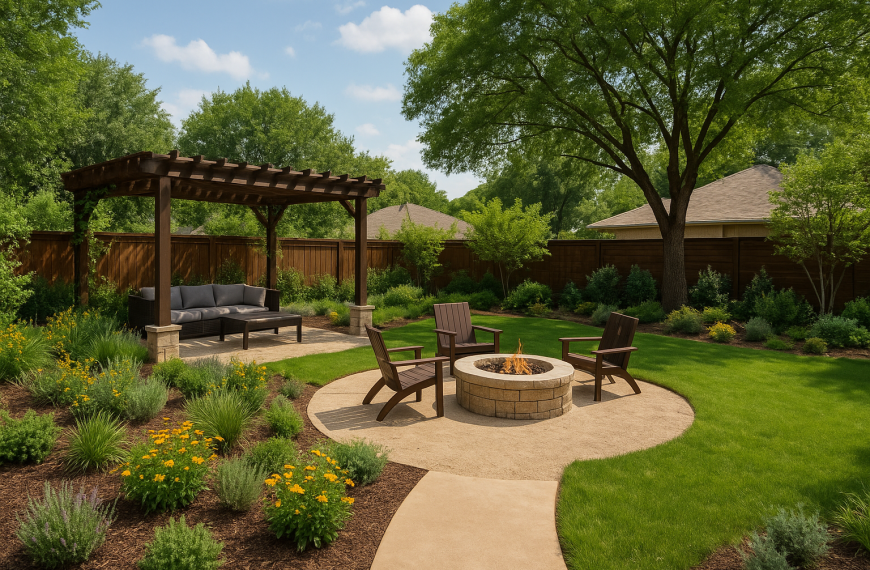
A landscape designer’s work centers on the visual, horticultural, and spatial planning of a property. When you hire a designer, you’re bringing in someone whose expertise sits squarely in how a property looks, how plants perform over time, and how the different elements of your outdoor space connect with one another. Most residential projects, from a refreshed front entry to a full backyard renovation, fall well within this scope.
Plant selection and space planning
On a real project, a landscape designer starts by assessing existing site conditions: sun exposure, soil type, drainage patterns, and the condition of mature plants already on the property. From there, they develop a planting plan that factors in seasonal performance, scale, and how each element relates to the overall layout. In Dallas, where clay soil and summer heat stress plants that look fine in photos but struggle in the ground, this kind of site-specific knowledge carries significant weight.
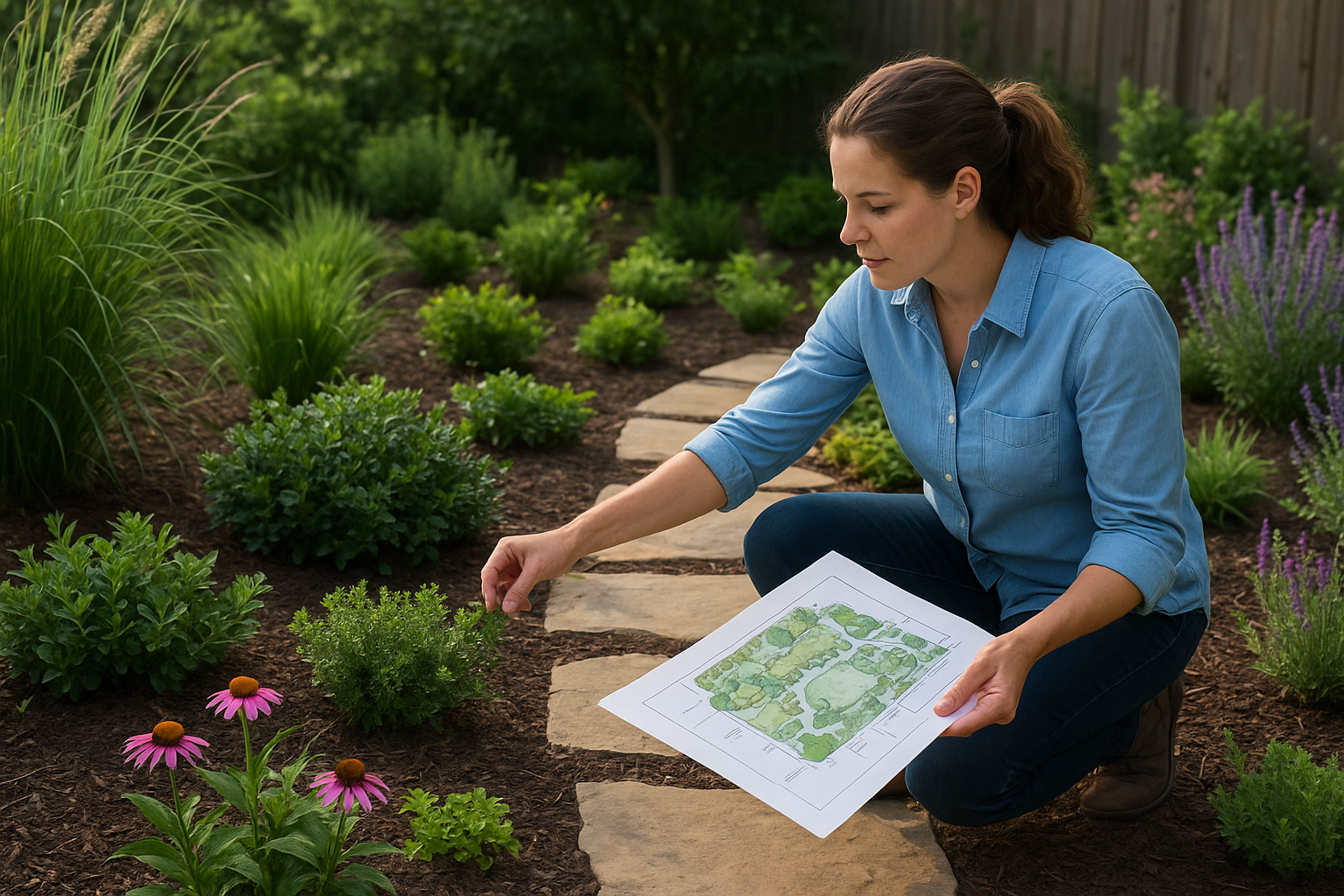
Choosing the wrong plants for North Texas conditions costs more to fix than it would have cost to get the selection right the first time.
A designer also handles spacing, layering, and the overall structure of beds, lawns, and transition zones. This is where the practical difference in landscape design vs landscape architecture becomes visible: a designer’s value lives in how the property looks, functions seasonally, and holds up year to year without the structural or civil engineering components.
Working within an existing landscape system
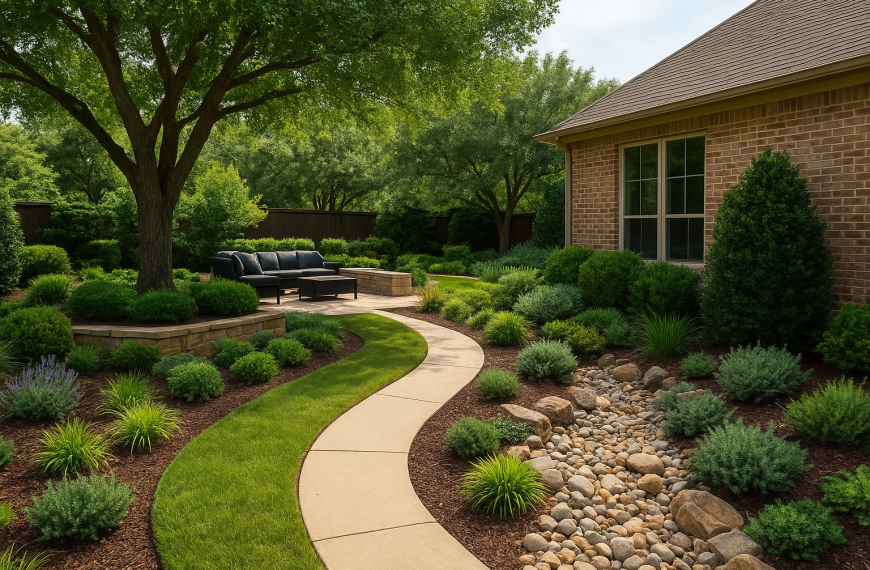
Many Dallas properties in established neighborhoods already have irrigation systems, drainage infrastructure, and mature tree coverage in place. A landscape designer works within those systems rather than rebuilding them. They coordinate planting plans around existing sprinkler zones, flag areas where drainage affects plant health, and identify where bed renovations, sod replacement, or new lighting would improve the overall composition without requiring engineering-level changes.
What a landscape architect does in real projects
A landscape architect’s work moves into territory that landscape design vs landscape architecture separates most clearly: the structural and engineering side of the outdoor environment. Where a designer focuses on plants and spatial composition, a landscape architect addresses grade changes, load-bearing structures, water management systems, and site infrastructure that require engineering-level precision.
Structural and drainage work
On a real project, a landscape architect evaluates how water moves across a site and designs systems to manage it correctly. This includes retaining walls built to hold significant grade changes, drainage solutions tied into city infrastructure, and grading plans that redirect runoff away from foundations and low-lying areas. These are not decorative decisions; they carry legal and safety implications.
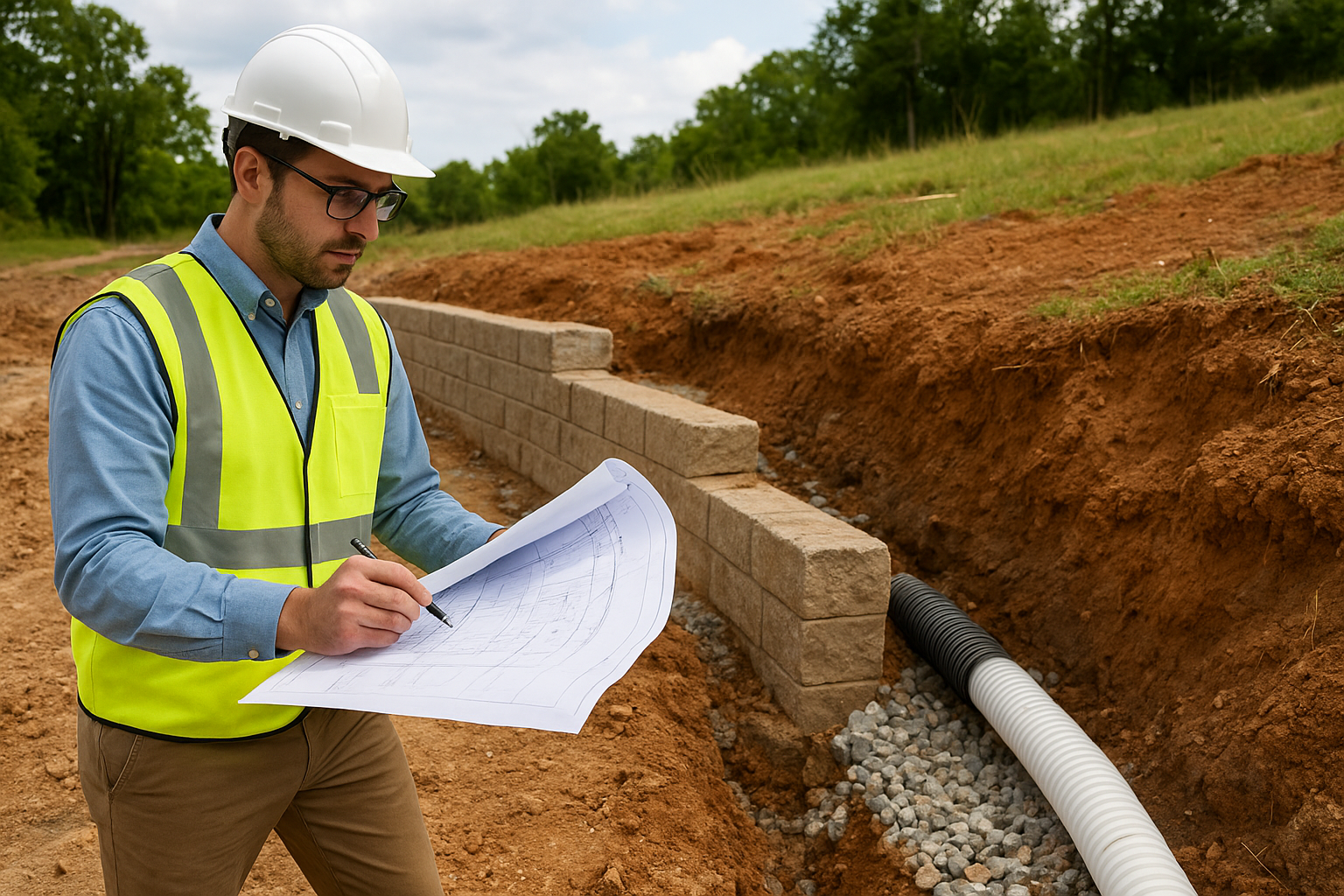
When a project involves significant grade changes or drainage infrastructure, the work typically requires drawings stamped by a licensed professional before permits will be approved.
Site grading at scale, particularly on larger properties or sloped lots, requires a level of technical documentation that goes beyond what a designer is trained or authorized to produce. A landscape architect produces the kind of drawings that engineers and municipalities review before work can proceed.
Commercial and large-scale residential projects
Landscape architects also take on commercial sites, multi-family properties, and public spaces where project complexity, code compliance, and coordination with civil engineers are part of the standard workflow. On a large Dallas property that involves a new pool structure, a major outdoor pavilion, or significant paving tied to building permits, the licensing requirement shifts the work clearly into landscape architecture territory.
For most homeowners in established residential neighborhoods, these scenarios don’t come up often. But when they do, understanding the distinction helps you identify the right professional before the project starts rather than after a permitting issue surfaces mid-project.
Education, licensing, and legal limits in Texas
The educational gap between a landscape designer and a landscape architect is one of the clearest ways the landscape design vs landscape architecture distinction plays out in practice. Understanding what each professional went through to reach their role tells you a lot about what they’re qualified to do on your property.
What it takes to become a landscape architect in Texas
A licensed landscape architect in Texas holds a professional degree in landscape architecture, typically a four- or five-year Bachelor of Landscape Architecture or a graduate-level equivalent. After completing their degree, candidates must pass the Landscape Architect Registration Examination (LARE), a multi-section national exam that covers site design, grading, drainage, and construction documentation. Texas also requires candidates to complete a supervised internship before they can apply for licensure through the Texas Board of Architectural Examiners.
Licensure is what grants a landscape architect the legal authority to stamp and seal drawings that municipalities and permit offices require before certain projects can proceed.
Once licensed, a landscape architect in Texas can legally sign off on permit drawings for projects involving structural elements, significant grading, or drainage systems tied to public infrastructure. This authority is specific to their license and cannot be transferred to an unlicensed designer regardless of experience.
How landscape designers develop their credentials
Landscape designers typically hold degrees in horticulture, landscape design, or environmental design, and many pursue certifications through professional organizations to demonstrate technical depth. In Texas, no state license exists for the title of landscape designer, which means the profession is not regulated in the same way as landscape architecture. That absence of regulation does not mean the work is less skilled for residential projects; it simply means the legal authority to stamp structural drawings does not apply.
For plant selection, spatial planning, and residential design work, a qualified designer with strong regional knowledge delivers results that match what most Dallas homeowners actually need.
How to choose the right fit for a Dallas property
When deciding between a landscape designer and a landscape architect, start with your project scope rather than the professional’s title. The landscape design vs landscape architecture distinction simplifies once you map it directly to what your property actually requires.
Start by identifying what the project requires
Most Dallas residential projects, including planting bed renovations, lawn replacement, seasonal color planning, and outdoor living space design, fall within a designer’s scope. If your goals center on how the property looks and how plants perform over time, a qualified designer with strong regional knowledge of North Texas conditions is typically the right fit.
For properties in established neighborhoods where the landscape structure is already in place, a designer can work within existing irrigation zones, mature plantings, and drainage patterns to deliver meaningful results without the overhead of licensed engineering work.
If your project stays above grade and doesn’t involve structural elements, permits, or drainage infrastructure, a landscape designer covers the full scope at a lower professional fee.
Signs your project may need a licensed landscape architect
Significant grade changes, retaining walls designed to hold soil under load, and drainage systems tied to city infrastructure shift the work into territory that requires licensure. If your property has a slope that affects drainage toward the foundation, or if you’re adding a covered structure that connects to a building permit, verify whether your project requires stamped drawings before you hire anyone.
You can confirm this by checking with the City of Dallas permitting office or requesting a preliminary consultation with a landscape professional who understands both sides of that line. Starting that conversation early prevents mid-project surprises that delay timelines and increase costs. For properties that need Dallas landscape design work alongside structural planning, clarifying this boundary upfront keeps the project on track from the first site visit.
Conclusion
The core distinction in landscape design vs landscape architecture comes down to project scope and legal authority. Most Dallas residential projects fall well within a designer’s range, covering planting plans, spatial layout, and seasonal performance without requiring licensed engineering work. When your project moves into structural territory, retaining walls, drainage systems tied to permits, or significant grade changes, a licensed landscape architect becomes the appropriate choice.
Matching the right professional to what your project actually requires keeps your budget focused and your timeline on track. Knowing this difference before you hire prevents mid-project complications that cost more to correct than they would have cost to avoid from the start.
For homeowners planning a landscape project in Dallas, reviewing completed residential projects can help clarify what’s possible before committing to a direction. When you’re ready to discuss the specifics of your property, request a consultation to get guidance matched to your situation.