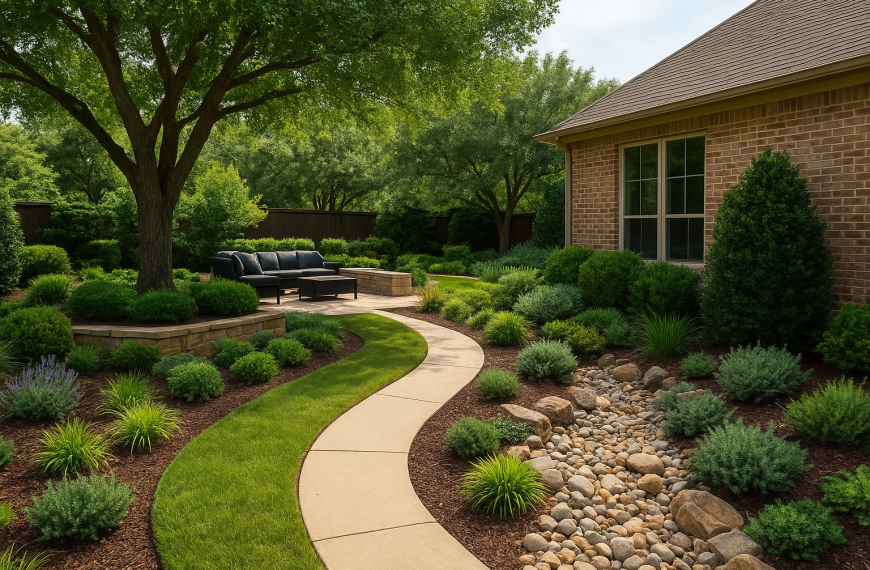
Aeration is one of the most effective things you can do for a lawn in North Texas, but timing it wrong can set your turf back instead of helping it recover. Knowing when to aerate lawn in Dallas depends almost entirely on which grass type you’re working with, because Bermuda and St. Augustine respond to aeration on very different schedules.
Dallas soils, particularly the heavy clay found across neighborhoods like Preston Hollow and Lakewood, compact easily under foot traffic, irrigation cycles, and seasonal temperature swings. That compaction restricts root growth, limits water infiltration, and slowly degrades turf quality over time. Aeration relieves that pressure, but only if it’s done during active growth periods when the grass can fill in quickly. Done too early or too late, and you’re exposing stressed turf to weed pressure and moisture loss with no real payoff.
At Greenform Landscapes, we schedule aeration based on soil conditions and grass type rather than a fixed calendar date. This guide breaks down the timing specifics for Bermuda and St. Augustine lawns in Dallas, what to watch for before aerating, and how to make sure the process actually improves your lawn long-term.
Why lawn aeration matters in Dallas
Dallas lawns face a combination of stressors that most other regions don’t experience at the same intensity. Heavy clay soils dominate the ground across most of the city, and those soils compact steadily under foot traffic, irrigation cycles, and seasonal temperature extremes. When soil compacts, air, water, and nutrients can’t reach the root zone efficiently, and turf quality declines over time even when the lawn looks acceptable from the street.
How Dallas clay amplifies compaction
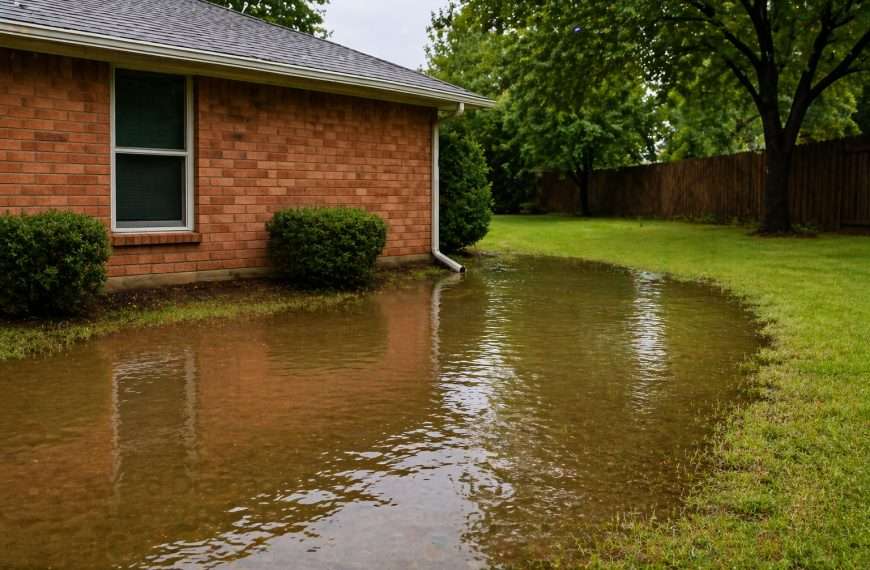
The clay content in North Texas soils creates a specific compaction pattern that worsens gradually over years. Unlike sandy soils, which shift and drain relatively freely, clay particles bind tightly together when pressure is applied, forming dense layers that roots struggle to penetrate. Once those layers develop, even a properly calibrated irrigation system loses effectiveness because water pools at the surface or runs off rather than absorbing into the soil. Core aeration removes small plugs of soil throughout the lawn, breaking up those compact layers and reopening the pathways roots need to grow deeper and access moisture during the dry months Dallas summers reliably bring.
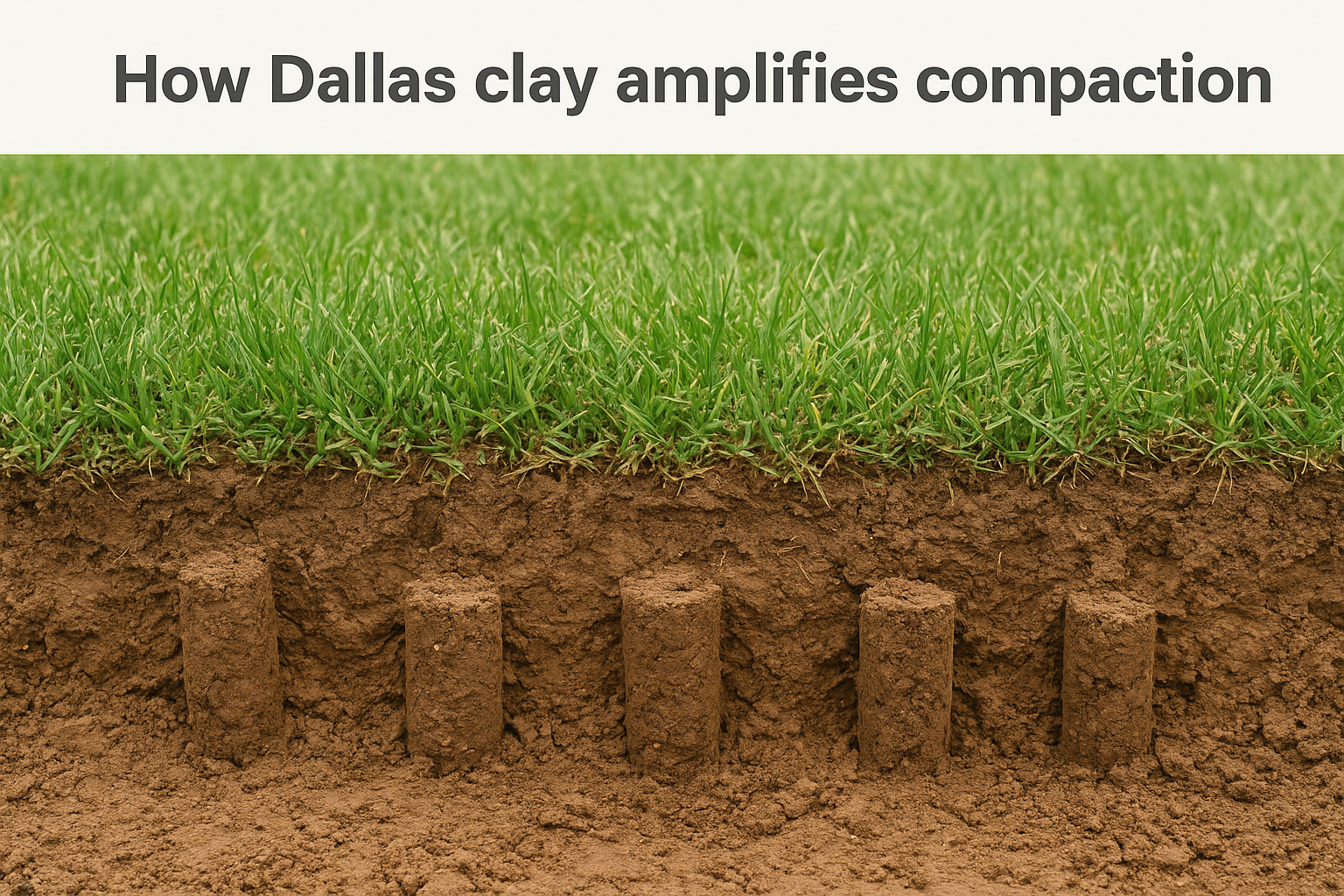
Aerating compacted clay without attention to timing can expose the soil profile before the grass is active enough to fill in the holes, turning a recovery tool into a liability.
Why timing determines whether aeration helps
Knowing when to aerate your lawn in Dallas means matching the process to your grass’s active growth window. Aeration creates temporary stress by pulling plugs and opening the soil surface. During active growth, the grass fills those channels quickly and benefits from improved root depth and nutrient uptake. Outside that window, the open channels become entry points for weeds and dry out faster than the turf can recover.
When to aerate Bermuda grass in Dallas
Bermuda grass is the most widely planted warm-season turf in Dallas, and when to aerate your lawn in Dallas largely depends on whether you’re working with Bermuda or another grass type. Bermuda goes fully dormant in winter and stays inactive until soil temperatures reach 65 degrees Fahrenheit consistently, so aerating before that threshold means disrupting roots with no active growth available to fill in behind it.
The ideal window for Bermuda aeration
In North Texas, late May through mid-July is the most reliable window for Bermuda aeration. By that point, the grass is pushing new stolons aggressively, and the channels left by core aeration fill in within two to three weeks rather than staying exposed through dry spells or heat stress.
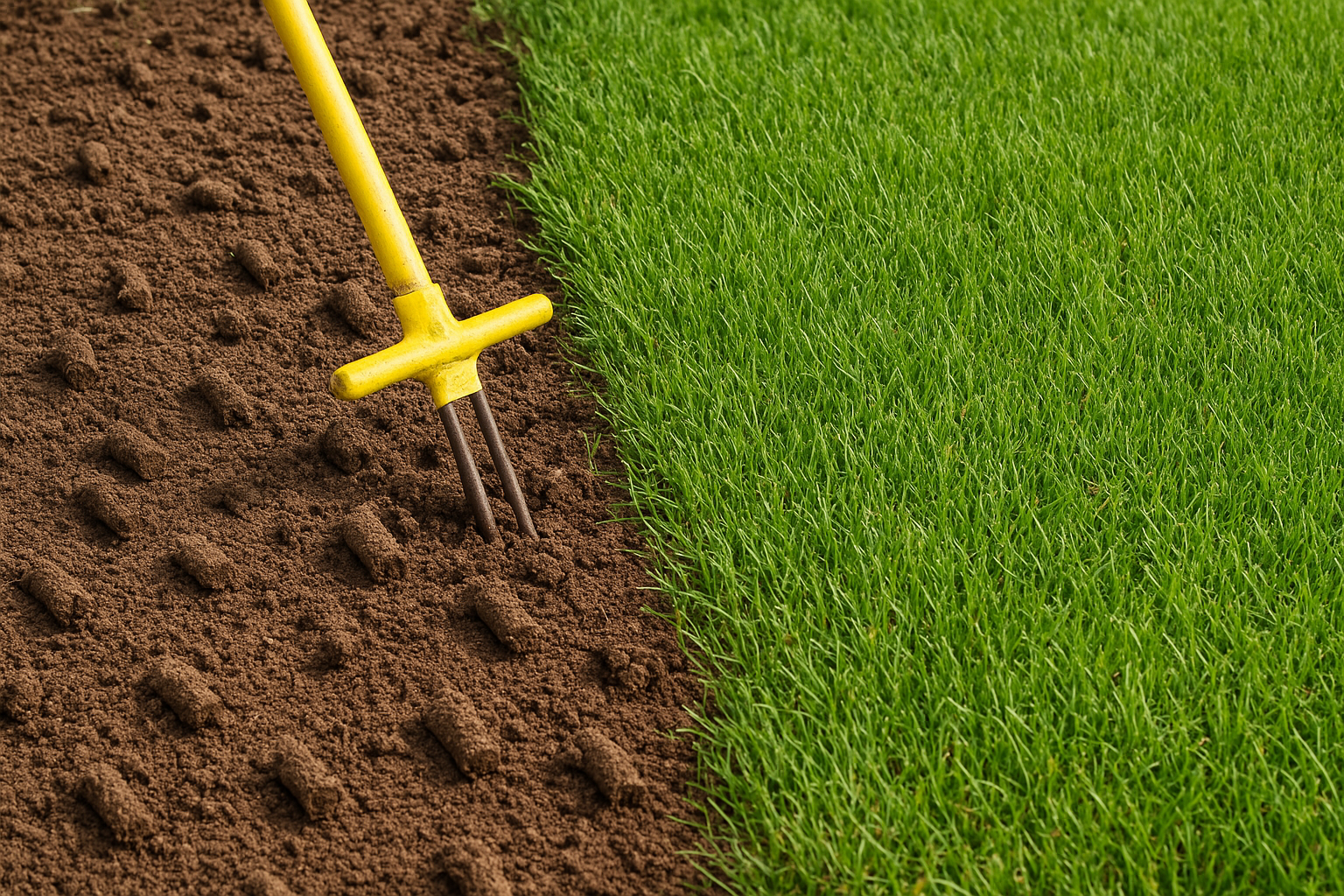
Waiting until Bermuda is fully green and actively spreading before you aerate gives the turf the best chance of recovering quickly and filling in evenly.
Avoid aerating in early spring even if the lawn looks partially green. Cool-season weeds are still active then, and open soil channels make it easier for them to establish. Holding off until late May also ensures the grass has built enough root energy to close those channels before peak summer heat arrives.
When to aerate St. Augustine grass in Dallas
St. Augustine behaves differently than Bermuda under aeration stress, and knowing when to aerate lawn in Dallas with this grass type means adjusting your expectations and your timing. St. Augustine spreads through above-ground stolons rather than aggressive underground rhizomes, so it recovers more slowly from aeration than Bermuda does and needs a tighter active growth window to close channels without issue.
Aeration Timing for St. Augustine Lawns
The safest window for St. Augustine aeration in Dallas runs from late May through June. By that point, soil temperatures are consistently warm, the grass is actively spreading, and recovery time before peak summer stress is still reasonable. Pushing into late July increases the risk of exposing the lawn during the hottest and driest stretch of the year, which can slow recovery significantly on properties with limited shade or heavy west-facing sun exposure.
St. Augustine needs a shorter post-aeration recovery window than Bermuda, so earlier in the active season is almost always the better choice.
Core aeration depth and spacing also matter more with St. Augustine. Because its stolons run along the surface, you want to avoid overly aggressive passes that could damage those stolons directly and slow lateral spread for the remainder of the season.
How to pick the right aeration window
Picking the right date matters more than most homeowners realize, and knowing when to aerate lawn in Dallas comes down to two practical signals: soil temperature and grass activity. A consistent soil temperature reading of 65 degrees Fahrenheit or above, combined with visible lateral spread in your turf, tells you the grass is ready to handle aeration stress and recover quickly.
Checking both soil temperature and active growth together gives you a more reliable timing signal than the calendar alone.
Two conditions to confirm before you schedule
Before you schedule aeration, confirm that your lawn meets both thresholds. Soil temperature should hold consistently at or above 65 degrees for at least a week before you aerate, not just hit that mark on a single warm afternoon. For most Dallas properties, that happens reliably in late May, though properties with heavy shade or north-facing slopes can run a week or two behind open areas nearby.
You should also look for active stolon or runner growth across the surface. If the grass is spreading laterally and filling thin spots on its own, it’s in the right growth phase for aeration. If growth looks stalled despite warm air temperatures, hold off and reassess the following week before committing to a schedule.
What to do before and after aeration
Preparation and follow-through matter as much as timing when it comes to knowing when to aerate lawn in Dallas effectively. Skipping either step reduces the results you’d otherwise get from a well-timed aeration pass.
Steps to take before aeration
Mow your lawn one to two days before the scheduled aeration. Shorter turf allows the core tines to penetrate the soil more evenly and reach the depth needed to break up compacted clay layers. Also, water the lawn thoroughly 24 hours in advance. Dry, hard clay deflects tines and produces shallow, inconsistent cores; moist soil allows clean extraction and more uniform aeration depth across the full lawn.
Mark any shallow irrigation heads and buried utility lines before the equipment moves across the lawn. This step protects both the irrigation system and the quality of the aeration pass.
Steps to take after aeration
Leave the soil plugs on the surface after the pass is complete. They break down within one to two weeks and return organic material directly to the soil profile. This is also the right time to apply fertilizer or compost topdressing, since open channels carry nutrients directly to the root zone while the soil is still exposed.
Topdressing with compost after aeration is one of the most effective ways to gradually improve clay soil structure over multiple seasons.
Hold off on heavy foot traffic for at least one week post-aeration to give the open channels time to settle properly. Resuming your regular irrigation schedule keeps the soil moist enough for recovery without washing the plugs away before they break down naturally.
Next steps for a healthier Dallas lawn
Understanding when to aerate your lawn in Dallas is the foundation, but following through with proper timing, preparation, and post-aeration care is what drives real improvement in turf quality. Bermuda lawns benefit most from aeration between late May and mid-July, while St. Augustine does best when aerated in late May through June before summer stress peaks. Both grass types need consistent soil temperatures above 65 degrees and visible active growth before you schedule a pass. On properties with heavy clay soils, repeating this process annually compounds the benefit over multiple growing seasons.
Paired with a reliable seasonal lawn care plan, aeration becomes one part of a broader approach to building denser, healthier turf over time. If you want to see how each month’s tasks connect, the Dallas Lawn Care Calendar lays out the full year in a single reference. For homeowners who prefer hands-on guidance, request a consultation to discuss timing and next steps for your specific property.