Knowing when to fertilize your lawn in spring matters more in Dallas than in most parts of the country. Our warm-season grasses, primarily Bermuda and St. Augustine, operate on a different clock than cool-season turf up north, and applying fertilizer too early is one of the most common mistakes we see across properties in Preston Hollow, University Park, and surrounding neighborhoods.
The issue isn’t whether spring fertilization helps. It does. The issue is timing. Fertilize before your grass has broken dormancy and you’re feeding weeds, not turf. Push too much nitrogen into soil that’s still cool and you risk shallow root development heading into a North Texas summer that won’t forgive it. Soil temperature is the real trigger, not the calendar date, and in Dallas, that window can shift by two to three weeks depending on the year.
At Greenform Landscapes, we schedule spring fertilization around measurable soil conditions, not guesswork. This guide walks through the specific timing indicators, soil temperature thresholds, and application considerations that lead to stronger turf through summer and fewer problems down the line. Everything here reflects what we’ve learned working on established Dallas properties year after year.
What spring fertilizing means in Dallas
Spring fertilization in Dallas isn’t a task you schedule off a national lawn care calendar or a bag label. Warm-season grasses like Bermuda and St. Augustine spend winter dormant, drawing down carbohydrate reserves and pausing all growth activity. When soil temperatures climb consistently above 65°F, those grasses wake up and begin pushing new tissue from the crown and root zone. That transition, not the date on the calendar, is what defines your fertilization window.
Why dormancy break sets the timeline

The moment your grass exits dormancy, its root system starts pulling nutrients from the soil again. Applying fertilizer before that transition means you’re offering nitrogen to soil that can’t move it into active grass tissue. What absorbs it instead are opportunistic weeds, specifically annual grassy weeds like crabgrass, which germinate at lower soil temperatures than your turf does.
Fertilizing too early doesn’t just waste product; it gives weeds a nutritional head start your turf then has to compete against all season.
Early fertilization without established green-up also promotes top growth before roots are ready to support it. That imbalance puts your lawn at a real disadvantage when Dallas summer heat arrives and your grass needs a deep, established root system to pull water from lower in the soil profile.
What Dallas clay soil means for nutrient timing
North Texas soils add another layer of complexity that matters when you’re thinking about when to fertilize lawn in spring. Dense clay profiles, common across much of Dallas, stay cold longer than sandy or loam soils and compact readily, which slows the rate at which nutrients move down through the profile. A property on a shaded lot with heavy clay may lag two weeks or more behind a sunny, well-drained lawn in the same zip code.
That site-level variance is exactly why a single regional date recommendation falls short. Knowing your specific conditions, including shade coverage, soil drainage, and compaction, lets you apply fertilizer when your grass is physically ready to use it rather than when the calendar suggests spring has arrived.
Step 1. Identify your grass and its green-up window

Your grass type directly controls when to fertilize lawn in spring, because Bermuda and St. Augustine don’t exit dormancy at the same time or respond to nitrogen the same way. Before you schedule any application, confirm what you’re growing and what that grass needs to show before you apply anything.
Bermuda grass timing
Bermuda is the more cold-sensitive of the two and typically shows consistent green-up in Dallas when soil temperatures have held above 65°F for five or more consecutive days. In most years, that puts first fertilization somewhere between late March and mid-April, though shaded lots often run a week or two behind. Wait until you see roughly 50 percent green coverage across the lawn before applying your first spring application.
Applying nitrogen to Bermuda before it reaches 50 percent green-up pushes shallow growth that burns out quickly once Dallas summer heat arrives.
St. Augustine grass timing
St. Augustine tends to show color slightly earlier than Bermuda under the same conditions, but it’s less forgiving of excess nitrogen early in the season. Rather than waiting for a coverage percentage, watch for active lateral spread from the stolons, which signals the plant is genuinely growing and ready to take up nutrients. The same 65°F soil temperature threshold applies, but grass behavior is the more reliable cue.
| Grass Type | Soil Temp Threshold | Visual Green-Up Cue |
|---|---|---|
| Bermuda | 65°F sustained | ~50% green coverage |
| St. Augustine | 65°F sustained | Active stolon spread |
Step 2. Use soil temps and mowing to time it right

Two reliable signals tell you when to fertilize lawn in spring in Dallas: soil temperature and mowing frequency. These aren’t interchangeable indicators. Each one gives you different information, and using both together removes most of the guesswork from your timing decision.
How to track soil temperature in Dallas
You don’t need specialized equipment to monitor soil temperature. A basic probe-style soil thermometer, available at most garden centers, gives you an accurate reading at the 3- to 4-inch depth where root activity is measured. Take readings in the morning, at the same location each time, for five consecutive days. When that average holds consistently above 65°F, your grass is physiologically ready to absorb nitrogen.
Soil temperature at the surface can read 10 to 15 degrees warmer than at root depth, so surface touch or ambient air temperature are not reliable substitutes.
Dallas typically crosses this threshold between late March and mid-April, but shaded properties in areas with heavy tree canopy can lag noticeably behind open, south-facing lawns.
Using mowing frequency as a secondary confirmation
Mowing frequency reflects real growth rate, which makes it a practical secondary checkpoint. Once your grass pushes enough new growth to require mowing every seven to ten days, that pattern confirms the plant is in active growth mode and ready to take up applied nutrients efficiently.
If you fertilize before that mowing rhythm establishes, your grass is likely still in transition and the nitrogen will move through the soil before the root system is actively pulling it in.
Step 3. Pick a spring fertilizer that fits your lawn
Once your grass is actively growing, product selection becomes the next decision. Not every fertilizer on the shelf suits spring application in Dallas, and choosing the wrong nitrogen ratio or release type can push top growth faster than your lawn’s root system can support it heading into summer.
Understanding NPK ratios for spring
Spring fertilizer for warm-season turf should lead with nitrogen (the first number in the NPK ratio), but that number needs context. A moderate nitrogen rate in the range of 0.5 to 1 pound of actual nitrogen per 1,000 square feet is appropriate for a first spring application. High-nitrogen formulations designed for rapid green-up can overstimulate top growth before roots have finished establishing, which creates problems when heat arrives.
Choosing a fertilizer with a ratio like 15-5-10 or 16-4-8 gives your lawn a nitrogen-forward boost while still supporting root development through phosphorus and potassium.

Slow-release vs. quick-release nitrogen
Slow-release nitrogen sources, such as polymer-coated urea or IBDU, deliver nutrients over a longer window and reduce the risk of burn on St. Augustine in particular. For most Dallas homeowners thinking about when to fertilize lawn in spring, a slow-release product applied at the right soil temperature consistently outperforms a fast-acting product applied at the wrong one.
| Nitrogen Type | Best Use Case | Risk Level |
|---|---|---|
| Slow-release (polymer-coated urea) | First spring application, St. Augustine | Low |
| Quick-release (urea) | Established growth, experienced applicators | Moderate |
| Stabilized organic blends | Clay soils, shaded lots | Low |
Step 4. Apply it cleanly and avoid common mistakes
Even with the right product and the right timing, application errors can undermine your results. Understanding how to distribute fertilizer evenly and what to avoid on the day you apply sets the difference between a lawn that responds well and one that ends up with streaks, burns, or uneven growth heading into summer.
Spread evenly and water it in
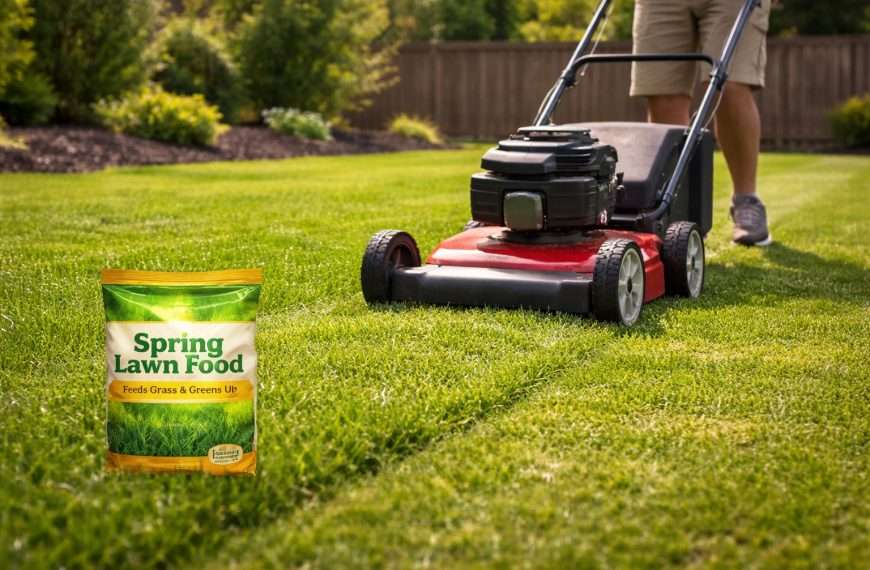
A rotary spreader gives you the most consistent coverage across Bermuda and St. Augustine lawns in Dallas. Walk at a steady pace and apply in overlapping passes, splitting your total application rate in half and covering the lawn in two perpendicular directions. This cross-pattern approach reduces streaking and ensures you don’t miss sections near beds or edges.
Watering your lawn within 24 hours of application moves the fertilizer off the leaf blade and into the soil where roots can access it, which also reduces the risk of foliar burn on St. Augustine in particular.
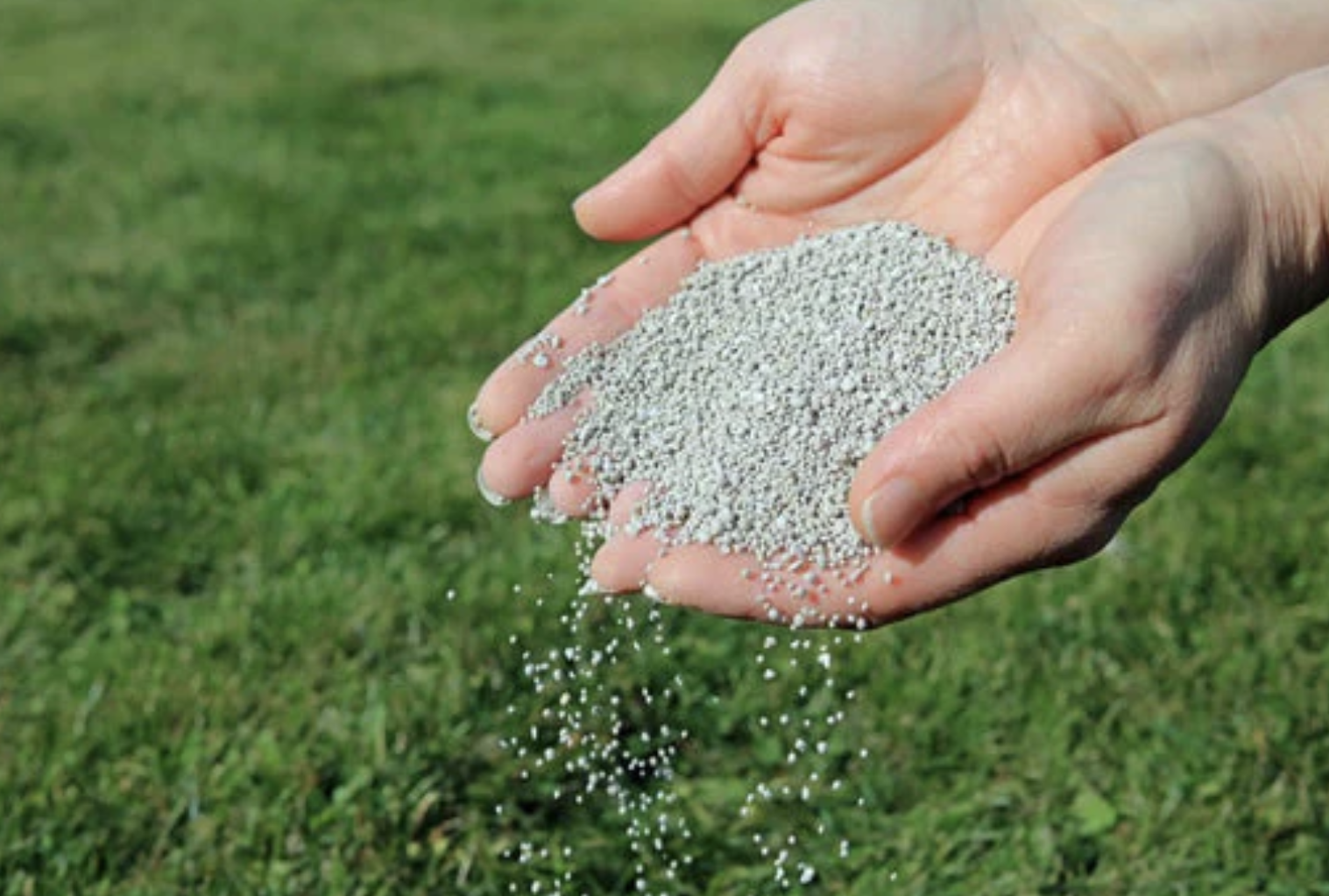
Make sure your spreader is calibrated to the bag’s recommended setting before you start. After you finish, sweep or blow any fertilizer granules off driveways and walkways immediately, since granules sitting on hardscapes can stain concrete and wash into storm drains.
Avoid these common timing and application errors
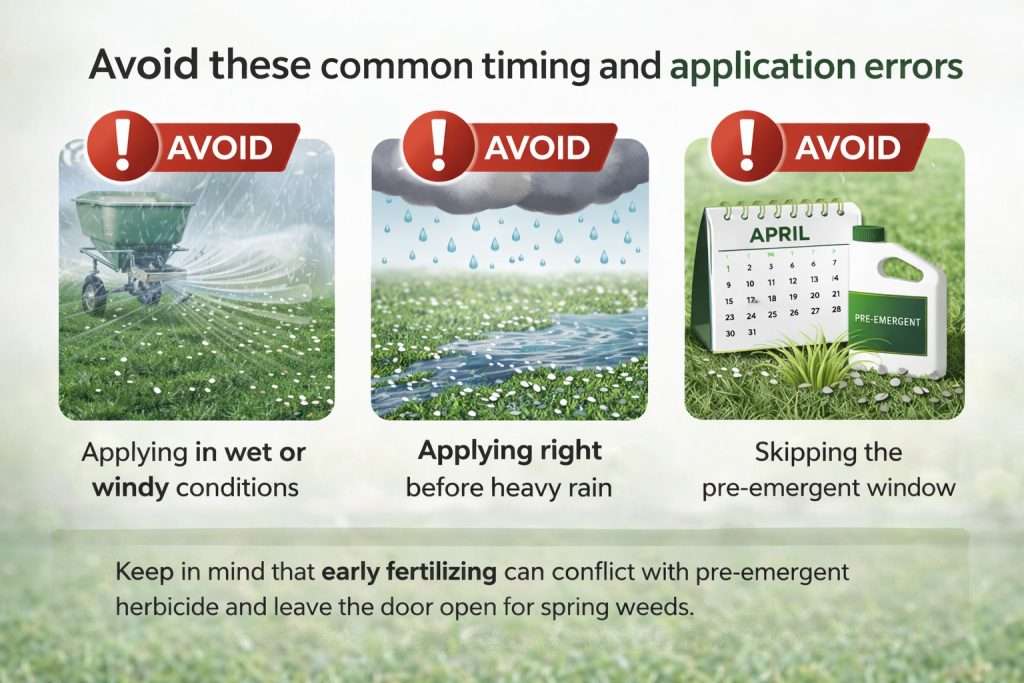
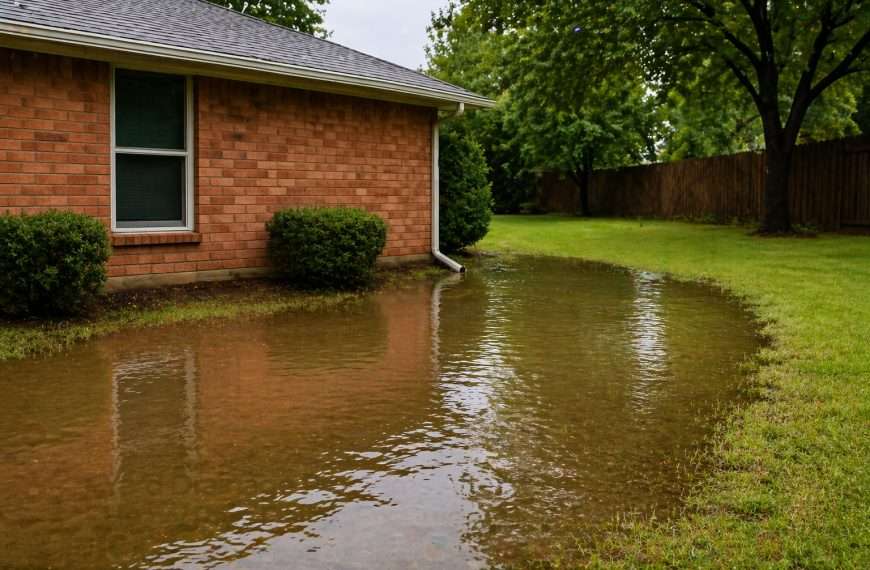
Applying on wet or wind-heavy days creates uneven distribution and risks washing product off your lawn before it enters the soil. You should also avoid fertilizing immediately before a heavy rain forecast, since runoff from a saturated lawn carries nitrogen away and reduces your application’s overall effectiveness.
Skipping your pre-emergent window is another error that compounds throughout the season. If you’re wondering when to fertilize lawn in spring, keep in mind that pre-emergent herbicide and fertilizer timing work together; applying fertilizer too early can conflict with pre-emergent effectiveness and leave the door open to crabgrass pressure your turf then has to compete against all summer.
Wrap up and set your next date
The right answer to when to fertilize lawn in spring in Dallas comes down to what your grass is doing, not what month it is. When your soil holds above 65°F for five or more consecutive days and your lawn is pushing consistent new growth, you’re in the window. Everything before that point, including product selection, spread calibration, and pre-emergent coordination, positions you to apply once that threshold is met.
Set a concrete date now. Pull your soil thermometer out in early March and start tracking. Once your Bermuda or St. Augustine reaches the visual green-up cues covered in this guide, you have your timing. A first application done right builds a stronger turf foundation than multiple poorly timed ones, and your lawn carries that advantage through the full heat of a North Texas summer.
If you’d like help planning seasonal work for your property, our team can walk through the timing with you through a lawn care consultation.