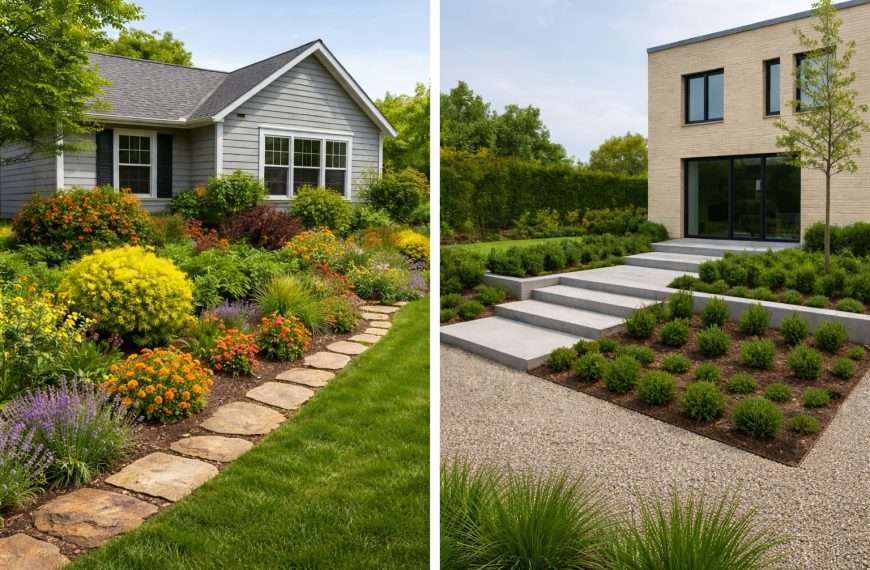
Most Dallas homeowners think about their landscape in daylight, the beds, the lawn, the tree canopy. But once the sun drops, a property either fades into the background or takes on an entirely different presence. Landscape lighting ideas for Dallas homes range from subtle path accents to structured uplighting schemes, and the right approach depends on your property’s layout, mature plantings, and how you actually use your outdoor space after hours. If you’re considering a more cohesive approach, our landscape lighting services in Dallas are designed to integrate both aesthetics and function from the ground up. Thoughtful lighting does two things well: it extends the visual presence of your landscape and addresses practical safety concerns around walkways, entry points, and grade changes.
At Greenform Landscapes, we work with Dallas properties where established trees, layered beds, and architectural detail all influence how light should move through a space. In neighborhoods like Preston Hollow and Lakewood, where canopy cover and lot depth vary significantly, a lighting plan needs to respond to real site conditions, not just ideas pulled from a catalog.
This guide covers five lighting approaches worth considering, from technique and placement to how each one performs across North Texas seasons. Whether you’re evaluating a full lighting installation or refining what’s already in place, these ideas are grounded in what actually works on properties with mature landscapes and year-round visibility needs.
1. Start with a layered lighting plan
Among all the landscape lighting ideas for Dallas homes, a layered plan is the most important concept to understand before purchasing a single fixture. Rather than placing lights randomly, layering combines multiple sources at different heights and intensities to create depth across your property. You build from grade level up, with path lights low, accent fixtures at shrub height, and wash or uplighting reaching into the canopy. The result is a composed scene that guides the eye through your landscape rather than dropping bright spots into an otherwise dark yard.
What it does
Layering eliminates the flat, overlit look that comes from relying on one fixture type. Ambient light handles general mood, fill light manages transitions between zones, and accent light draws attention to specific plants or architectural features. When all three levels work together, your landscape reads as intentional after dark rather than a collection of disconnected highlights.
Best places to use it
Entry sequences, front bed borders, and any area with meaningful planting depth benefit most from a layered approach. If your property has a defined arrival path, a combination of low path lights, mid-height shrub accents, and canopy wash lighting gives the space structure after sunset. Side yards and rear entertaining areas follow the same logic, especially where grade changes or bed transitions create natural visual breaks.
A layered plan also makes future adjustments easier: you can modify one layer without rebuilding the entire system.
Dallas-specific design notes

North Texas properties often mix wide-canopy live oaks, dense shrub borders, and hard surfaces, all of which respond differently to light. In neighborhoods like Preston Hollow, where lot depth and mature canopy are common, layering helps manage contrast between deep shade and open lawn areas. Plan fixture placement around seasonal foliage changes, since some trees drop leaves in winter and shift how light moves through the canopy.
Cost range and upkeep
A professionally installed layered system for a mid-size Dallas property typically ranges from $3,500 to $8,000, depending on fixture count, transformer capacity, and wiring complexity. LED fixtures reduce long-term energy costs and require less frequent bulb replacement. Expect an annual inspection to adjust aim, clear debris from fixture heads, and confirm timer settings remain accurate after seasonal time changes.
2. Add path and step lighting for safe movement
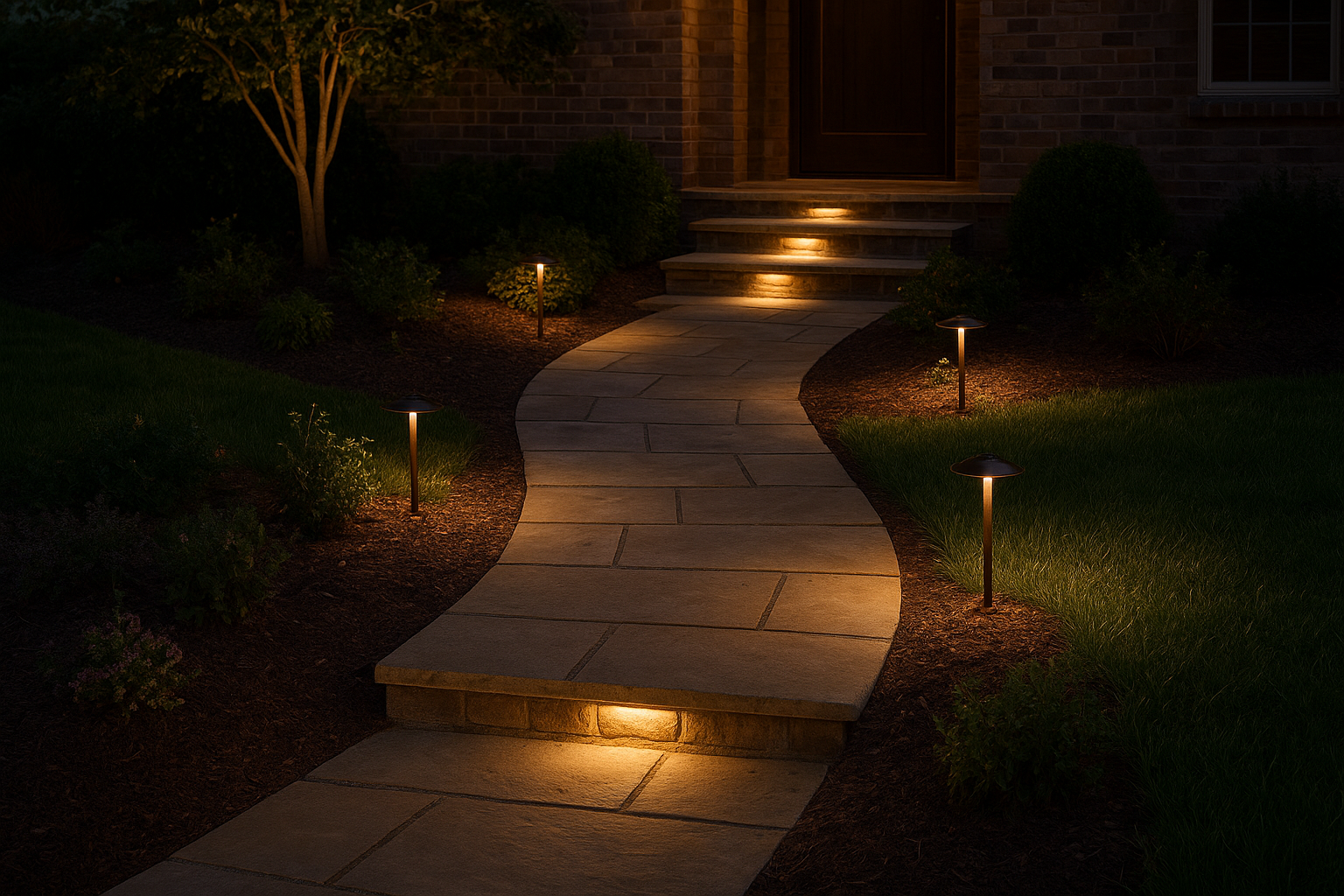
Path and step lighting addresses one of the most practical concerns in landscape lighting ideas for Dallas homes: safe navigation after dark. Fixture placement and light intensity matter more than most homeowners expect, because poorly aimed path lights create glare rather than guidance, which actually makes movement harder at night.
What it does
This layer of your lighting plan marks grade transitions and walking surfaces without flooding the area with light. The goal is to illuminate the ground plane clearly so that steps, curb edges, and surface changes read at a glance. Low-profile fixtures at consistent intervals create rhythm and reduce the visual clutter that comes from oversized or unevenly spaced placement.
Best places to use it
Front entry walks, side yard passages, and any step sequence connecting your driveway to the door benefit directly from this approach. Rear terraces with multiple grade levels need step lighting at every riser, not just the top and bottom.
Lighting every riser consistently prevents the disorienting contrast between lit and unlit steps.
Dallas-specific design notes
Properties with decomposed granite paths or flagstone walks need fixtures positioned to graze the surface rather than shine straight down. During summer, fixture housings near hardscape absorb significant heat, so brass or powder-coated aluminum holds up far better than plastic alternatives.
Cost range and upkeep
Path and step lighting typically runs $800 to $2,500 for a standard residential installation. Your fixtures at this scale need minimal upkeep beyond occasional lens cleaning and annual timer adjustments after seasonal time changes.
3. Use moonlighting in mature trees
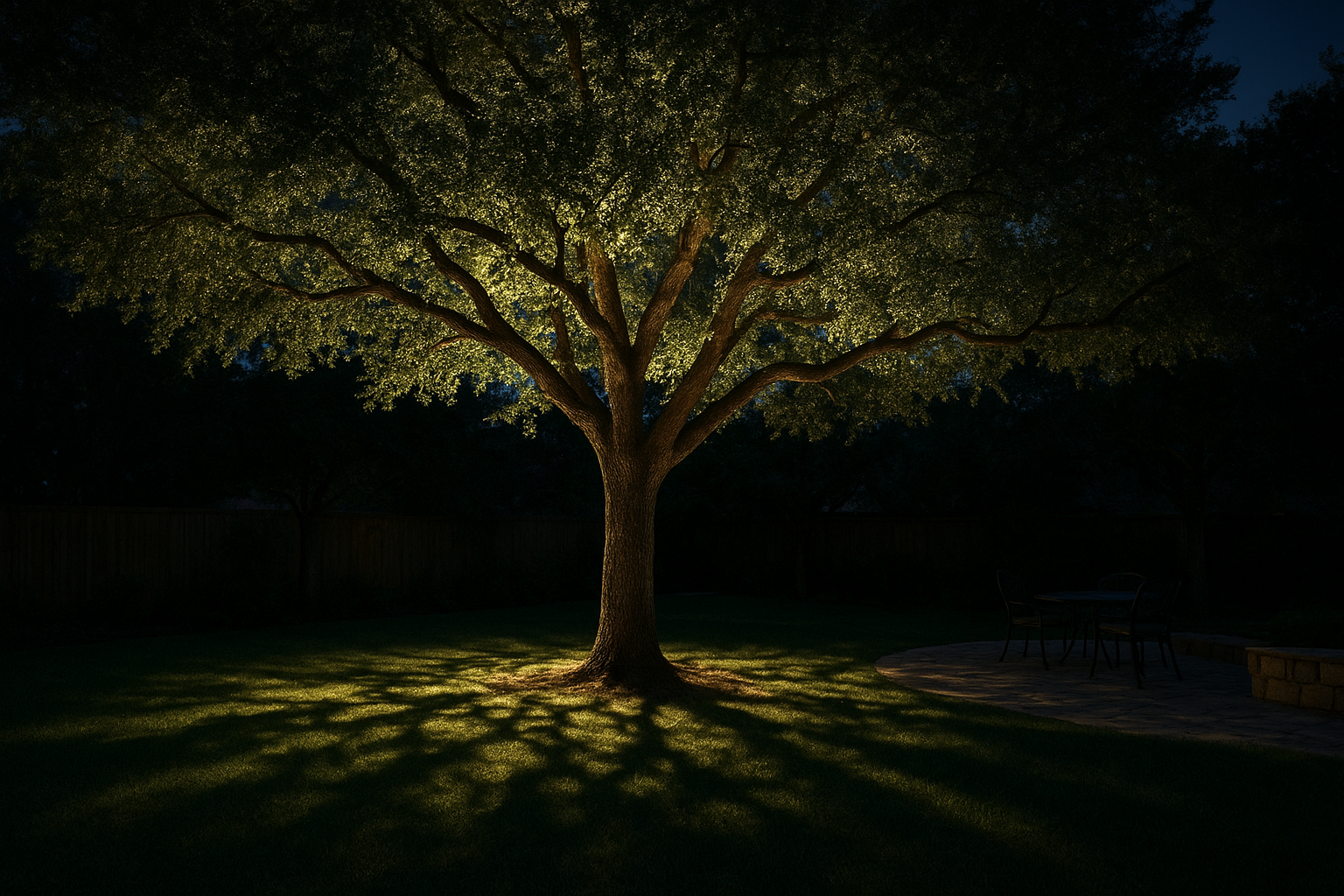
Moonlighting places fixtures high in a tree’s canopy and directs them downward, mimicking the soft, diffused quality of natural moonlight filtering through branches. This technique is one of the more distinctive landscape lighting ideas for Dallas homes with established canopy cover, because the result looks nothing like conventional accent lighting.
What it does
Rather than drawing attention to a single focal point, moonlighting casts dappled shadow patterns across the ground plane below, creating depth and movement that no ground-mounted fixture can replicate. The effect fills a broad area with low-intensity, natural-looking light that makes outdoor spaces feel genuinely usable after dark without overexposing the yard.
Best places to use it
Wide canopy trees positioned over lawn areas, patios, or rear seating spaces benefit most from this approach. If your yard has a sitting area beneath a mature live oak, a single well-placed fixture can illuminate the entire zone with minimal hardware visible from below.
Moonlighting works best when fixtures mount high enough that the light source itself disappears into the canopy.
Dallas-specific design notes
Live oaks throughout Dallas hold their foliage year-round, which makes them ideal hosts for this technique because the light quality stays consistent across all four seasons, unlike deciduous trees that shift dramatically between summer and winter.
Cost range and upkeep
Expect to budget $1,200 to $3,500 per tree depending on mounting height and canopy access. Annual inspections should confirm fixture aim hasn’t shifted after wind events or significant limb growth.
4. Highlight architecture and trees with uplighting

Uplighting places fixtures at grade level and directs them upward, drawing attention to vertical elements like tree trunks, stone facades, or significant plantings. Among the practical landscape lighting ideas for Dallas homes, uplighting produces the most dramatic visual contrast because it works against the natural direction of light, creating depth that no overhead fixture can replicate.
What it does
This technique creates strong definition along vertical surfaces, making architectural details and tree structure visible from the street and from inside your home. Grazing light across textured surfaces like brick, limestone, or bark reveals dimension that flat overhead lighting eliminates entirely.
Best places to use it
Corner trees, entry columns, and significant specimen plantings near the front of your property are natural targets for uplighting. Rear garden walls and privacy screens also benefit when surface texture or planting structure warrants the emphasis.
Uplighting a single specimen tree near your entry can anchor an entire front yard lighting plan without additional fixtures.
Dallas-specific design notes
Cedar elm and live oak are common candidates in Dallas yards, and both respond well to uplighting because their branching structure creates visual interest when lit from below. Avoid positioning fixtures too close to the trunk, as this creates an unnatural hot spot rather than a gradual wash up into the canopy.
Cost range and upkeep
Individual uplight fixtures run $95 to $245 installed, with most front-yard applications requiring four to eight fixtures. Annual aim adjustments after storm season keep light direction aligned with any shifting tree structure over time.
5. Build subtle security lighting without glare
Security lighting often gets installed as an afterthought, and the result is usually a row of bright flood fixtures that create as many problems as they solve. Effective security lighting for Dallas homes works differently: it eliminates dark hiding spots without producing the harsh glare that blinds you, your neighbors, and your guests.
What it does
Well-placed security lighting maintains low ambient light levels across the full perimeter of your property so that movement and entry points stay visible without the jarring contrast of bright floods against a dark yard. Fixtures at moderate intensity, distributed across the property edge, outperform a single high-wattage flood because they remove shadows rather than deepening them.
Best places to use it
Gate entries, garage approaches, and side yard passages are the priority areas. Any gap in your landscape perimeter where foot traffic could pass undetected needs coverage.
Consistent, low-level light across the perimeter does more for security than one bright fixture pointed at the driveway.
Dallas-specific design notes
Summer insects in North Texas are drawn strongly to bright white light, so warm-spectrum LED fixtures near entries reduce pest accumulation while maintaining adequate coverage. Motion-activated zones near rear gates work well without keeping fixtures on all night.
Cost range and upkeep
A perimeter security lighting package typically runs $1,500 to $4,000 installed. Annual inspections should confirm motion sensor sensitivity remains calibrated after seasonal temperature swings affect sensor performance.
A simple next step for your property
The landscape lighting ideas for Dallas homes covered in this guide work because they start from how a property actually functions rather than how a catalog presents it. Layering, moonlighting, uplighting, path guidance, and perimeter security each solve a specific problem, and when combined thoughtfully, they produce results that hold up across seasons and property conditions.
Before purchasing any fixtures, walk your property after dark and note where visibility breaks down, where grade changes are difficult to read, and which trees or architectural features deserve more attention. That honest assessment shapes a much better plan than starting from aesthetics alone.
If you’d like to see how lighting has worked on comparable Dallas properties, the Dallas landscape projects portfolio shows real installations with finished results. For homeowners ready to discuss their property specifically, scheduling a consultation is a straightforward way to get accurate recommendations for your site.