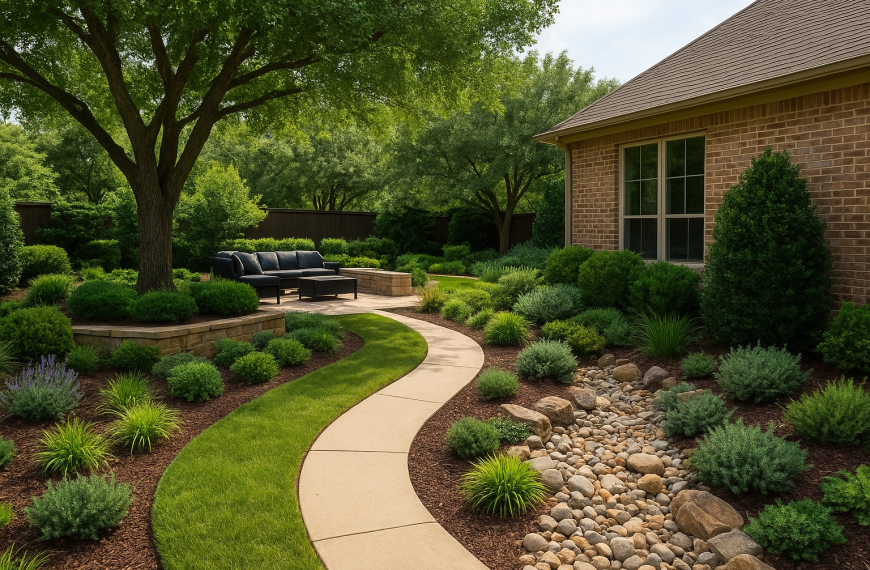
The question of drip irrigation vs sprinkler system comes up often among Dallas homeowners, especially when an existing setup isn’t keeping up with summer heat or when landscape beds are being reworked. Both methods deliver water, but they do it in fundamentally different ways, and in North Texas, where clay soils and triple-digit temperatures shape every irrigation decision, the differences matter more than most general guides suggest.
Choosing between the two isn’t just about efficiency ratings or upfront cost. It depends on what you’re watering, how your property is laid out, and how much flexibility you need across seasons. A Bermuda lawn in full sun has nothing in common with a shaded bed of hollies and Asian jasmine, and the irrigation method that serves one well may be a poor fit for the other. Many established properties in neighborhoods like Preston Hollow and Lakewood already run sprinkler zones, but that doesn’t mean every area of the yard benefits from overhead coverage.
This article breaks down how each system works, where each performs well in Dallas-area landscapes, and how to decide which approach, or combination, makes sense for your property. At Greenform Landscapes, we design and adjust irrigation systems around real site conditions, so the guidance here reflects what we see working on the ground, season after season.
Why the choice matters in North Texas
Most irrigation advice published online treats soil type and climate as secondary considerations. In North Texas, those factors come first. Dallas sits on expansive clay soils that absorb water slowly, hold it unevenly, and shrink and crack during extended drought. When you run overhead sprinklers over clay during a dry spell, much of that water runs off before the soil can accept it. Understanding how your soil behaves is the foundation for making any useful irrigation decision.
Clay soils shift the calculus on delivery rate
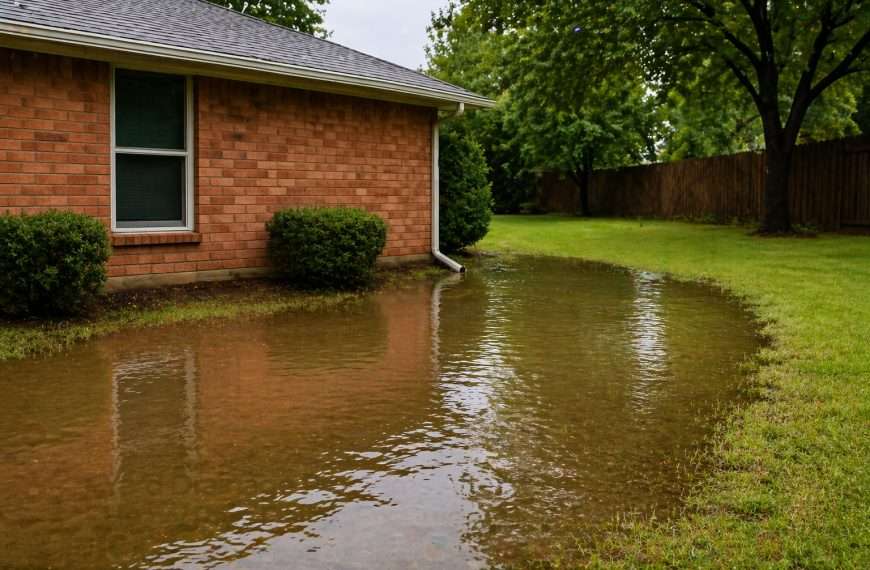
Dallas clay doesn’t respond well to fast water delivery. A sprinkler head that outputs water faster than the soil can absorb it creates runoff and pooling, which wastes water and encourages shallow root development over time. Drip systems apply water slowly and directly to the root zone, giving clay more time to absorb moisture without triggering runoff. When you’re weighing drip irrigation vs sprinkler system options for a planted bed or a slope, the soil’s absorption rate is one of the most practical factors to consider.
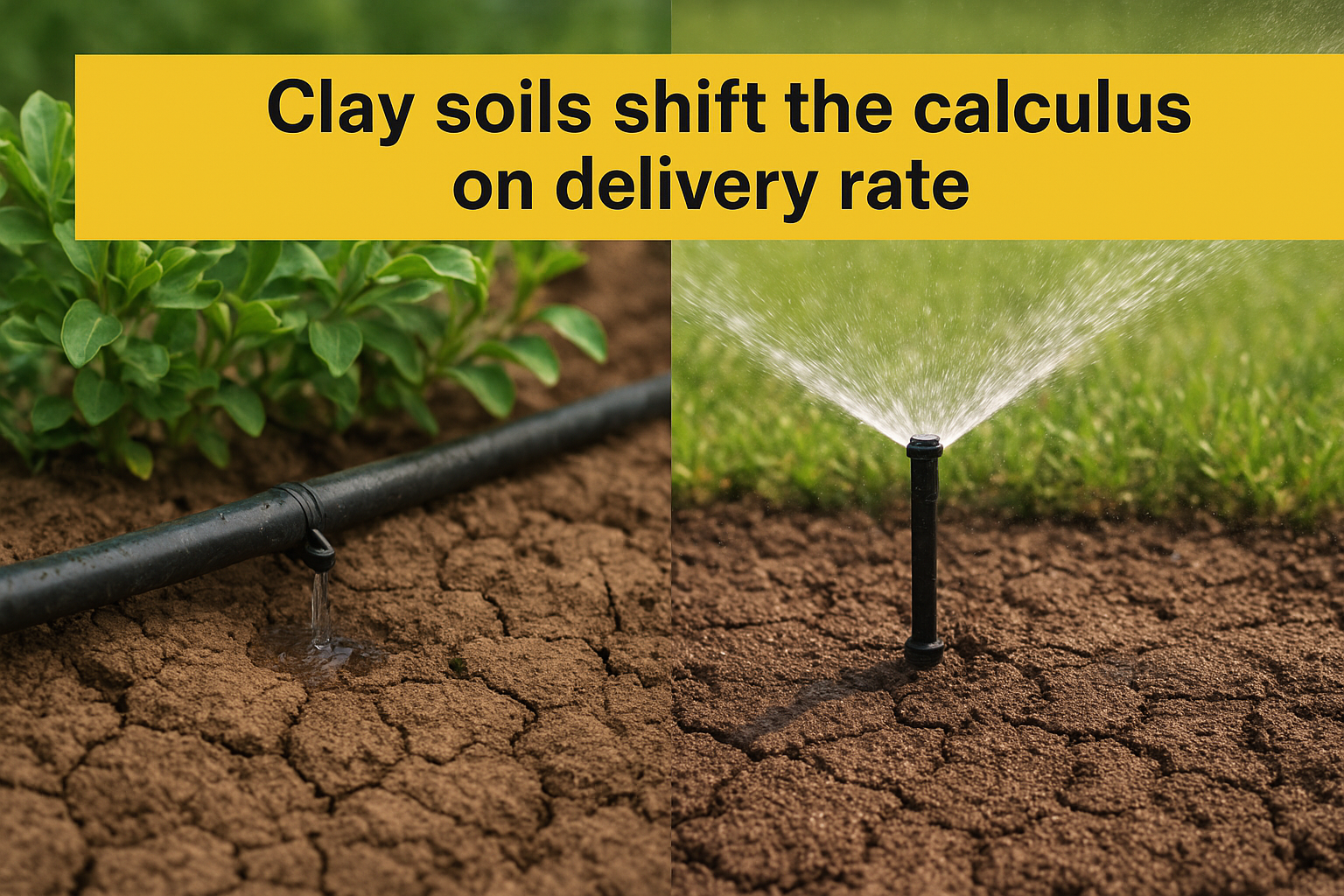
Clay soil infiltration rates in Dallas often run below 0.5 inches per hour, meaning cycle-and-soak programming is frequently necessary even with well-maintained sprinkler systems.
Summer heat compresses your timing options
North Texas summers regularly push past 100 degrees Fahrenheit for weeks at a stretch. During those periods, evaporation loss from overhead spray becomes substantial, particularly during midday or early afternoon watering. Sprinkler systems are best run in the early morning hours when temperatures and wind are lower, but even then, fine mist from rotating heads can lose a meaningful percentage of output before it reaches the ground. Drip systems largely sidestep this problem because they deliver water at soil level with minimal exposure to heat and wind.
Your irrigation setup has to account for both the soil conditions beneath your landscape and the climate pressing down on it from above. In Dallas, that means neither system is universally superior, and properties with both turf and planted beds often benefit from treating each area as a separate irrigation problem.
How drip irrigation works in real landscapes
Drip irrigation delivers water through a network of low-pressure tubing and emitters placed directly at the base of plants. Rather than broadcasting water across a wide area, the system targets individual root zones, releasing moisture slowly enough that the soil can absorb it as it arrives. In Dallas landscapes, this approach works particularly well in mulched planting beds, along foundation plantings, and in any area where you want precise moisture control without wetting foliage.
Where drip systems perform best
Planted beds with shrubs, perennials, and ground covers are the most natural fit for drip irrigation. In a direct comparison of drip irrigation vs sprinkler system performance, drip consistently reduces water loss in areas with mixed planting densities because each emitter can be sized and positioned independently. You can run higher-output emitters near established hollies and lower-output emitters near smaller perennials without creating uneven wet and dry zones across the same bed.
Drip systems also reduce foliar disease pressure because leaves stay dry, which matters in shaded or densely planted beds where air circulation is limited.
Maintaining the system means periodic checks for clogged emitters, which can occur when mineral deposits accumulate in areas with hard water. The tubing is typically buried just below the mulch layer or laid on the soil surface and covered, keeping it out of sight once the bed is dressed.
How sprinkler systems work for Dallas lawns
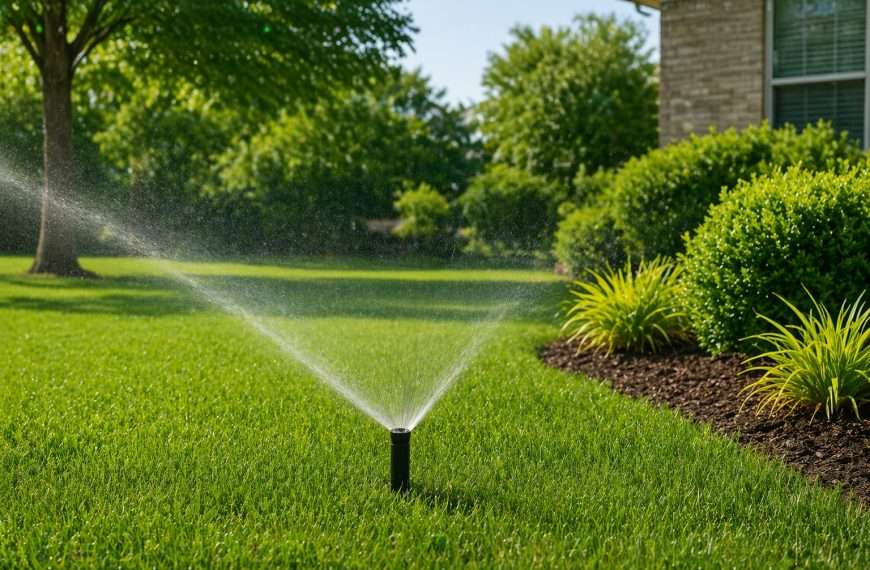
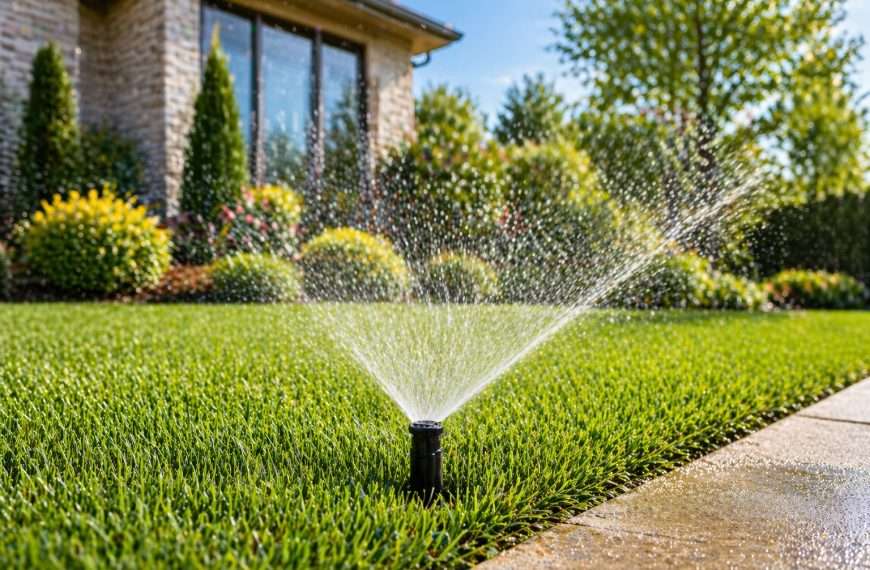
Sprinkler systems distribute water through a network of pressurized heads that rotate, spray, or pop up across turf areas, delivering broad coverage over open ground. They’re built to water large spaces efficiently, which makes them well suited for grass rather than individual plants. In Dallas, most established properties already rely on sprinkler zones for their Bermuda or St. Augustine lawns, where uniform coverage across open areas matters more than targeted root-zone delivery.
Where sprinkler systems hold their advantage
Turf is where sprinkler systems make the most practical sense. Grass roots spread laterally across the soil surface, and overhead irrigation wets that entire zone evenly. In a direct comparison of drip irrigation vs sprinkler system performance on open turf, sprinklers handle coverage faster and with far less installation complexity than any drip alternative would require.
Rotary heads with lower precipitation rates perform better on Dallas clay than fixed spray heads, because they apply water more slowly and reduce surface runoff on compacted or dry soils.
Timing and programming matter in summer heat
Running sprinklers during early morning hours, typically between 4 and 7 a.m., significantly reduces evaporation loss and gives the soil time to absorb moisture before daytime heat peaks. Cycle-and-soak programming splits each zone’s runtime into shorter intervals with rest periods between them, allowing clay soils to accept water before the next cycle begins. Without that adjustment, even a well-designed sprinkler system will lose a meaningful share of its output to runoff before it reaches the root zone.
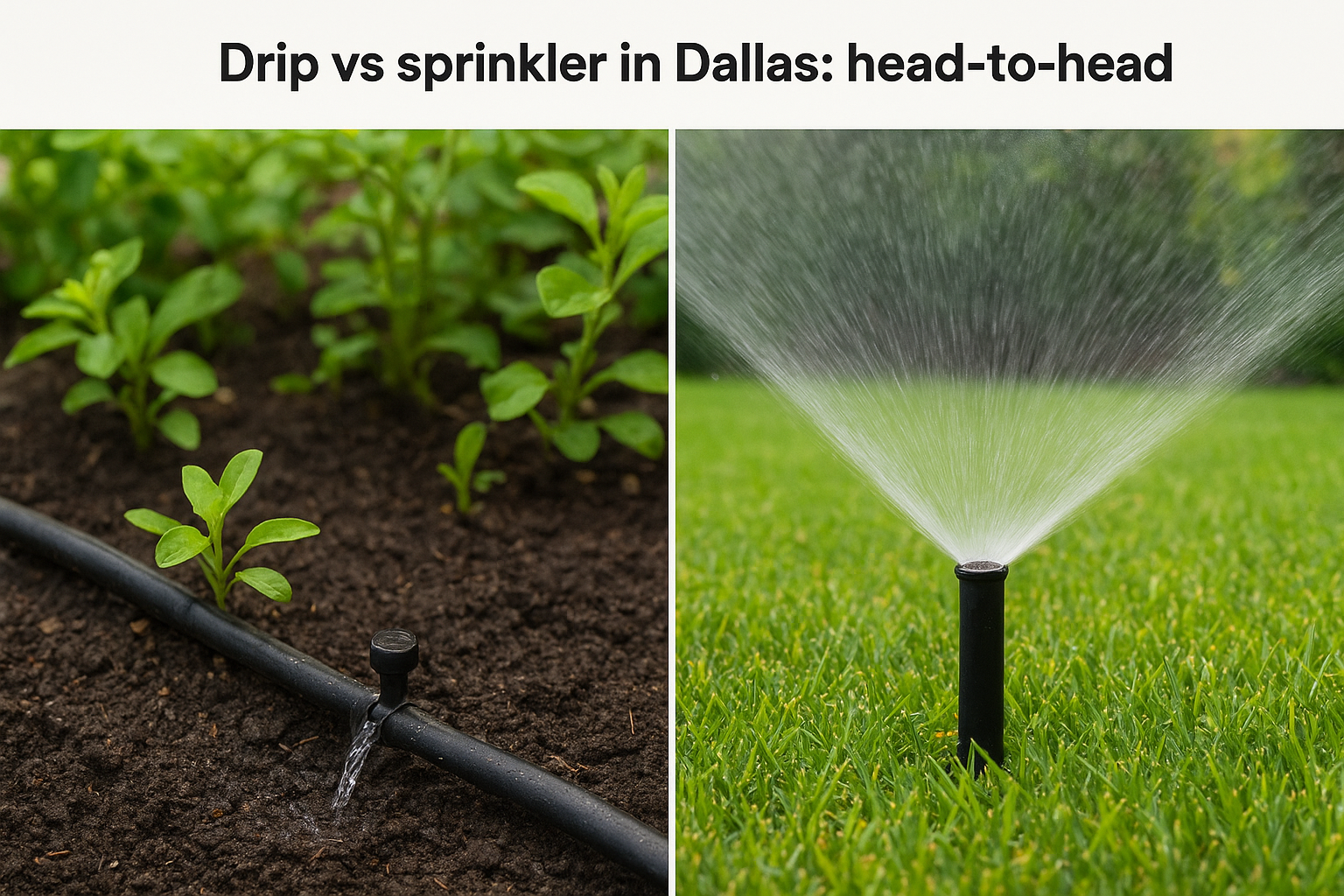
Drip vs sprinkler in Dallas: head-to-head
Putting drip irrigation vs sprinkler system performance side by side in a Dallas context clarifies where each method earns its place. Neither system dominates across every situation, but understanding their performance differences on specific applications helps you make a more informed decision before committing to a design or a change.
Water efficiency on Dallas clay
Drip systems apply water slowly enough that clay soils can absorb moisture without triggering runoff, which gives them a clear efficiency advantage in planted beds and foundation areas. Sprinkler systems can reach comparable efficiency on turf when cycle-and-soak programming is used correctly, but they require active management to prevent the runoff that compacted or dry clay causes during longer runtimes.
Texas A&M AgriLife Extension research indicates drip irrigation can reduce water use by 30 to 50 percent compared to overhead spray in comparable planted areas.
Installation and ongoing maintenance
Installation complexity favors sprinklers on large open turf areas, where a standard rotary head layout covers ground quickly with relatively low per-zone material cost. Drip systems cost less to expand incrementally but require more consistent maintenance, particularly emitter checks in areas with high mineral content in the water supply. For most established Dallas properties, the most practical outcome involves both systems working together: sprinklers covering open lawn zones and drip handling planted beds where slow, targeted delivery reduces water loss and plant stress across the demanding summer season.
How to choose and combine systems
Most established Dallas properties don’t need to choose one system and abandon the other. What you’re watering and how each area of your yard behaves under summer stress usually points toward a split approach: sprinklers covering open turf zones and drip handling planted beds, foundation plantings, and any slope where runoff is a persistent problem.
Start with what each area demands
Walk your property and separate it into two categories: open grass areas and planted zones with shrubs, perennials, or ground covers. Turf responds well to overhead coverage from rotary heads on a timed schedule, while planted beds benefit from the slower, targeted delivery that drip emitters provide. When you evaluate drip irrigation vs sprinkler system options through this lens, the decision becomes less about preference and more about matching each method to the right application.
Splitting your irrigation into separate zones by plant type also makes seasonal adjustments easier, since turf and planted beds rarely need the same frequency or runtime during summer or dormancy.
Factor in your maintenance capacity
Drip systems require periodic emitter checks to catch clogs before they cause dry spots in your beds. Sprinkler systems need head adjustments and seasonal inspections to confirm coverage hasn’t shifted. Both systems reward consistent attention, and the combination approach only works well if you’re prepared to maintain each zone on its own schedule.
Key takeaways for Dallas yards
The drip irrigation vs sprinkler system decision comes down to what each part of your property actually needs. Sprinkler systems handle open turf zones well when paired with cycle-and-soak programming and early morning run times. Drip systems outperform overhead spray in planted beds, foundation areas, and slopes where runoff and evaporation reduce how much water actually reaches the roots.
Most established Dallas properties benefit from running both. Clay soils and summer heat create conditions where neither method works perfectly across every zone, but each works well when matched to the right application. Keeping both systems maintained and programmed correctly is where long-term results come from, not the hardware itself.
Many homeowners who invest in irrigation improvements also pair them with professional Dallas lawn care services to keep turf and planting beds performing consistently throughout the season. Homeowners can also follow our Dallas lawn care calendar to better understand watering schedules and seasonal maintenance timing across North Texas landscapes.
If your irrigation setup isn’t keeping up with your landscape’s demands, or if you’re planning a bed redesign that requires rethinking water delivery, professional irrigation support can help you evaluate what changes will make the most practical difference for your property. Contact Greenform Landscapes if you’d like help evaluating irrigation upgrades or planning improvements to your landscape.