Dallas summers don’t leave much room for guessing. When afternoon temperatures hold above 100°F for days at a stretch, your lawn is either getting the water it needs or it’s showing signs of stress fast. The question of how often to water lawn in Texas heat comes up every year, and the answer depends on more than just turning the sprinklers on more frequently. Soil type, grass variety, sun exposure, and local watering restrictions all shape what an effective schedule actually looks like.
If your system isn’t distributing water evenly, the issue may not be your schedule at all—it could be coverage, pressure, or a failing component that requires proper sprinkler system repair in Dallas.
At Greenform Landscapes, we manage irrigation timing across established Dallas properties throughout the summer, from dense clay lots in Preston Hollow to sun-exposed turf in Lakewood. What we see consistently is that overwatering causes just as many problems as underwatering, and most homeowners are doing one or the other. Getting the frequency, duration, and timing right matters more than simply adding extra run days.
This guide breaks down a practical watering schedule built around real Dallas conditions, including how many days per week to water, how long each cycle should run, the best time of day to irrigate, and how to adjust when Stage 2 restrictions take effect. If your lawn struggled through last summer, the issue likely wasn’t effort—it was timing.
How often should you water a lawn in Texas heat?
Most Dallas lawns should be watered 2–3 times per week during peak summer, applying a total of 1 to 1.5 inches of water weekly. Water deeply in the early morning to encourage root growth and reduce evaporation.

What proper watering looks like in Dallas heat
Proper lawn watering in Dallas during summer isn’t about running your sprinklers as often as possible. It’s about applying enough water at the right depth to push roots downward rather than keeping them shallow near the soil surface.
Shallow roots are vulnerable to heat stress because the top two inches of soil can dry out completely within hours on a 103°F afternoon. Deep roots, by contrast, access moisture that stays cooler and more consistent throughout the day, which is how turf survives an extended Texas summer without constant intervention.
Deep and infrequent vs. shallow and frequent
Most conversations about how often to water lawn in Texas heat focus on days per week, but depth is the more important variable. An established lawn in Dallas needs approximately 1 to 1.5 inches of water per week during peak summer, but how you deliver that water matters as much as the total amount.
Two or three longer sessions per week reach the 6-to-8-inch root zone, while daily short cycles wet only the top inch or two before evaporation takes over.
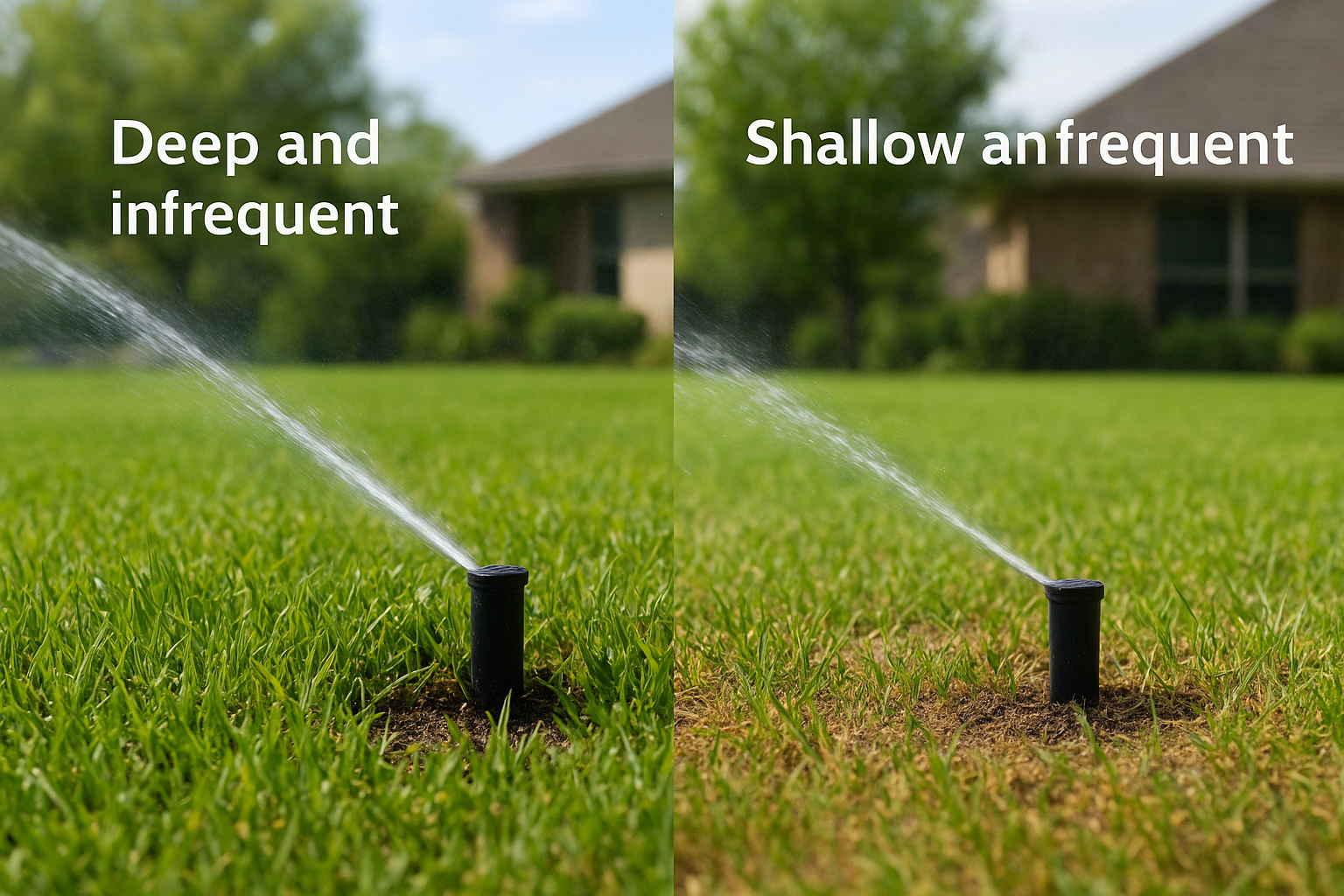
Watering deeply two to three times per week builds heat tolerance at the root level in a way that daily light cycles cannot.
The table below shows how the two approaches compare in practice:
| Approach | Frequency | Soil depth reached | Root behavior |
|---|---|---|---|
| Shallow and frequent | Daily or every other day | 1-2 inches | Roots stay near surface |
| Deep and infrequent | 2-3 times per week | 6-8 inches | Roots develop downward |
| Cycle-and-soak (clay soils) | 2-3 times per week | 6-8 inches with better absorption | Roots develop downward |
How Dallas clay changes your watering math
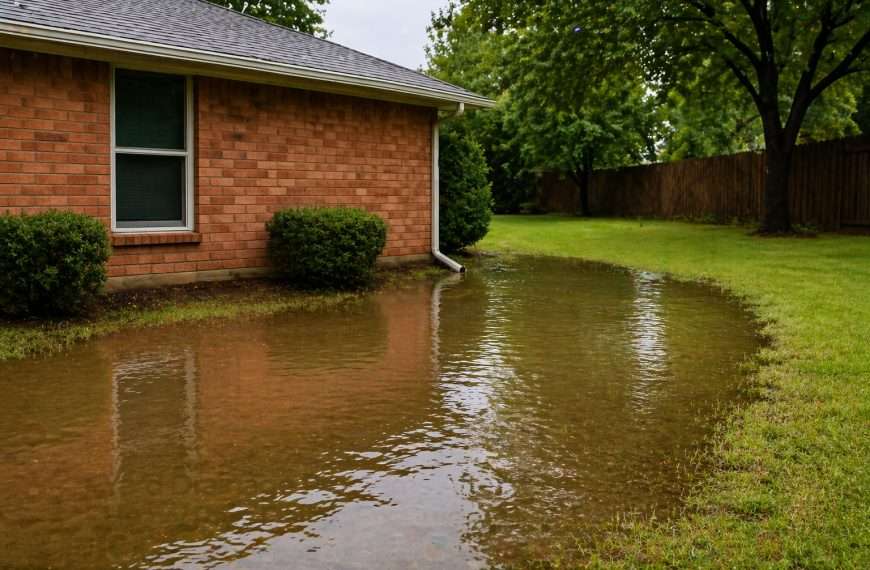
Dallas clay soil absorbs water slowly and holds it well once it penetrates, but that absorption rate creates a practical problem. Running a sprinkler zone for a single long uninterrupted cycle often produces surface runoff before the water reaches the root zone, especially on compacted clay that hasn’t been aerated recently. Breaking each session into two shorter cycles with a 30-to-45-minute gap between them, a technique called cycle-and-soak, allows the clay to absorb the first pass before the second cycle adds more.
Your property’s shade and sun exposure also shift what effective watering looks like zone by zone. Full-sun turf loses moisture faster than areas under mature tree canopy, and running every zone on the same schedule leads to overwatered shaded areas and underwatered open turf. Watching how quickly different zones dry out in the days after irrigation gives you more actionable information than any generic timer setting.
Step 1. Set your weekly inch goal
Before you adjust days or run times, you need a baseline number to work toward. Established warm-season turf in Dallas requires between 1 and 1.5 inches of water per week during peak summer.
Bermuda grass sits closer to 1.25 inches when temperatures hold above 95°F, while Zoysia and St. Augustine perform better at the higher end of that range because their broader leaf structure loses moisture faster. Starting with this target gives your schedule a fixed goal rather than a vague sense of “watering enough.”
How to measure what your lawn is actually getting
Knowing your target inch goal matters only if you know how much water your system actually delivers. Straight-sided cans or rain gauges placed in the middle of each zone give you an accurate read during a timed test run.
Run one zone for 15 minutes, measure the depth in each can, then multiply to reach a per-hour rate. Most residential sprinkler systems apply between 0.5 and 1.0 inches per hour, though rotary heads typically run slower than fixed spray heads, so each zone may deliver a different amount.

Measure before you schedule, not after you notice stress.
| Sprinkler type | Typical application rate | Time to apply 0.5 inches |
|---|---|---|
| Fixed spray head | 1.0-1.5 in/hr | 20-30 minutes |
| Rotary/rotor head | 0.4-0.6 in/hr | 50-75 minutes |
| Drip (beds only) | Varies by emitter | Not applicable to turf |
Adjusting your goal through peak heat
When you’re thinking about how often to water lawn in Texas heat, the weekly inch goal isn’t static. During an extended heat event, where lows stay above 80°F overnight and highs push past 105°F, your lawn loses moisture faster than normal conditions assume. Raising your target to 1.5 inches during those stretches, rather than adding extra days, keeps your schedule aligned with what the turf actually needs without encouraging shallow root development.
Step 2. Pick days and the best time to water
The City of Dallas enforces watering restrictions that define how many days per week you can irrigate, so your schedule starts with which days your address allows. You can use our Dallas watering schedule tool to quickly check your assigned days based on your address.
Under Stage 2, that drops to one day per week, which forces you to deliver your full weekly inch goal in a single session, something that requires longer run times and cycle-and-soak to work effectively on Dallas clay.
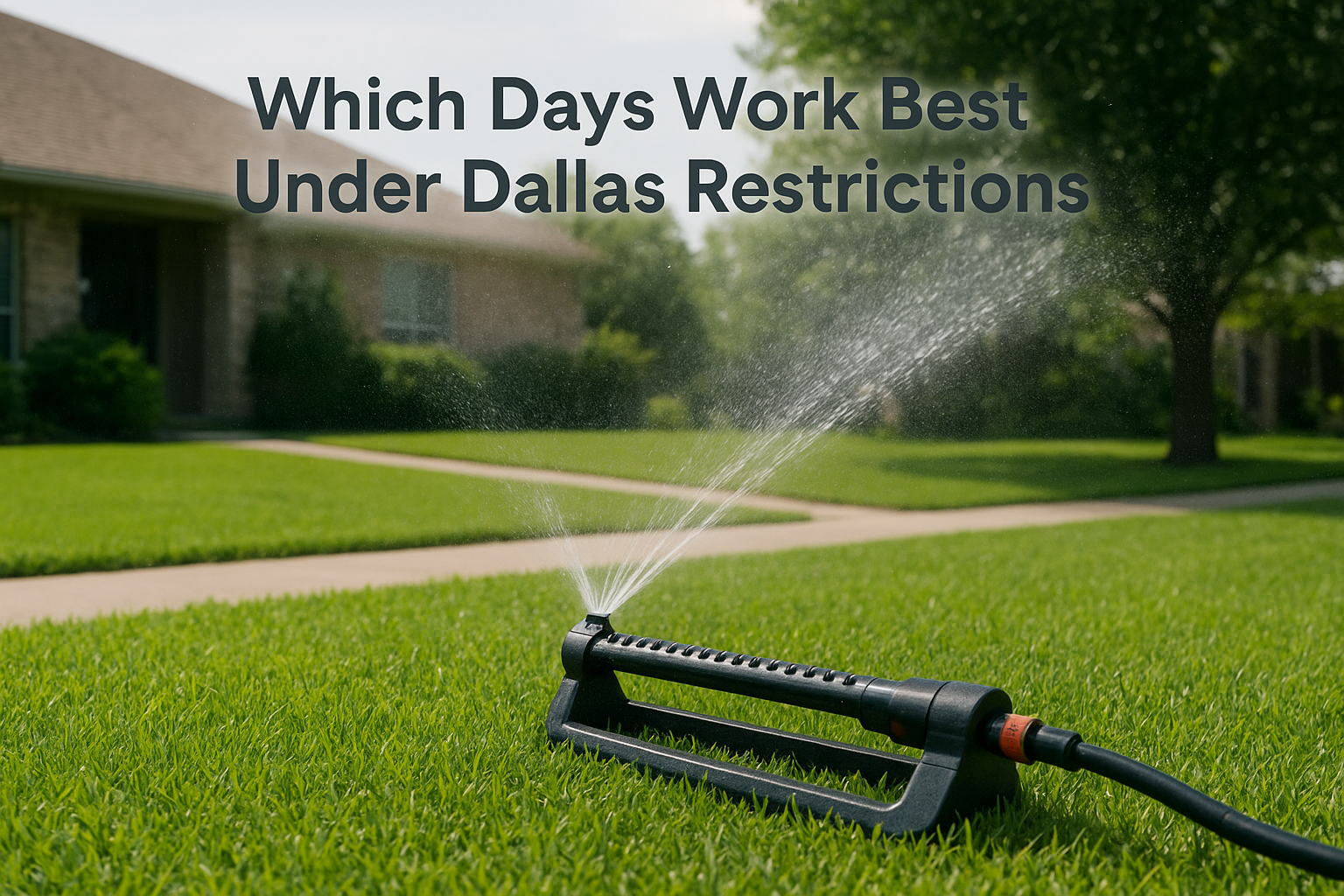
Which Days Work Best Under Dallas Restrictions
Under Stage 1, odd-numbered addresses typically water on Wednesdays and Saturdays, while even-numbered addresses water on Thursdays and Sundays. Spacing your two allowed days evenly across the week, rather than back-to-back, gives the turf time to dry slightly between sessions, which encourages roots to reach deeper into the soil profile.
If Stage 2 restrictions apply, you’ll need to apply your full 1 to 1.5 inches in one extended session, which makes cycle-and-soak essential on compacted clay.
| Restriction stage | Days allowed | Recommended approach |
|---|---|---|
| Stage 1 | 2 days/week | Even spacing, deeper per-cycle runs |
| Stage 2 | 1 day/week | Cycle-and-soak, maximum run time |
The Best Time to Run Your System
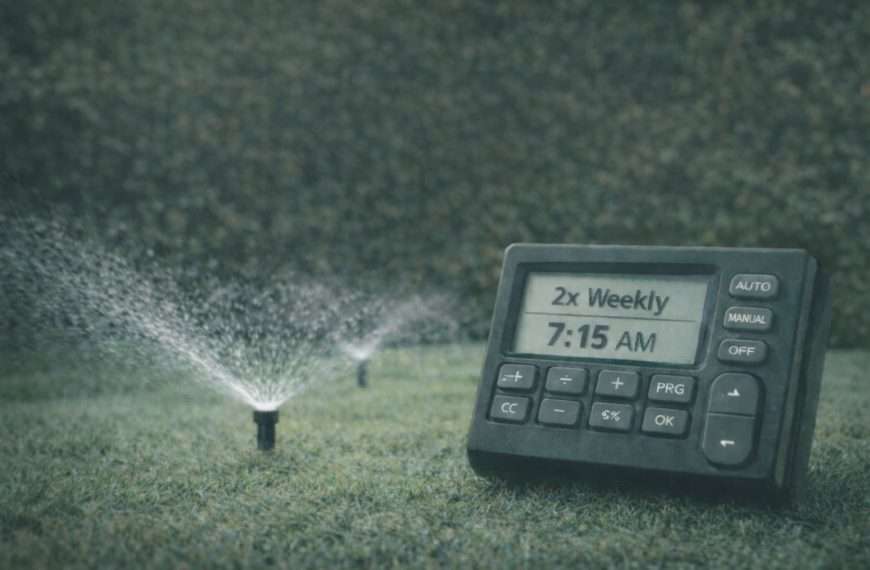
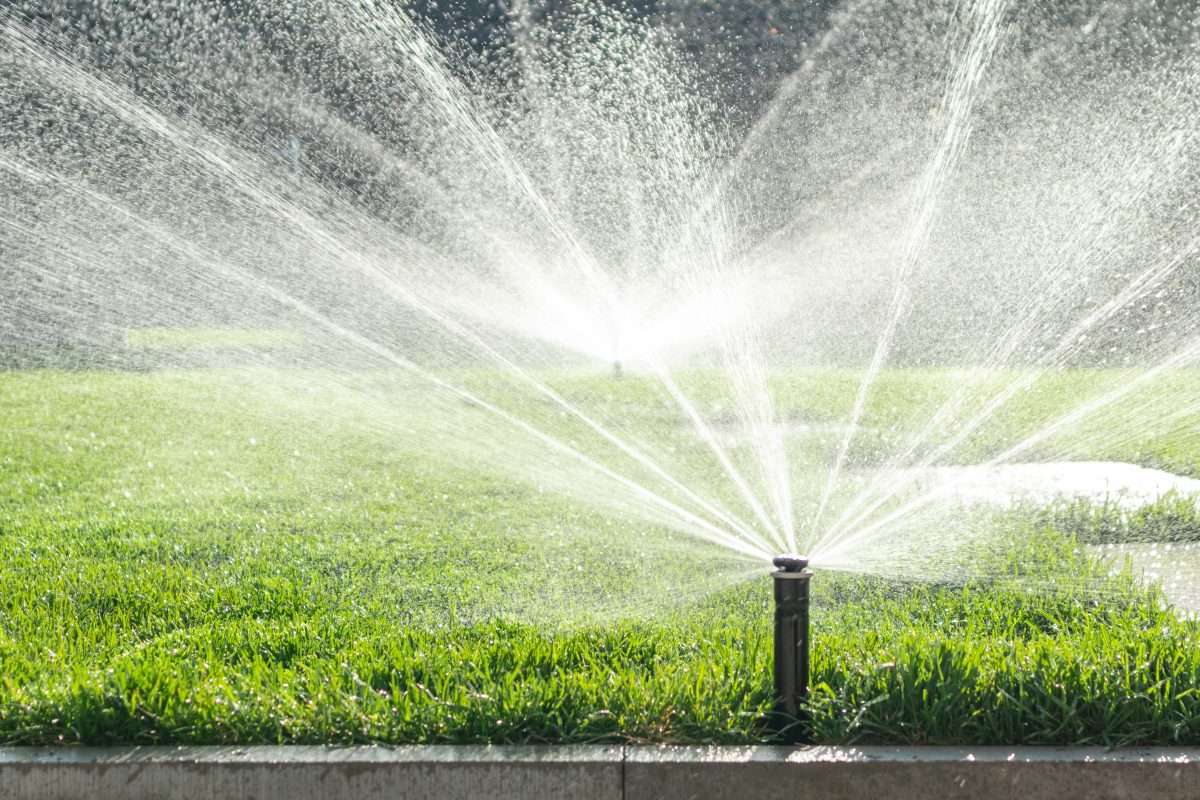
Early morning, between 5 and 9 a.m., is consistently the most effective window for irrigation during Dallas summers. Wind is typically calm, temperatures are lower, and water has time to soak into the soil before midday heat accelerates evaporation. Running your system at midday can waste 30 to 40 percent of applied water before it reaches the root zone.
Watering in the evening is less effective, as moisture that sits overnight can increase the risk of fungal issues and turf disease—especially during extended heat and humidity.
For best results, early morning irrigation should be paired with proper lawn care and maintenance practices that support deeper root growth and long-term turf health.
Watering after 10 a.m. during a Texas summer can reduce efficiency by up to 30–40% due to evaporation, especially during extended heat waves.
When thinking about how often to water lawn in Texas heat, timing within the day matters almost as much as frequency. Evening watering keeps foliage wet through the night, which raises the risk of fungal disease in humid summer conditions, particularly for St. Augustine and Zoysia lawns.
Mulch can also play a major role in reducing evaporation and stabilizing soil temperature during extreme heat. Choosing the best mulch for Dallas landscaping helps retain moisture, protect root systems, and reduce how often your irrigation system needs to run.
Step 3. Dial in run times by sprinkler type
Once you know your weekly inch goal and your allowed watering days, the next variable is how long each zone needs to run to actually deliver that water. Run time isn’t a single number you apply across your whole system. Fixed spray heads and rotary heads operate at very different application rates, so a schedule that works for one zone may leave another underwatered or soaked.

How to Calculate Run Time for Each Zone
Start with the measurement you gathered in Step 1. If your fixed spray zone delivers 1.2 inches per hour and your weekly goal is 1.25 inches across two watering days, each session needs to apply roughly 0.6 inches. That translates to approximately 30 minutes per session for a fixed spray zone.
For a rotary head zone running at 0.5 inches per hour, reaching 0.6 inches per session requires about 72 minutes, which on Dallas clay should be split into two 36-minute cycles with a soak interval between them.
Run times vary by zone, not by system, so setting one timer for the whole property consistently under- or over-applies water somewhere.
The table below provides practical starting points based on common sprinkler types when targeting 0.6 inches per session across two watering days per week:
| Sprinkler type | Application rate | Run time per session | Cycle-and-soak split |
|---|---|---|---|
| Fixed spray head | 1.0-1.5 in/hr | 25-35 minutes | Optional on sandy areas |
| Rotary/rotor head | 0.4-0.6 in/hr | 60-75 minutes | Split into 2 cycles |
When to Revisit Your Run Times
Knowing how often to water lawn in Texas heat also means recognizing when your current run times stop producing results. If you see pooling or runoff midway through a cycle, your clay soil is saturating faster than the schedule accounts for, so cut the cycle in half and add a second pass after a 30-minute gap.
If turf shows wilting or footprint retention two days after watering, extend your run time in 10-minute increments until the stress clears.
Step 4. Adjust for soil, shade, and grass type
One schedule rarely fits every zone on a Dallas property. Grass type, shade coverage, and soil compaction all pull your watering needs in different directions, and treating every zone the same leads to chronic stress in some areas while others stay waterlogged. Before finalizing your zone-by-zone run times, take a close look at what each section of your lawn actually demands.
Grass Type and Water Demand
The three warm-season grasses most common in Dallas, Bermuda, Zoysia, and St. Augustine, have meaningfully different drought tolerance levels and water requirements. Bermuda handles heat the best of the three and tolerates slightly drier conditions without serious damage, which makes it more forgiving if you’re working within Stage 2 restrictions.
Water requirements vary significantly by turf type. Choosing the best grass for Dallas lawns helps determine how much water your lawn actually needs during peak summer.

Zoysia and St. Augustine, with their wider leaf blades, lose moisture faster and perform better when you stay at the higher end of the 1 to 1.5-inch weekly range. If you’re managing a mixed turf situation and thinking through how often to water lawn in Texas heat, prioritize the most water-demanding grass type in your schedule rather than averaging across the yard.
Knowing your grass type before adjusting run times prevents you from consistently underwatering the sections of your lawn that need the most support.
| Grass type | Weekly water need (peak summer) | Drought tolerance |
|---|---|---|
| Bermuda | 1.0-1.25 inches | High |
| Zoysia | 1.25-1.5 inches | Moderate |
| St. Augustine | 1.25-1.5 inches | Low to moderate |
Shade and Soil Compaction
Shaded zones under mature tree canopy dry out significantly slower than open turf, and running them on the same schedule as full-sun areas almost always leads to overwatering. Reduce run time on shaded zones by 20 to 30 percent from your baseline and monitor them separately from exposed areas.
Use these starting adjustments when fine-tuning zones with distinct conditions:
- Shaded turf under canopy: reduce run time 20–30% from your standard zone setting
- Full-sun turf on compacted clay: apply cycle-and-soak by splitting watering into two passes with a 30-minute gap
- Sloped areas: shorten each pass to limit surface runoff, then add a second cycle after the soil absorbs the first
Compacted clay that hasn’t been aerated recently holds water near the surface longer, making multi-cycle delivery more important—not less. Core aeration each fall improves absorption throughout the following summer and reduces runoff that wastes water before it reaches the root zone.

If your system isn’t adjusting well across these different conditions, it may be a design or coverage issue rather than a scheduling problem. Our irrigation and drainage services help optimize zone performance across complex Dallas landscapes.
A simple plan you can follow this week
Pull everything from this guide into three decisions: set your weekly inch target at 1 to 1.5 inches based on your grass type, run your sprinklers two mornings per week between 5 and 9 a.m. on your allowed watering days, and split longer zones into two cycles with a 30-minute soak gap. That foundation addresses most of what drives stress on Dallas lawns during peak summer heat.
If you’re still unsure how often to water lawn in Texas heat based on your specific soil, shade coverage, or irrigation setup, a zone-by-zone assessment will give you more accurate run times than any general schedule.
For homeowners who want a broader seasonal framework, the Dallas Lawn Care Calendar walks through what to do each month beyond just summer watering.
And if your lawn isn’t responding the way it should, the issue is often system performance—not just timing. You can schedule a consultation to have your irrigation zones evaluated and adjusted for real Dallas conditions.