The electric vs gas lawn mower debate comes up often among Dallas homeowners, and the answer isn’t as straightforward as marketing from either side would suggest. Both options have real strengths and real limitations, and in North Texas, where summer heat pushes turf and equipment hard, the wrong choice can cost you in performance, maintenance, or long-term results.
What matters most isn’t the power source itself. It’s how well the mower matches your property’s size, terrain, and grass type. A half-acre Bermuda lawn in Preston Hollow has very different demands than a smaller, shaded St. Augustine yard. Battery life, engine output, and cut quality all play a role, but so do factors like soil firmness during drought, mowing frequency in peak season, and how your lawn responds to different cutting mechanics over time.
At Greenform Landscapes, we maintain properties across Dallas with a range of equipment, and we’ve seen firsthand how each type performs under real North Texas conditions. This guide breaks down the practical differences, power, runtime, maintenance, and turf impact, so you can make an informed decision based on your yard, not a spec sheet. We’ll cover what actually matters for Dallas lawns and where each mower type falls short.
Why this choice matters for Dallas lawns
North Texas doesn’t follow the same rules as the rest of the country when it comes to lawn care equipment. Dallas summers routinely push temperatures above 100°F, and your mower has to perform through that heat week after week during peak growing season. The electric vs gas lawn mower decision carries more weight here than in cooler climates, where performance differences are less pronounced and the mowing season is shorter.
The combination of dense clay soil, drought stress, and aggressive warm-season grasses makes Dallas one of the more demanding mowing environments in the country.
Warm-season grasses demand consistent cutting power
Dallas yards are dominated by Bermuda and St. Augustine grass, both of which grow aggressively during summer and require consistent, reliable cutting through their peak growth period. Bermuda in full sun can add an inch of growth in just a few days during July, and letting it get ahead of your mower creates scalping risk and uneven results. Dense, fast-growing turf puts real demand on blade speed, and any equipment that struggles to maintain consistent power through thick passes will leave a ragged cut that stresses the grass.
St. Augustine, common in shadier yards across North Dallas, grows at a slower pace but carries a thick thatch layer that requires a sharp, forceful blade to cut cleanly rather than tearing. Both grass types are less forgiving of inconsistent mowing than cool-season grasses found in other regions.
Heat, clay soil, and what they do to equipment
Dallas clay soil firms up significantly during drought, which changes how your mower handles uneven terrain. Dry, hardened ground increases vibration and affects traction on mild slopes, which matters more for heavier gas models. Heat also reduces battery performance in cordless electric mowers, cutting into effective runtime on the hottest mowing days, which often happen to be the days your lawn needs cutting most urgently.
During a typical Dallas summer, you may mow every five to seven days, sometimes more for Bermuda in irrigated yards. That frequency means your equipment runs hard across a long season, from late March through October in most years. Durability, heat tolerance, and consistent power output matter more here than in regions where the mowing season lasts three or four months. Understanding these local demands before choosing a mower will save you frustration later in the season.
What really differs between electric and gas mowers
The electric vs gas lawn mower comparison often centers on emissions or noise, but the practical differences that affect your lawn come down to power delivery, runtime, and how each type handles demanding conditions across a full mowing season.
Power delivery and cut quality
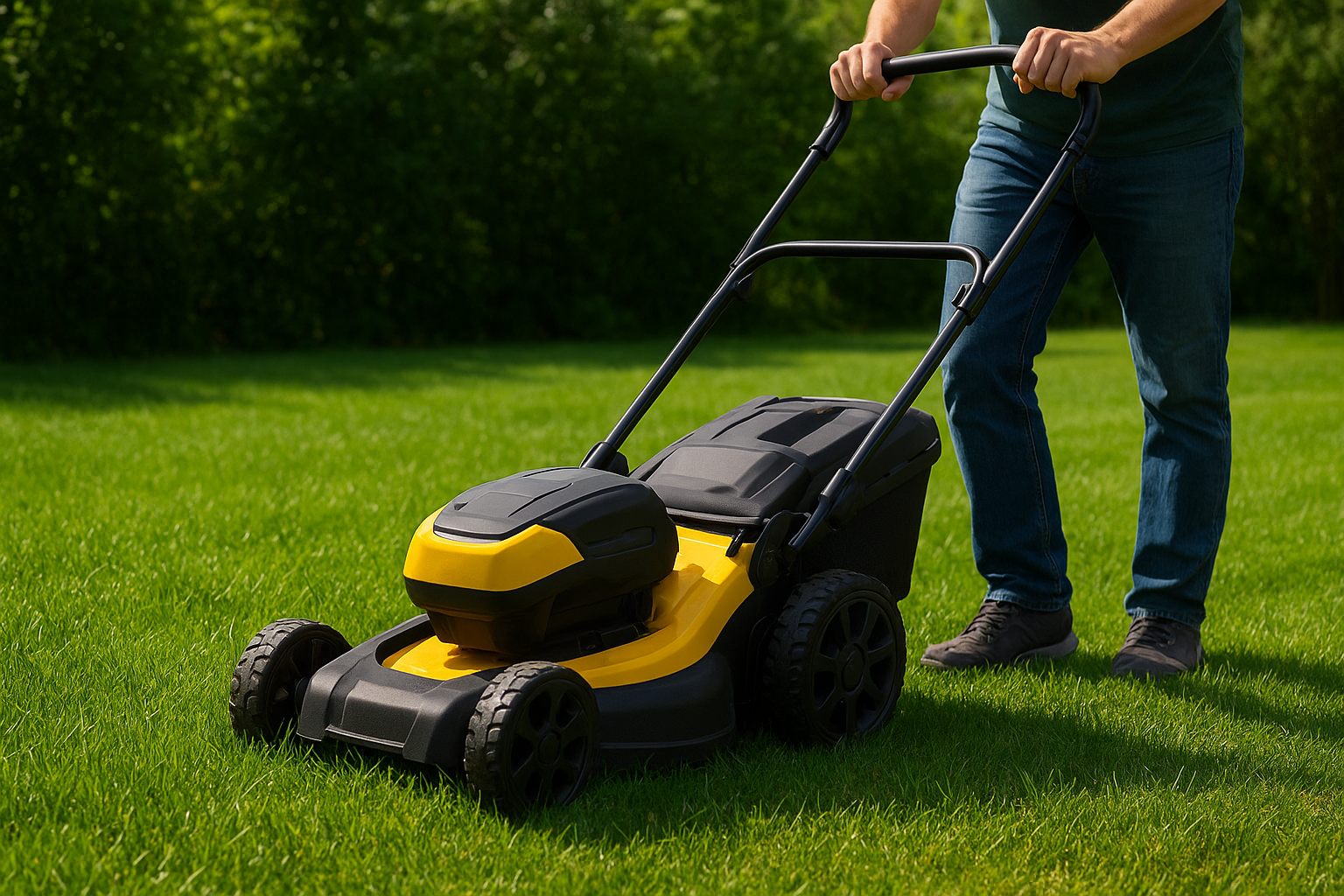
Gas mowers run on combustion engines that maintain consistent torque through thick grass regardless of fuel level. Blade tip speed stays stable even when you push through dense Bermuda or a heavy St. Augustine patch, which produces a cleaner cut with less tearing. Cordless electric mowers can experience power fade as the battery depletes, which shows up as a slower blade and a rougher cut near the end of a long run.
Consistent blade speed matters more than most homeowners realize; a slowing blade tears grass rather than cutting it cleanly, which increases disease pressure and slows turf recovery.
Runtime and refueling realities
Gas mowers refuel in minutes, which makes them practical for larger properties or back-to-back sessions without scheduling around charge cycles. A full battery on most cordless electric models covers roughly 30 to 45 minutes of continuous use under moderate conditions, though heat and thick turf reduce that figure noticeably. Corded electric mowers eliminate runtime concerns entirely, but the cable limits your working range and creates its own constraints on larger lots.
Both types require consistent maintenance, but in different ways. Gas engines need regular oil changes, air filter replacements, and spark plug inspections on a defined schedule. Electric motors carry fewer moving parts, but battery packs degrade over time and replacement costs add up across several seasons. Neither option is maintenance-free; the demands just fall in different places.
Dallas yard factors that change the decision
The electric vs gas lawn mower decision shifts significantly depending on what your specific Dallas property looks like. Yard size, sun exposure, grass type, and even your irrigation schedule all influence which platform performs better on your lot across the full mowing season.
Lot size and mowing frequency
Larger properties in established neighborhoods like Lakewood or Preston Hollow often push past the practical limits of a single battery charge. If your yard covers more than a half acre, a cordless electric mower may require mid-session recharging, which disrupts workflow and extends your time outside during summer heat. Gas mowers handle larger properties without interruption, and their consistent torque holds up well across long mowing sessions where battery fade would otherwise affect cut quality.
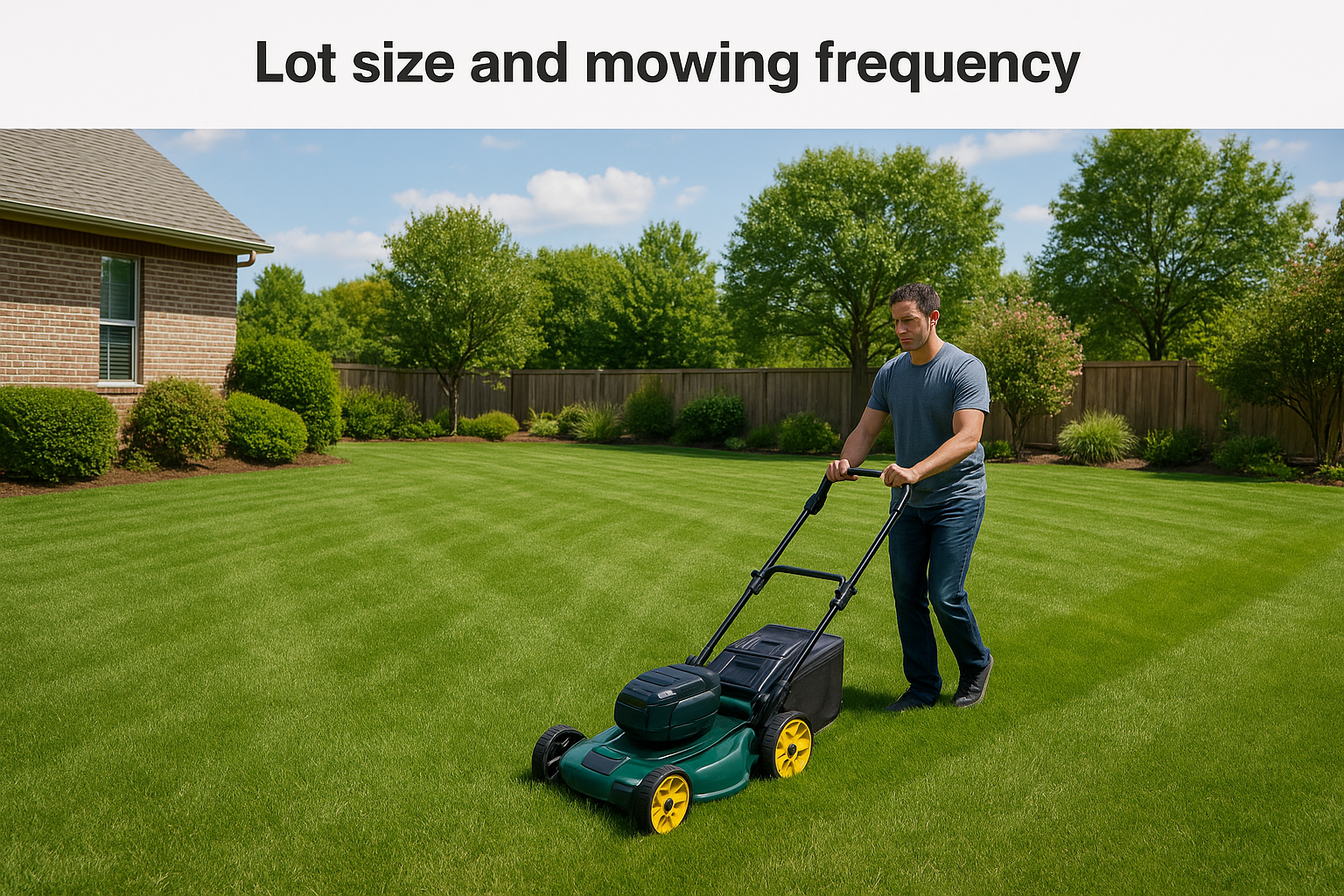
For irrigated Bermuda yards mowed every five to six days in July, equipment reliability during the heat of the day matters more than convenience features.
Smaller, well-defined yards under a quarter acre, particularly those with smooth terrain and moderate turf density, are well suited for cordless electric models. Battery runtime covers the full mowing area without a mid-cycle stop, and the lower weight of most electric mowers makes maneuvering around beds and obstacles easier.
Shade, slope, and turf type
Shaded yards with dense St. Augustine turf require a clean, forceful blade pass to avoid tearing the thick leaf blades. Gas mowers generally deliver that consistency more reliably than battery-powered models at the end of a charge cycle. For sloped lots, heavier gas mowers can be harder to control on mild grades compared to lighter cordless models, which makes yard topography worth evaluating before you commit to either option. Match your choice to the terrain you actually have, not the average yard in a product description.
Because mowing performance is heavily influenced by the type of grass you have, choosing the right turf from the start plays a major role in long-term results. If you’re unsure which variety is best for your property, our guide to the best grass for Dallas lawns breaks down the top options for North Texas conditions.
How to choose the right mower for your lawn
The right choice in the electric vs gas lawn mower decision comes down to matching the equipment to what your specific property actually demands, not to what sounds most convenient on paper. Start by being honest about your yard’s size, turf type, and how often you mow during the long Dallas growing season. Those three factors will narrow your options faster than any spec comparison.
Match the mower to your mowing routine
If you maintain an irrigated Bermuda yard over a quarter acre, a gas mower will handle your mowing frequency and growth rate without the constraint of battery runtime. Bermuda in a well-irrigated Dallas yard can push you to mow every five to six days through peak summer, and that kind of demand favors consistent engine output across a full session.
Matching your mower to your mowing routine, rather than your mowing routine to your mower, leads to better turf results over time.
A cordless electric mower suits your situation well if your yard is compact, your terrain is flat, and your turf density stays moderate through the season. At that scale, a single charge covers the full area without fade, and the lighter weight makes maneuvering around beds and obstacles easier.
Prioritize cut quality over convenience
Blade consistency determines turf health more than any other mowing variable, and your choice should reflect that priority directly. If your yard carries shaded areas with thick St. Augustine or heavy full-sun Bermuda, choose the platform that maintains stable blade speed through a complete mowing session. For most Dallas homeowners with mid-sized to larger properties, that points toward gas. For smaller, lower-density yards where runtime covers the full area cleanly, cordless electric is a practical and capable option.
Cost, maintenance, and longevity in North Texas
The electric vs gas lawn mower cost comparison doesn’t end at the purchase price. In North Texas, where the mowing season runs from late March through October, equipment runs hard across an extended period, and total ownership cost reflects that reality more clearly than sticker price alone.
Upfront cost and what you get for it
Quality cordless electric mowers carry a higher entry price than comparable gas models, largely because battery pack costs are built into the initial purchase. A reliable cordless mower with sufficient runtime for a mid-sized Dallas yard typically runs $400 to $600 or more, depending on battery capacity. Gas mowers at a similar performance level start lower, though self-propelled models with enough torque for dense Bermuda close that gap quickly.
Battery replacement, which typically occurs every three to five years depending on usage and storage conditions, adds $150 to $300 to your total cost over time. Planning for that recurring expense gives you a more accurate picture of what each platform actually costs across a full ownership cycle.
Maintenance demands across a long season
Gas mowers require consistent attention throughout the season. Oil changes, spark plug replacements, and air filter swaps follow a defined schedule, and neglecting any of them shortens engine life noticeably in high-heat conditions. Carburetor problems are also more common when fuel sits in the system between seasons, which is a real concern for Dallas homeowners who store equipment through winter.
Electric motors carry fewer mechanical components, but battery care matters significantly in Dallas heat; storing packs in a hot garage or running them to zero repeatedly accelerates degradation faster than most manufacturers indicate.
Both platforms reward consistent maintenance. Over a long North Texas mowing season, the mower that receives proper care will reliably outperform one that doesn’t, regardless of which power source it runs on.
A simple way to decide
The electric vs gas lawn mower decision simplifies once you look honestly at your property. If your yard covers more than a quarter acre, carries dense warm-season turf, or requires mowing every five to six days through a Dallas summer, a gas mower will handle that demand more reliably. If your yard is compact, flat, and manageable on a single charge, a cordless electric model works well.
Beyond the equipment itself, consistent mowing frequency and proper cutting technique determine turf health more than power source alone. Your lawn responds to how often and how cleanly you cut it, regardless of what runs the blade. The Dallas Lawn Care Calendar covers month-by-month timing across the full North Texas growing season and pairs well with any equipment decision you make.
For homeowners who prefer professional lawn maintenance, our lawn care services can help keep your turf on a reliable, well-timed schedule throughout the year without the equipment decisions falling on you.