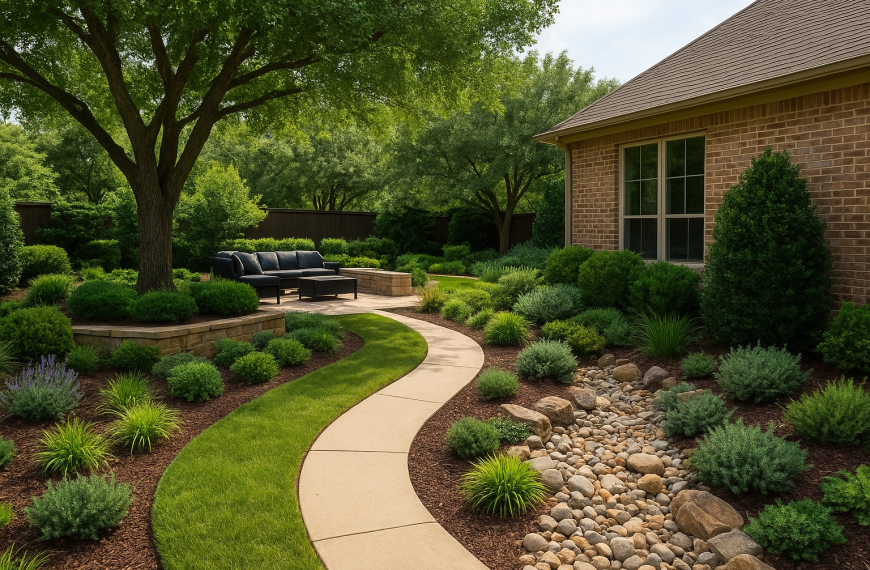
Pre-emergent herbicide is one of the most effective tools for preventing weeds in Dallas lawns—but only if it’s applied at the right time. The real trigger isn’t the calendar. It’s soil temperature for pre-emergent in Dallas, and missing the ideal window by even a week or two can mean the difference between a clean lawn and a season-long battle with crabgrass, rescuegrass, and other invasive weeds. If you’re planning your seasonal lawn care strategy, our Dallas Lawn Care Calendar outlines when to fertilize, mow, water, and treat your lawn throughout the year in North Texas.
In North Texas, soil temperatures change faster than many homeowners realize, especially during seasonal transitions. A warm stretch in February can push soil temperatures upward quickly, while a late cold front can delay germination patterns. Even within the same property, conditions can vary. In neighborhoods like Preston Hollow, mature tree canopy, shaded beds, and exposed lawn areas can create microclimates that shift the correct application window from one section of the yard to another.
At Greenform Landscapes, we monitor soil temperatures across the Dallas area as part of our seasonal lawn care planning. In this guide, we’ll explain the temperature thresholds that determine when spring and fall pre-emergent treatments should be applied, how to monitor soil temperatures accurately, and how Dallas homeowners can time applications based on real North Texas conditions—not generic calendar advice.
Why soil temperature matters more than the calendar
Pre-emergent herbicide works by creating a chemical barrier in the soil that disrupts germination as seeds sprout, not after weeds are visible. That barrier only does its job if it’s in place before germination begins. Calendar dates give you a rough starting point, but they tell you nothing about what’s actually happening in the soil beneath your lawn. Acting on a date rather than a temperature reading is the single most common reason pre-emergent applications fall short.
How weed seeds respond to temperature thresholds
Weed seeds activate based on specific soil temperature ranges, not the month on the calendar. Crabgrass, the most persistent warm-season weed in Dallas lawns, typically begins germinating when 4-inch soil temperatures hold at 50 to 55°F for several consecutive days. Rescuegrass and annual bluegrass, the cool-season problem weeds that push through in fall, begin germinating as soil cools below 70°F. Once germination starts, pre-emergent has no effect on seeds that have already sprouted.
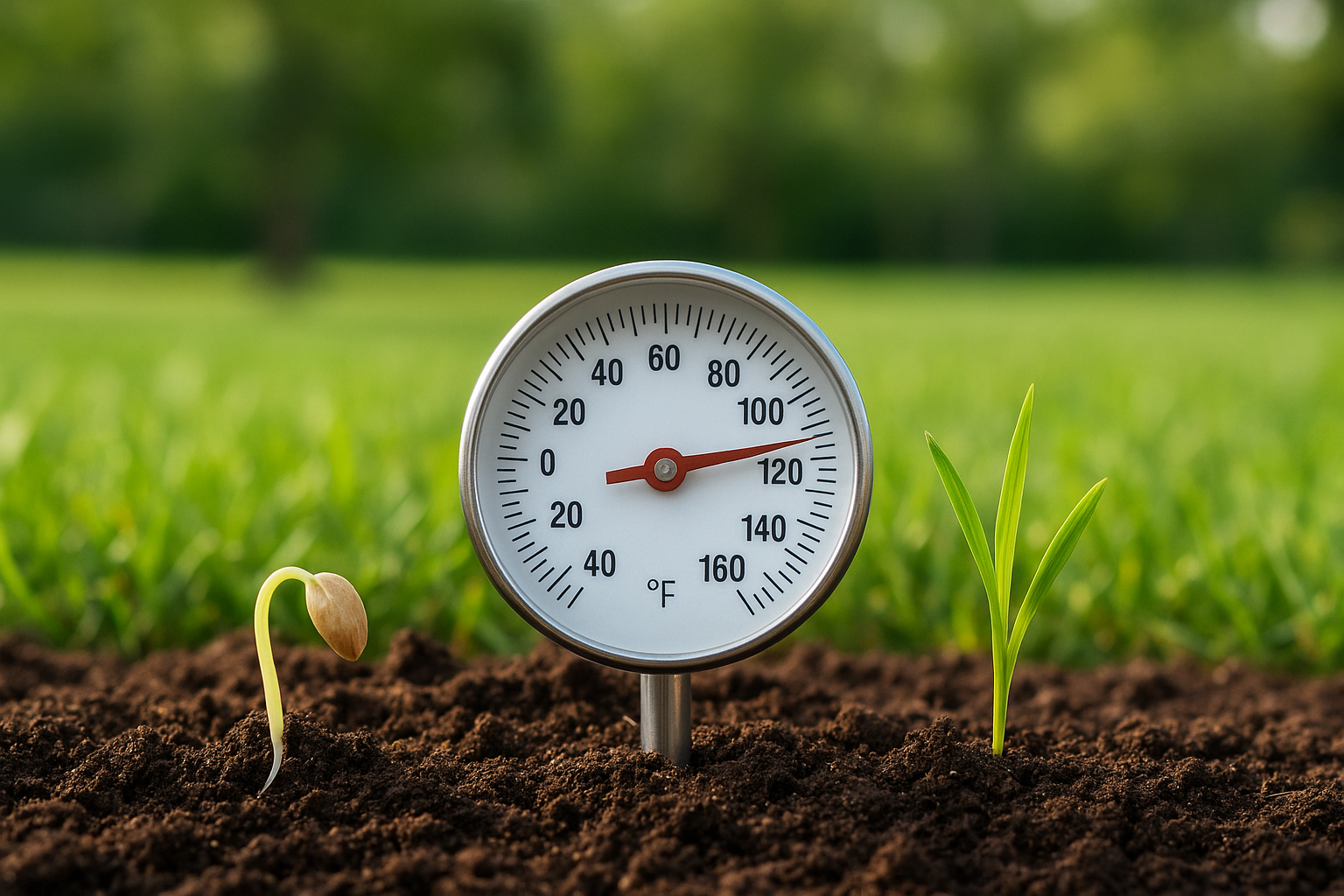
Soil temperature is the only reliable trigger for pre-emergent timing. Calendar-based schedules miss the actual germination window more often than not.
This is why tracking the soil temperature for pre-emergent in Dallas matters more than watching a date. In a warm February, crabgrass germination can begin two to three weeks earlier than historical patterns suggest. In a cooler spring, that same window may not arrive until mid-March. Applying based on a fixed date means you’re either too early, where the product breaks down before germination occurs, or too late, where weeds have already pushed past the barrier.
Why North Texas conditions make timing harder to predict
Dallas sits in a climate zone where spring soil temperatures can shift 15 to 20 degrees within a single week. A stretch of warm days in late February can push 4-inch readings above 55°F quickly, only for a cold front to drop them back below 50°F days later. That kind of volatility is typical for North Texas and is exactly why a single calendar-based application window frequently misses the mark.
Mature properties with dense tree canopy, shaded beds, or heavy irrigation add another layer of complexity. Shaded areas hold cooler soil temperatures longer than open turf, which means your property can have multiple active microclimates that affect germination timing differently across the same yard. Tracking soil temperatures at multiple points on your property, rather than relying on regional averages, is the most reliable way to act when it actually counts.
Step 1. Find and track Dallas soil temps correctly
Accurate timing starts with reliable data, not guesswork. For the soil temperature for pre-emergent in Dallas to guide your application correctly, you need readings taken at 4 inches deep, measured consistently over several consecutive days. A single reading on one afternoon won’t tell you whether the threshold has actually held, and acting on a single data point is one of the fastest ways to miss your window entirely.
Where to check soil temperature data
The Texas A&M AgriLife Extension network provides soil temperature monitoring stations across North Texas, including readings specific to the Dallas area. These stations report 4-inch depth readings updated regularly and give you a consistent baseline without requiring any equipment on your end. Checking readings over five to seven consecutive days gives you a much clearer picture of whether temperatures are holding steady or still fluctuating with passing cold fronts.
| Data Source | What It Provides |
|---|---|
| Texas A&M AgriLife Extension | 4-inch soil temps for North Texas stations |
| Local weather station | Air temp only, not a substitute for soil readings |
| On-site soil thermometer | Property-specific depth readings |
Regional station averages are a useful starting point, but your property’s actual 4-inch reading is what determines when to apply.
How to Check Soil Temperature
A basic soil thermometer gives you property-specific data that no regional station can match. Push the probe to exactly 4 inches deep in open turf, away from pavement or any structure that holds and radiates heat. Take readings at the same time each day, ideally mid-morning, and log them for at least five consecutive days before acting. Shaded areas typically run two to four degrees cooler than open lawn, so check both zones if your yard carries significant tree cover.
You can measure lawn soil temperature in several ways:
• Use a soil thermometer inserted 2–4 inches into the soil
• Check online soil temperature maps
• Track local lawn care reports
Take readings in the morning, since soil temperatures fluctuate during the day.
Step 2. Apply spring pre-emergent at the 50–55°F window
When your 4-inch soil temperature readings hold at or above 50°F for five consecutive days, you’ve reached the application window for spring pre-emergent. This is the threshold where crabgrass germination in North Texas lawns becomes a real risk. Acting within this window, rather than waiting for temperatures to climb higher, gives the product time to bind in the soil before the first seeds break dormancy.
What the 50–55°F window looks like in Dallas
In most years, 4-inch soil temperatures in the Dallas area reach this range between late February and mid-March, though a warm winter can push that window earlier. The soil temperature for pre-emergent in Dallas rarely holds perfectly still during this period. Expect fluctuation between cold fronts, which is why tracking readings for five to seven consecutive days matters more than acting on a single warm afternoon.
If soil temperatures drop back below 50°F after you’ve applied, the product remains viable. What you’re preventing is waiting so long that warm soil has already triggered the first germination flush.
How to apply effectively during this window
Apply your granular or liquid pre-emergent product at the rate specified on the label for your lawn size, and do it before forecast rain or plan to water it in yourself within 24 to 48 hours. The product needs moisture to move into the soil and form an effective barrier. Avoid applying directly before heavy rainfall, which can cause runoff before the product settles.
| Application Condition | Result |
|---|---|
| Applied before light rain or irrigation | Activates correctly in soil |
| Applied before heavy rain or runoff | Product washes away before binding |
| Applied with no water within 48 hours | Barrier does not form properly |
Step 3. Apply fall pre-emergent as soil cools to 70°F
Fall pre-emergent timing works in reverse compared to spring. Instead of waiting for soil to warm up to a threshold, you’re watching for it to cool down to 70°F at 4 inches deep. This is when rescuegrass and annual bluegrass seeds begin germinating, and both weeds establish quickly in North Texas lawns before most homeowners realize they’ve arrived.
What the 70°F threshold looks like in Dallas
In most Dallas-area years, 4-inch soil temperatures drop to 70°F sometime between late September and mid-October, though a prolonged summer heat pattern can push that window later. Fall timing tends to be tighter than spring because soil temperatures in North Texas can drop through the germination threshold more quickly once consistent cooler air arrives.
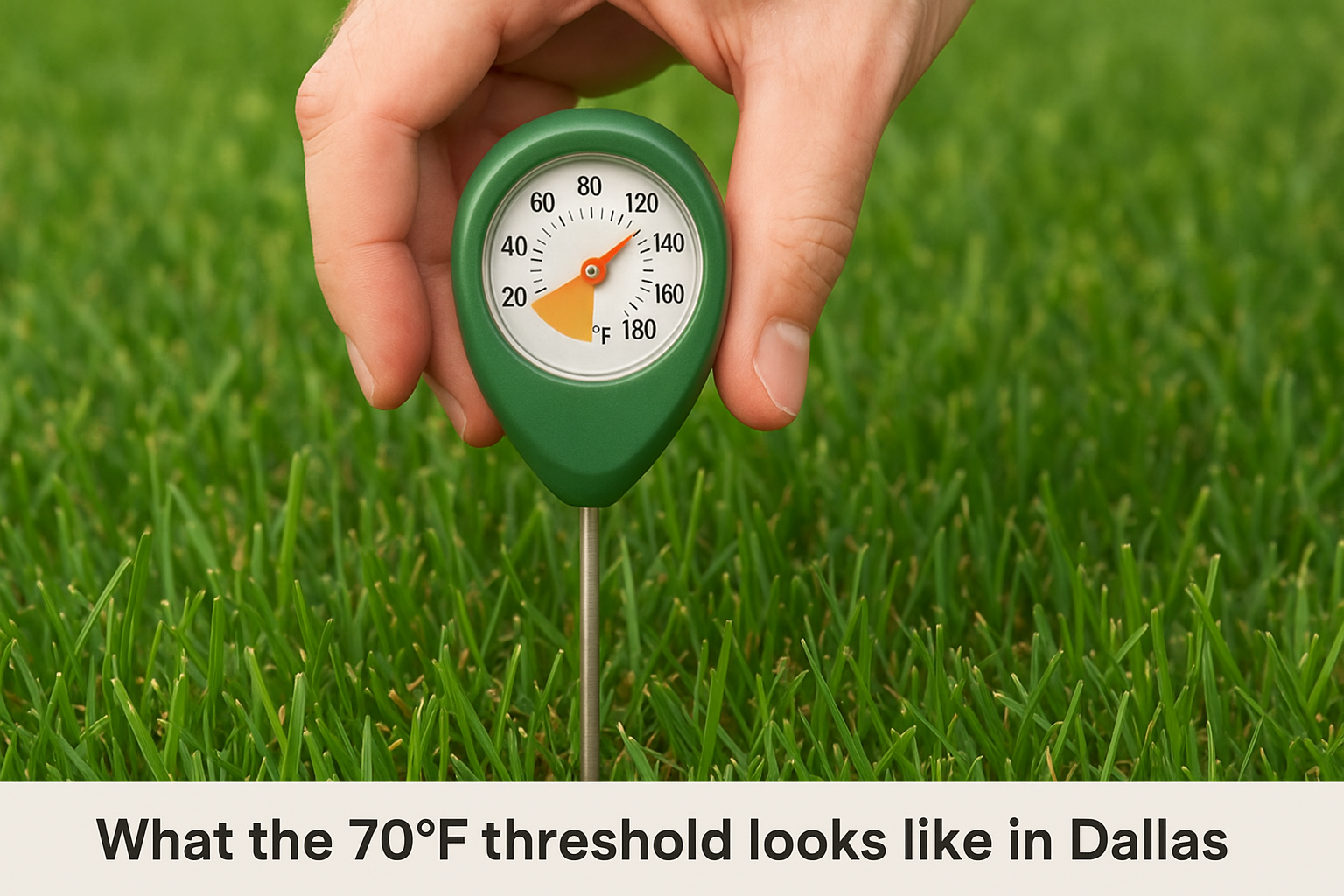
| Typical Dallas Fall Window | 4-Inch Soil Temp |
|---|---|
| Late September | 72–75°F (approaching threshold) |
| Early to mid-October | 68–72°F (apply now) |
| Late October onward | Below 65°F (likely too late) |
How to confirm timing before applying
Tracking the soil temperature for pre-emergent in Dallas through late September gives you the lead time to act before that window closes. Check readings over five consecutive days as temperatures trend downward, and apply when you see consistent readings at or just above 70°F. A single cool day following a late-summer heat break is not enough to act on.
The fall window is often narrower than spring. Once soil temperatures drop well below 70°F, cool-season weed seeds may already have a head start.
Follow these steps to confirm your timing before applying:
- Take 4-inch readings mid-morning each day starting in late September
- Look for five consecutive days trending at or below 72°F
- Apply your product and water it in within 48 hours of application
Step 4. Water-in, mowing, and other easy-to-miss details
Applying pre-emergent at the right soil temperature for pre-emergent in Dallas is only part of the process. Several steps after application determine whether the product actually works as intended. Getting the temperature window right and then skipping the water-in step is one of the most common ways a well-timed application fails to deliver results.
Watering the product into the soil
Pre-emergent herbicide does not activate on the surface. It needs moisture to move it down into the soil where germinating seeds actually contact it. Plan to water in the product within 24 to 48 hours of application, using roughly a quarter to half an inch of irrigation if rain isn’t in the forecast. Light, consistent moisture works better than a heavy soak, which can push the product deeper than the target germination zone.
If you apply and then skip irrigation for several days, the barrier you’re counting on simply doesn’t form in the soil.
| Watering Scenario | Outcome |
|---|---|
| Quarter inch within 24 hours | Product activates correctly |
| No water for 3+ days | Barrier does not form |
| Heavy rain immediately after | Risk of runoff before binding |
Mowing and traffic after application
Avoid mowing for at least two to three days after applying and watering in pre-emergent. Mowing too soon can physically disrupt the barrier layer before it binds to the soil. Similarly, heavy foot traffic or equipment passes over treated areas can break up the uniform coverage you need, especially on sandy or loose soil.
After that initial hold period, resume your regular mowing schedule. Cutting height matters too: keeping turf at the upper end of its recommended range during the first few weeks after application reduces surface disruption and supports the barrier layer as it settles.
Step 5. Handle missed timing, new sod, and seeding plans
Missing the ideal soil temperature for pre-emergent in Dallas doesn’t mean the rest of your season is a loss. Your next steps depend on how far past the window you are and what work you have planned for the lawn, including new sod or overseeding. Each situation calls for a different approach, and applying pre-emergent at the wrong time or over the wrong surface can create more problems than it solves.
If you missed the spring or fall window
If soil temperatures have already pushed well past the target threshold, a pre-emergent application won’t stop the weeds that have already begun germinating. At that point, switching to a post-emergent product targeted at the specific weed species you’re seeing is a more effective path than applying a barrier that has already been bypassed. For spring misses, crabgrass-specific post-emergents applied early in the weed’s growth cycle can still limit spread before it sets seed.
Applying pre-emergent after germination has started wastes product and delays the targeted treatment your lawn actually needs.
For minor timing misses where soil temps crossed the threshold only recently, a split application can sometimes recover partial coverage. Apply a reduced rate now and follow with a second application four to six weeks later to extend the window.
Pre-emergent with new sod or seeding plans
New sod installation and pre-emergent do not conflict the way seeding does. Pre-emergent applied before or shortly after sod installation won’t interfere with established turf roots. Seeding is a different situation entirely.
- Do not apply pre-emergent if you plan to overseed within the next 8 to 12 weeks
- Wait until the new seedlings have been mowed at least twice before applying any pre-emergent product
- Plan your seeding and pre-emergent windows at least one full season apart to avoid competition between germination and the barrier layer
Frequently Asked Questions
- What soil temperature should you apply pre-emergent?
Apply pre-emergent when soil temperatures approach 50–55°F and are trending upward. - Is it too late if soil temperatures reach 60°F?
Possibly. Many summer weeds begin germinating once soil temperatures reach the mid-50s. - Can you apply pre-emergent too early?
Yes. If applied too early, the herbicide barrier may break down before weed germination begins.
A simple wrap-up for Dallas homeowners
Pre-emergent timing in Dallas comes down to one repeatable process: track 4-inch soil temperatures consistently, act when the threshold holds for five consecutive days, and water the product in before that window closes. The soil temperature for pre-emergent in Dallas follows recognizable patterns each year, but North Texas volatility means calendar dates will always be less reliable than what your soil thermometer or the AgriLife monitoring stations actually show.
Whether you’re targeting crabgrass in spring at 50–55°F or rescuegrass in fall as soil cools toward 70°F, the approach is the same: monitor first, apply at the right moment, and follow through with proper watering and mowing discipline. Missing one step reduces the value of getting the others right.
For homeowners who want a clearer seasonal roadmap, our Dallas Lawn Care Calendar outlines the typical timing for fertilizing, mowing, watering, and weed prevention across North Texas lawns. And for properties where timing and microclimates vary, a professional consultation can help avoid costly mistakes. Request a consultation to plan the right seasonal timing for your property.