Timing is everything with lawn fertilization. Apply too early and you waste product. Apply too late and your grass misses its growth window. Understanding when to fertilize your lawn in North Texas requires knowing your grass type, watching the soil temperature, and following a seasonal rhythm that matches our local climate.
Here in Dallas, we deal with unique conditions, hot summers, mild winters, and soil that ranges from heavy clay to sandy loam depending on your neighborhood. At Greenform Landscapes, we’ve maintained lawns across Highland Park, Preston Hollow, and Lakewood for years, and we’ve learned that proper fertilizer timing can mean the difference between a lawn that struggles and one that thrives.
This guide breaks down exactly when to fertilize your lawn month by month, covering both warm-season and cool-season grasses common to the Dallas area. You’ll know precisely when to apply, how often to repeat, and what signs to watch for throughout the year.
Step 1. Identify your grass type and zone
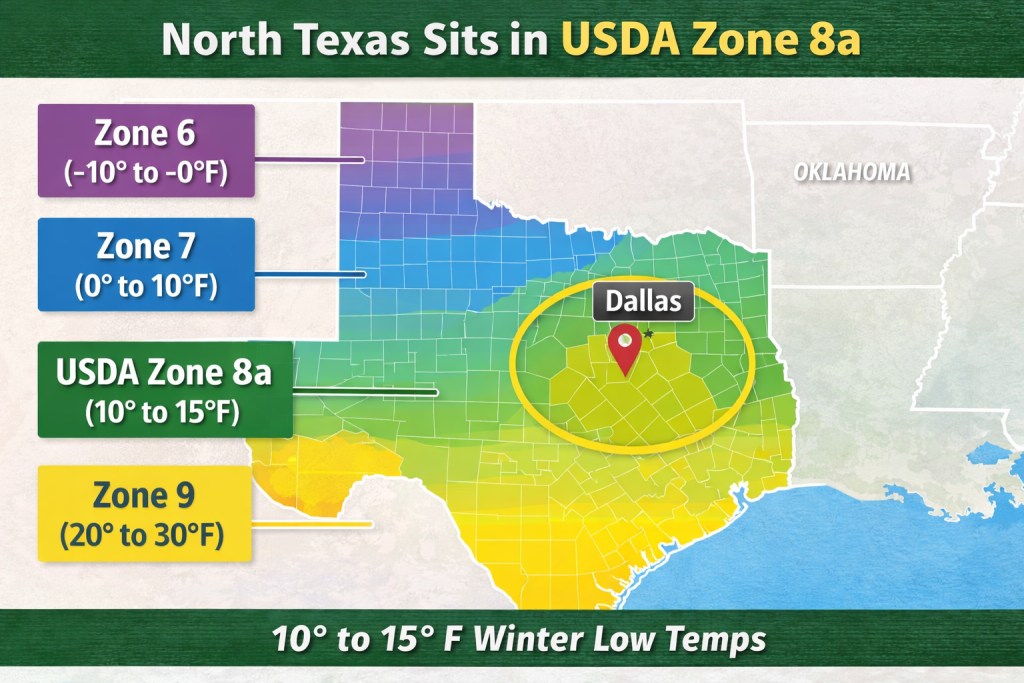
You can’t answer when to fertilize lawn areas without first knowing what type of grass you’re feeding. North Texas sits in USDA Zone 8a, which means we work with predominantly warm-season grasses that thrive in heat but go dormant when temperatures drop below 55°F. Your fertilization schedule depends entirely on whether you’re maintaining Bermuda, St. Augustine, Zoysia, or one of the less common cool-season varieties.
Walk your lawn and examine the blade shape, texture, and growth pattern. Bermuda grass features fine blades and spreads aggressively through stolons and rhizomes. St. Augustine shows wider, boat-shaped blades with a coarser texture. Zoysia sits somewhere in between with medium-width blades and dense growth. Each responds differently to fertilizer timing, with Bermuda needing earlier spring feeding than St. Augustine, which prefers warmer soil before active growth begins.
Your grass type determines not just when to fertilize, but how often and what ratio of nutrients to apply throughout the season.
Common warm-season grasses in North Texas
Warm-season grasses dominate Dallas lawns because they handle our intense summer heat and recover quickly from drought stress. These grasses wake up in spring, grow vigorously through summer, and slow down as fall temperatures drop.
Here’s what you’ll typically find in the area:
- Bermuda grass: Most common in full-sun lawns, grows fastest, needs most frequent fertilization (4-6 times annually)
- St. Augustine: Shade-tolerant, popular in established neighborhoods, requires 3-4 applications per year
- Zoysia (including Palisades Zoysia): Dense, durable turf with slower growth and excellent heat tolerance; Palisades performs especially well in North Texas, offering better cold tolerance and a softer texture. Most Zoysia varieties need 2–4 fertilizations per year, depending on growth rate and soil conditions
- Buffalograss: Native option for low-water landscapes, minimal fertilization needs (1-2 times annually)

Cool-season grasses and overseeding
Some homeowners overseed with ryegrass in fall for winter color, particularly in high-visibility commercial properties. Cool-season grasses require opposite timing from warm-season varieties. You fertilize ryegrass in October and again in February, while your base warm-season grass stays dormant. This dual-timing approach adds complexity but maintains year-round green coverage in North Texas landscapes.
Step 2. Use growth cues and soil temperature timing
Calendar dates provide rough guidelines, but soil temperature tells you exactly when to fertilize lawn areas for optimal nutrient uptake. Your grass roots only absorb nitrogen when the soil reaches specific thresholds, and applying fertilizer before that point wastes product while potentially feeding weeds instead. You need a soil thermometer and consistent morning readings to determine your first application date each spring.
Check soil temperature at root depth
Push a soil thermometer three inches deep into your lawn at 8 AM for three consecutive mornings. Calculate the average of those readings to determine if your grass has woken up. Bermuda grass starts active growth when soil reaches 65°F consistently, while St. Augustine waits until 70°F. Zoysia falls in between at 60-65°F. These temperatures typically arrive in Dallas between late March and mid-April, but the exact date shifts yearly based on weather patterns.
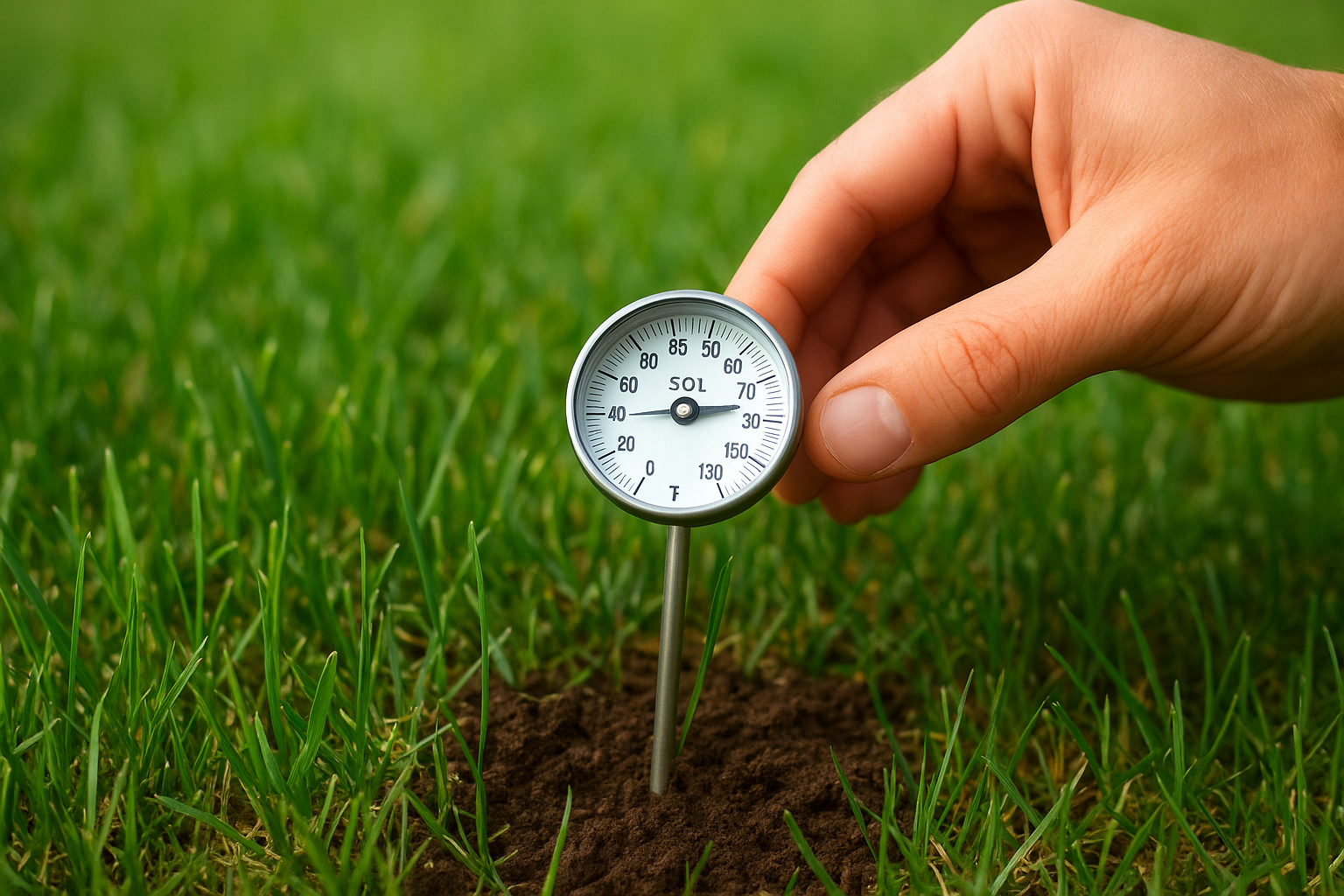
Soil temperature matters more than air temperature because root activity drives nutrient absorption, not blade growth.
Watch for visible growth signals
Pair temperature readings with physical observation of your lawn. You’ll notice the grass transitioning from tan dormancy to light green as chlorophyll production restarts. Run your hand across the turf, active growth feels slightly sticky and shows visible blade extension when you check the same spot three days apart. Wait until you see consistent greening across 50% of the lawn before applying your first fertilizer round. Feeding too early forces immature roots to process nutrients they can’t fully utilize.
Step 3. Follow a North Texas month-by-month schedule
Your fertilization schedule follows the growth cycle of warm-season grass in Dallas rather than fixed calendar dates. The timing below reflects average soil temperature patterns across Highland Park, University Park, and surrounding areas, but you should adjust by two weeks earlier or later depending on actual spring warmth and fall cooling each year. This schedule assumes you maintain Bermuda or St. Augustine grass, the two most common types in North Texas residential lawns.
Monthly application calendar for warm-season grass
Mark these application windows on your calendar and prepare to shift them based on the soil temperature readings from Step 2. You want to feed your lawn four times annually for optimal health without overstimulating growth that requires excessive mowing.
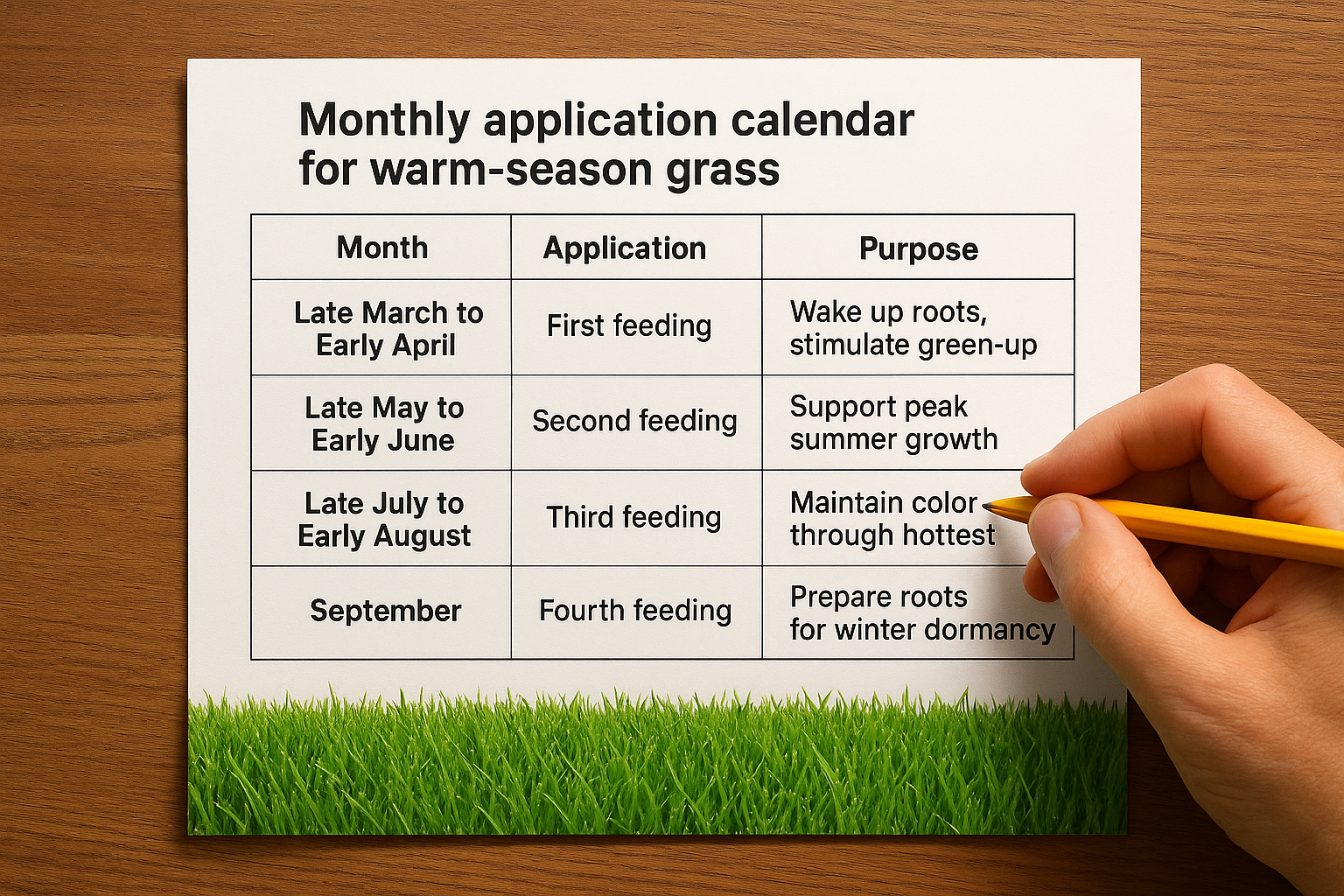
| Month | Application | Purpose | Notes |
|---|---|---|---|
| Late March to Early April | First feeding | Wake up roots, stimulate green-up | Wait for 65-70°F soil temp |
| Late May to Early June | Second feeding | Support peak summer growth | Apply before heat stress begins |
| Late July to Early August | Third feeding | Maintain color through hottest period | Water immediately after |
| September | Fourth feeding | Prepare roots for winter dormancy | Last application of the year |
Your final fall feeding strengthens root systems during the active underground growth phase that happens as air temperatures cool but soil stays warm.
You’ll skip fertilization completely from October through February when your grass enters dormancy. Applying nitrogen during this period feeds winter weeds like henbit and chickweed instead of your lawn.
Step 4. Apply fertilizer the right way to avoid burn
You’ve figured out when to fertilize lawn areas based on soil temperature and grass type, but poor application technique ruins even perfectly timed fertilizer schedules. Fertilizer burn happens when concentrated nitrogen sits on grass blades or creates hot spots in the soil, causing brown patches that take weeks to recover. You prevent this damage by calibrating your spreader, watering strategically, and applying product in the right weather conditions.
Measure and set your spreader correctly
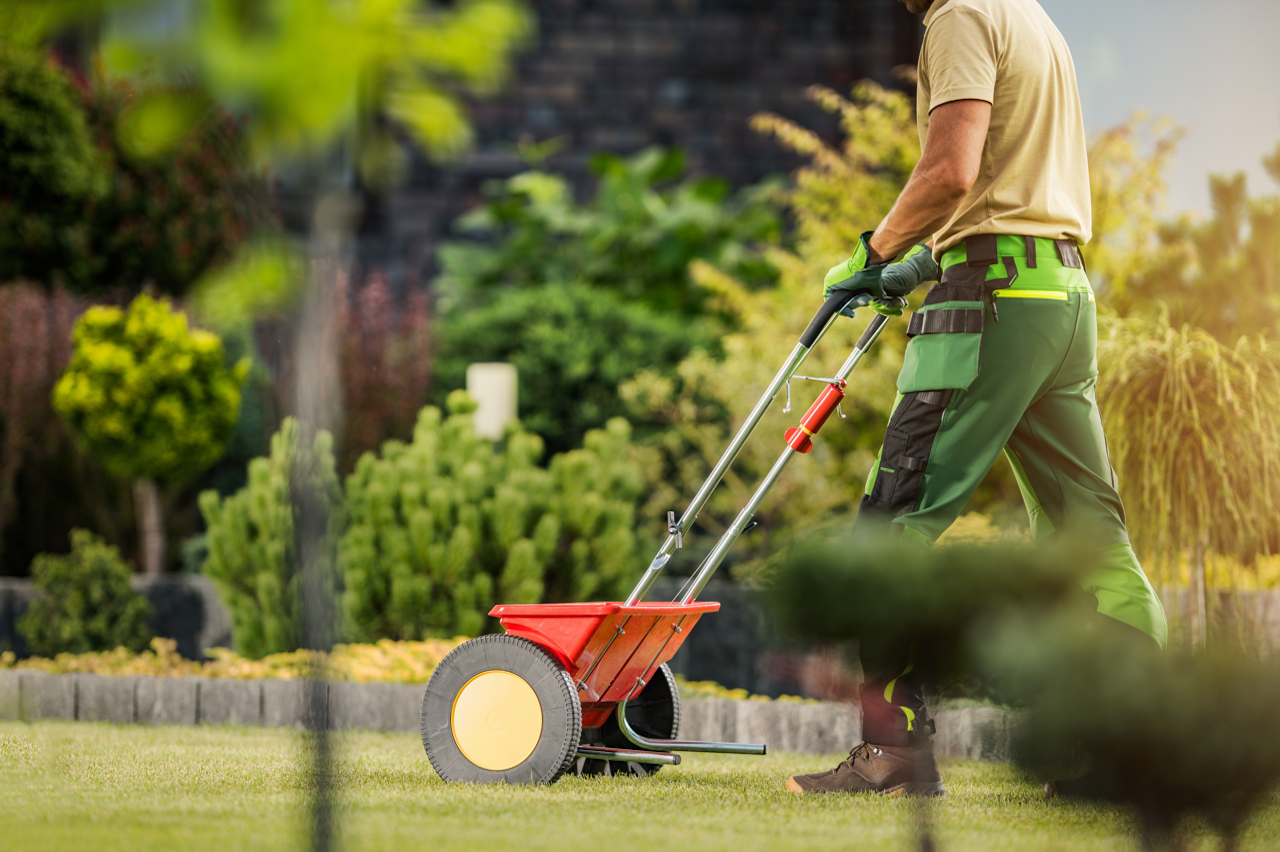
Check the fertilizer bag for the recommended spreader setting based on your specific model. Most manufacturers list settings for common brands like Scotts or Earthway. Set your rotary spreader to half the recommended rate and make two perpendicular passes across your lawn instead of one heavy application. This crosshatch pattern prevents the striping effect you see when fertilizer distribution isn’t even.
Splitting your application into two half-rate passes at 90-degree angles delivers more uniform coverage than a single full-rate pass.
Apply at a steady walking pace of about three feet per second. Speeding up leaves gaps while slowing down creates overlapping strips that receive double fertilizer. Keep your spreader closed when you stop or turn to avoid dumping product in concentrated piles.

Water before and after application
Mow and water your lawn 24 hours before fertilizing so grass blades stand upright and soil moisture levels support nutrient absorption. Apply fertilizer to dry grass, wet blades trap granules that burn leaf tissue as they dissolve. Water again within 12 to 24 hours after spreading to move nitrogen into the root zone where grass actually uses it.
Step 5. Adjust timing for rain, weeds, and new sod
Your fertilization schedule requires flexibility when weather, weeds, or new installation work interrupts your planned timeline. Rain within 24 hours of application can wash granular fertilizer away before it dissolves into the soil, while heavy weed pressure demands pre-emergent products that shift when to fertilize lawn areas by several weeks. You need backup dates and condition-based decision rules to maintain consistent lawn health despite North Texas weather variability.
Rain delays and weather windows
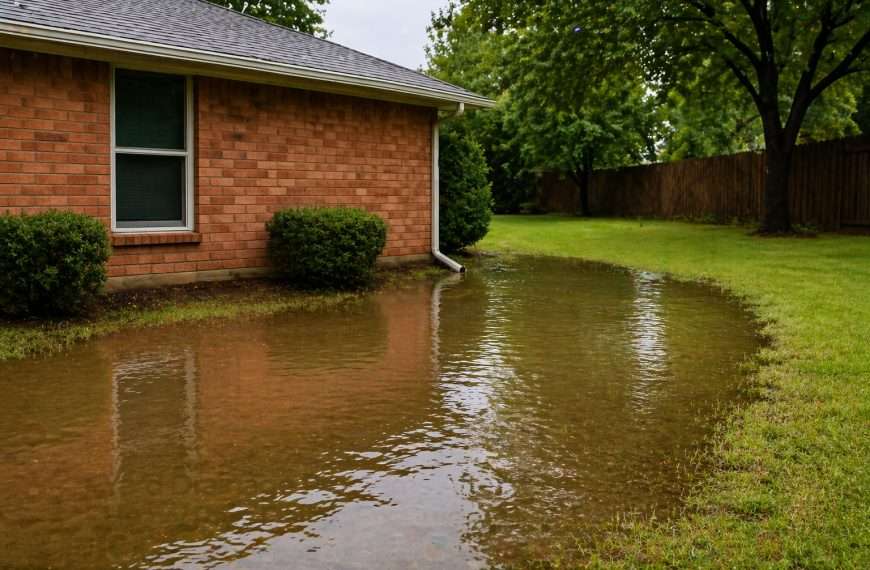
Check your local forecast before opening the fertilizer bag. Postpone application if rain exceeds half an inch within the next 48 hours, which could move product into storm drains before grass roots absorb it. Light showers under a quarter inch actually help by watering in the fertilizer you just spread. Schedule your backup date three to five days later when conditions clear, keeping the application within the same month to maintain your seasonal rhythm.
Heavy rain right after fertilizing wastes product and potentially contaminates nearby waterways with excess nitrogen runoff.

Pre-emergent timing for weeds
Apply pre-emergent herbicide in late February when soil hits 55°F to block summer weeds like crabgrass. This application happens eight weeks before your first fertilizer round, creating a clean slate for spring feeding. You’ll need a second pre-emergent dose in early September, which you can combine with your fourth fertilization if you use a product containing both nutrients and weed control.
New sod fertilization exceptions
Wait four to six weeks after installation before fertilizing new sod. Fresh grass needs time to establish root contact with underlying soil before it can process supplemental nutrients. Water daily during establishment, then apply a starter fertilizer at half strength once you see active growth and roots penetrating two inches deep when you lift a corner.

Next steps for a greener lawn
You now have a complete framework for when to fertilize lawn areas based on soil temperature, grass type, and North Texas seasonal patterns. Start by marking your four application dates in your calendar for late March, late May, late July, and September, then adjust those dates forward or backward based on actual spring warmth each year. Buy a soil thermometer this week so you can measure root-zone temperature accurately before your first spring feeding.
Track each application in a simple notebook or phone app, recording the fertilizer type, amount used, and any weather conditions that affected timing. This record helps you spot patterns over multiple growing seasons and refine your schedule based on how your specific lawn responds. You’ll notice improved color, thicker turf, and fewer bare patches within six to eight weeks of consistent proper timing.
Professional lawn care removes the guesswork from fertilization timing and application. Our team at Greenform Landscapes handles seasonal feeding schedules across the Dallas Metroplex. Schedule a lawn care consultation to discuss your specific grass type and property needs.