Spring in North Texas is a season of anticipation—and confusion. Warm afternoons hint that growing season is around the corner, while sudden cold snaps remind us winter isn’t quite finished. When it comes to pruning perennials, timing and restraint matter just as much as technique.
Prune too early and you risk cold damage. Prune too late and you may stunt growth or miss the opportunity to shape plants correctly. The good news is that many North Texas perennials are forgiving if you understand when and how to approach them.
This guide walks through spring pruning best practices for North Texas perennials, what to cut back, what to leave alone, and how to avoid the most common mistakes we see every year.
Why Spring Pruning Is Different in North Texas

North Texas doesn’t follow a neat seasonal calendar. Our spring weather is unpredictable, with temperature swings that can confuse plants—and homeowners.
Unlike colder regions, many perennials here don’t die back completely in winter. Instead, they show partial evergreen growth or winter burn rather than true dormancy. This makes it tempting to prune aggressively early in the season, but patience is critical.
Rule of thumb: If nighttime temperatures are still regularly dipping below 40°F, major pruning should wait.
The Biggest Spring Pruning Mistake

The most common mistake we see is hard pruning too early.
Homeowners often cut perennials back severely in late winter to “clean things up,” only to have new growth damaged by late cold snaps, delayed spring performance, or reduced flowering later in the season.
In North Texas, light shaping is usually safe early. Heavy cuts should wait until consistent warm weather arrives.
Perennials That Benefit from Spring Pruning

Here are some of the most common North Texas perennials and how to handle them as spring approaches.
Salvia (Autumn Sage, Mealy Blue Sage, Mexican Bush Sage)

Salvia is one of the most forgiving and rewarding perennials in our region.
- Remove dead or woody stems
- Cut back by about one-third once new growth appears
- Avoid cutting to the ground too early
If you see green at the base, let it guide you.
Lantana (Perennial Varieties)

Lantana often looks terrible coming out of winter, but it’s tougher than it looks.
- Wait until danger of frost has passed
- Cut back to 6–12 inches once consistent warmth arrives
- Remove brittle stems early, save major cuts for later
Blackfoot Daisy
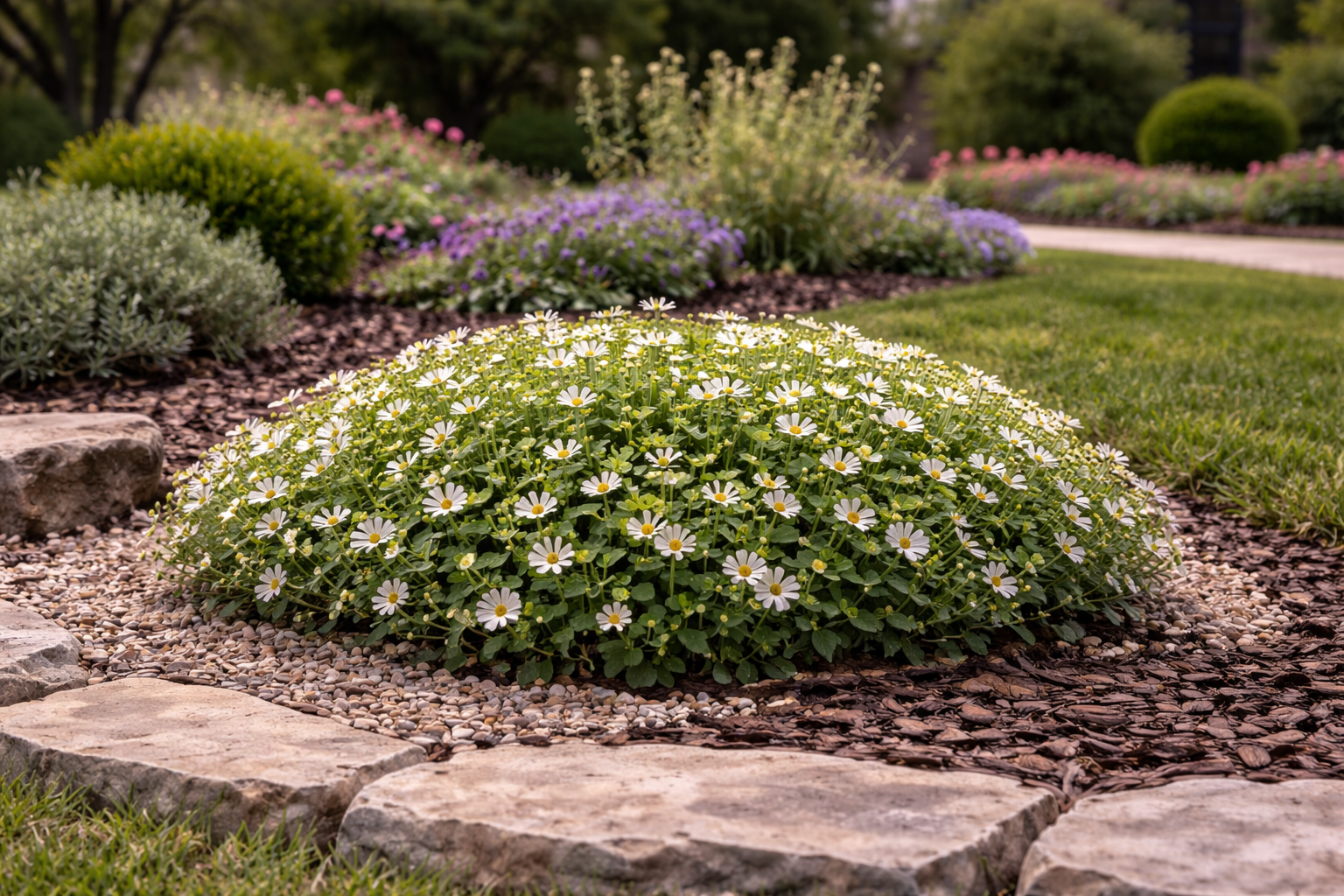
This Texas native thrives on neglect more than attention.
- Lightly shear to shape
- Remove dead tips only
- Avoid aggressive pruning
Mexican Feather Grass
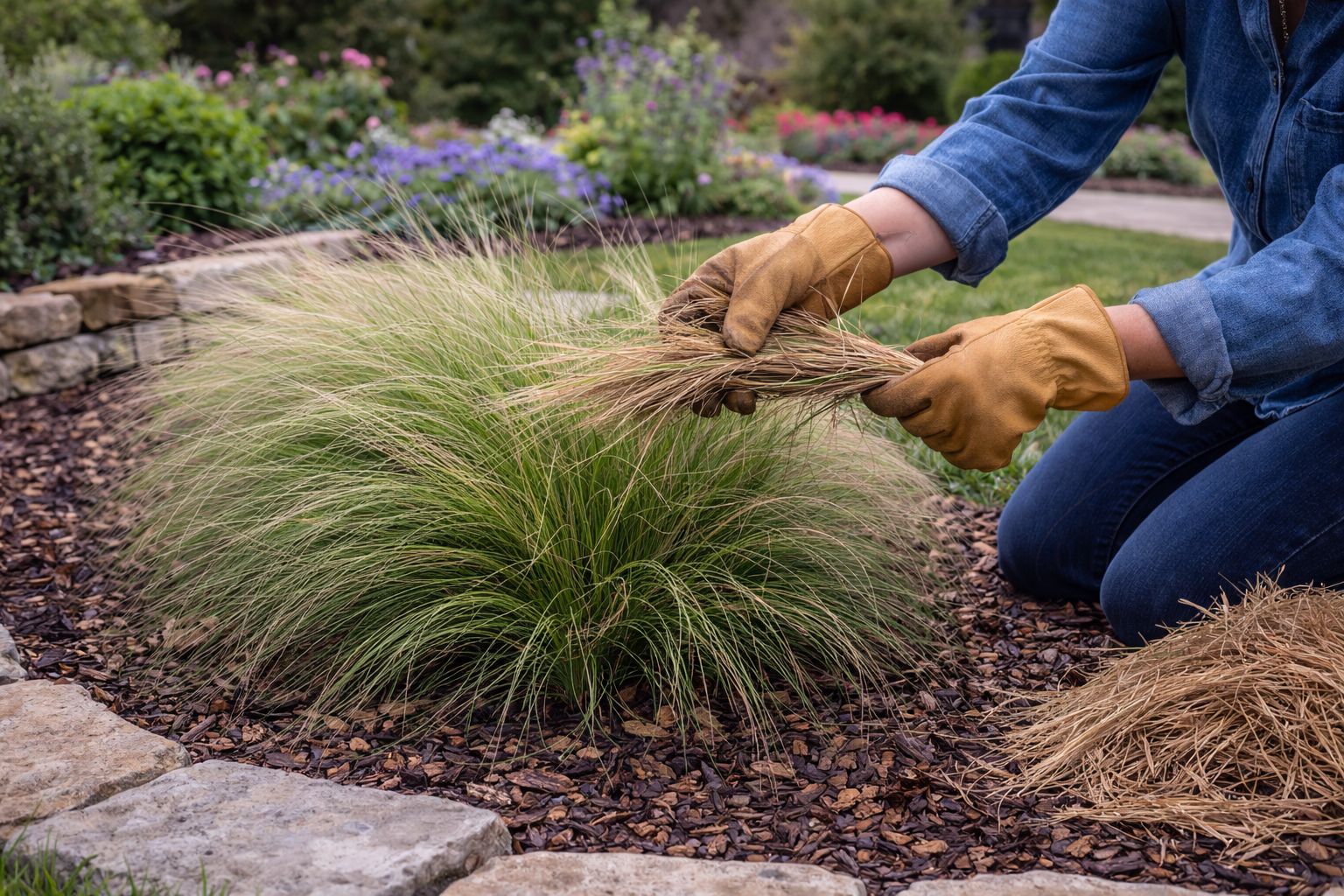
This ornamental grass does not like being hacked down.
- Hand-comb with gloves to remove dead blades
- Avoid cutting to the ground
- Lightly trim the top third if needed
Coneflower (Echinacea)
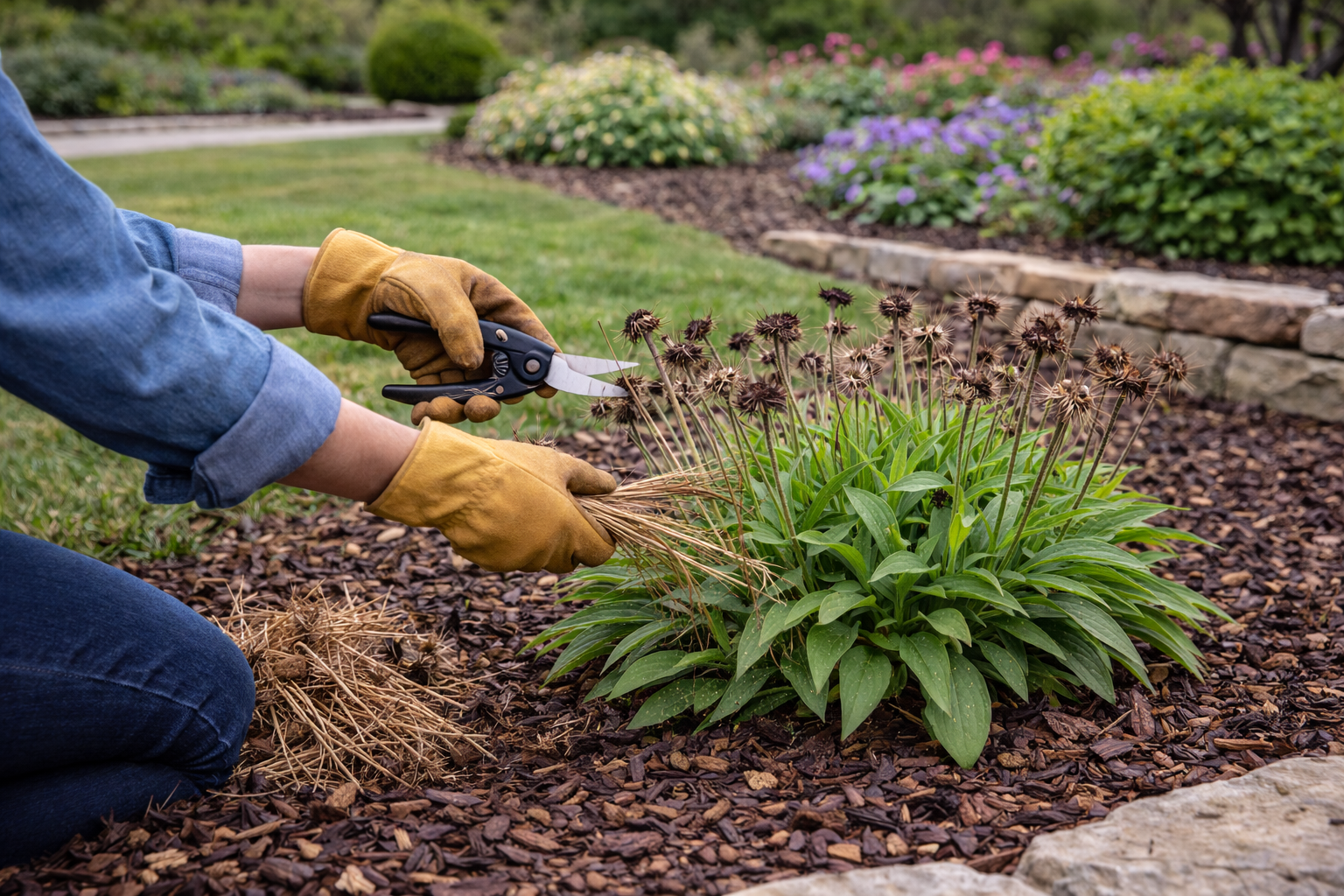
Coneflower is resilient but slow to wake up.
- Remove old seed heads and dead stems
- Leave basal growth untouched
- Cut back once new shoots appear
Coreopsis
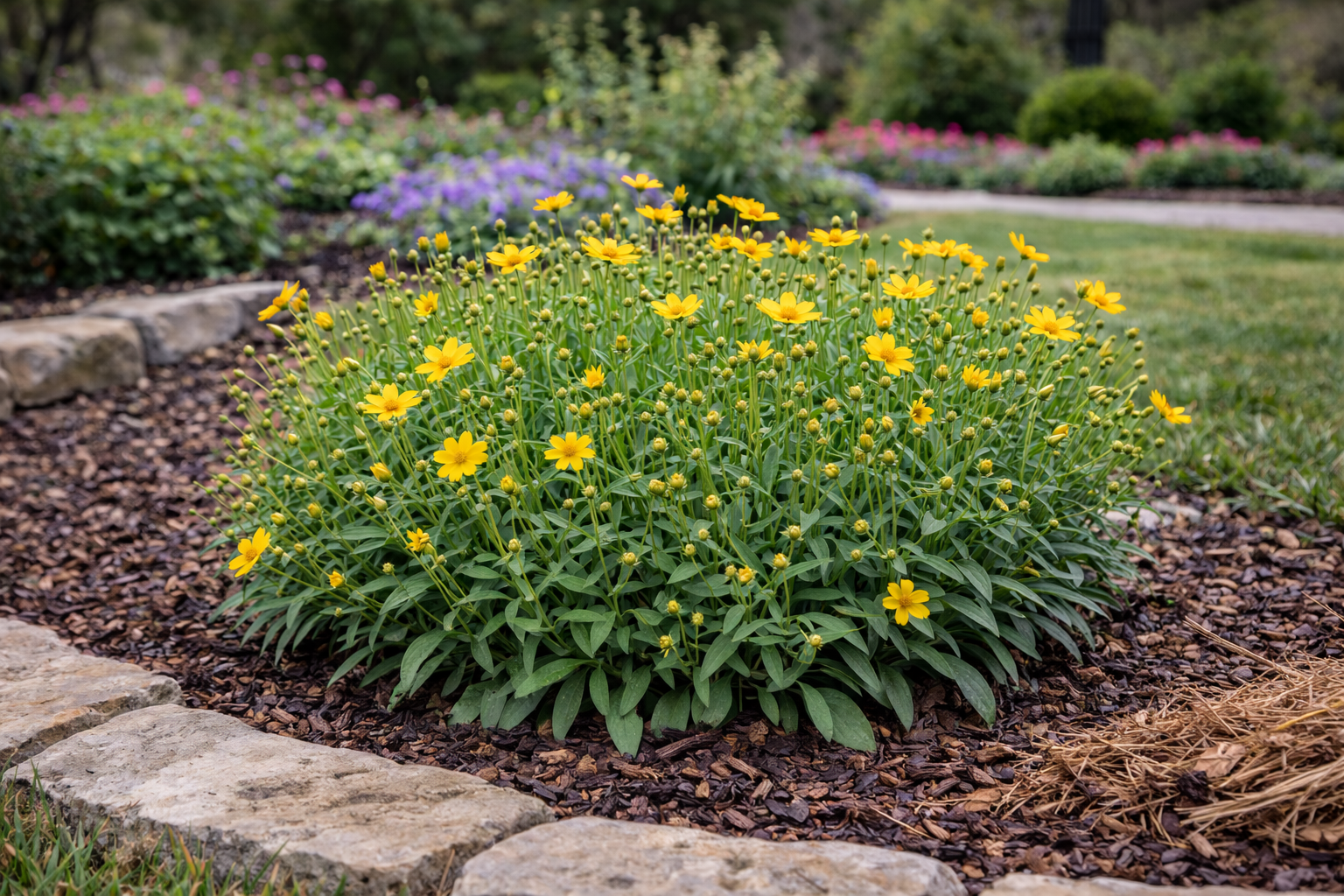
Coreopsis responds well to spring cleanup.
- Cut back old growth to a few inches above the crown
- Wait for stable temperatures
Perennials to Be Careful With in Spring
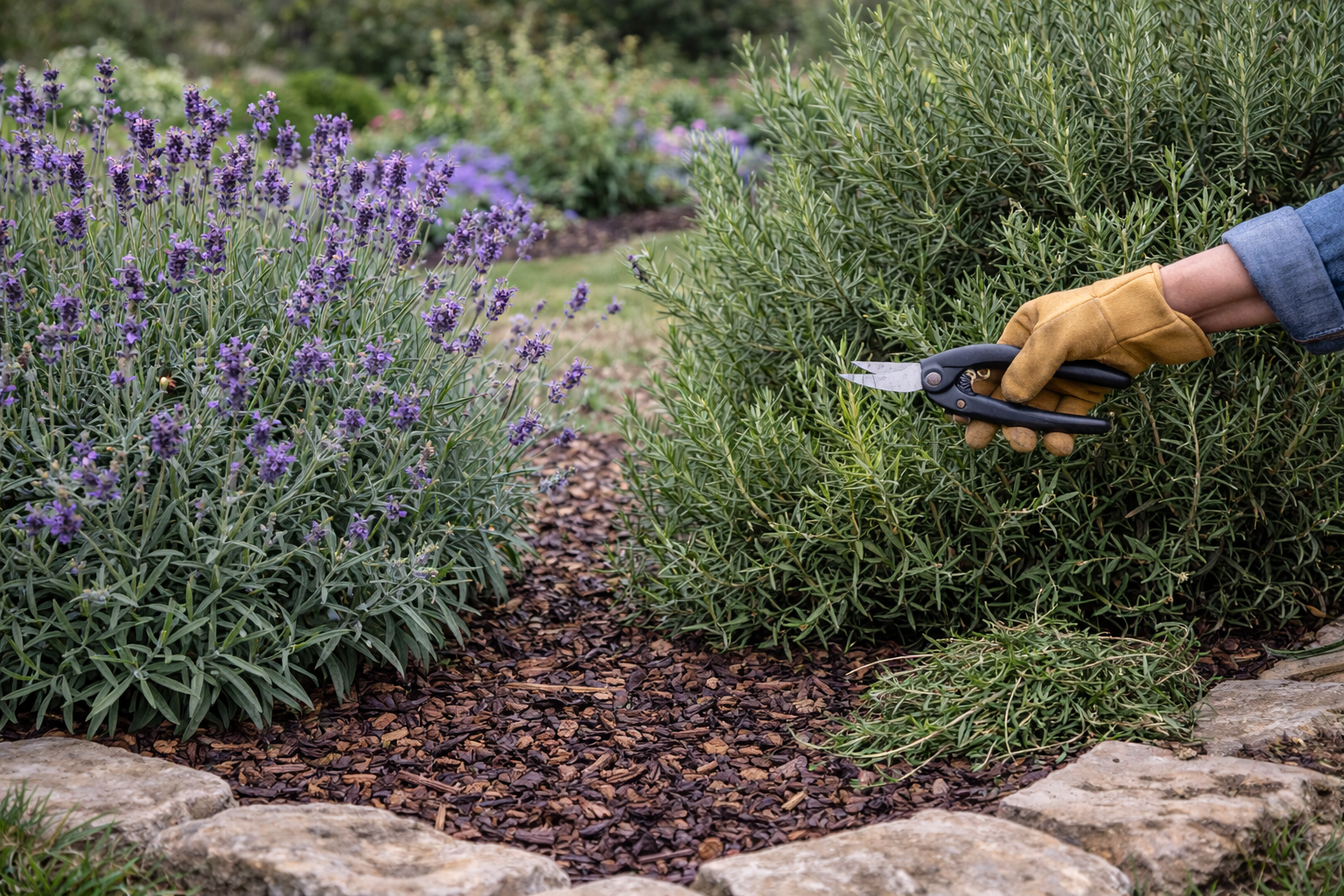
Lavender
- Remove dead tips only early in spring
- Wait for strong new growth
- Never cut into woody stems
Rosemary
- Light shaping only
- Avoid cutting into old wood
How to Tell If a Plant Is Dead or Just Dormant
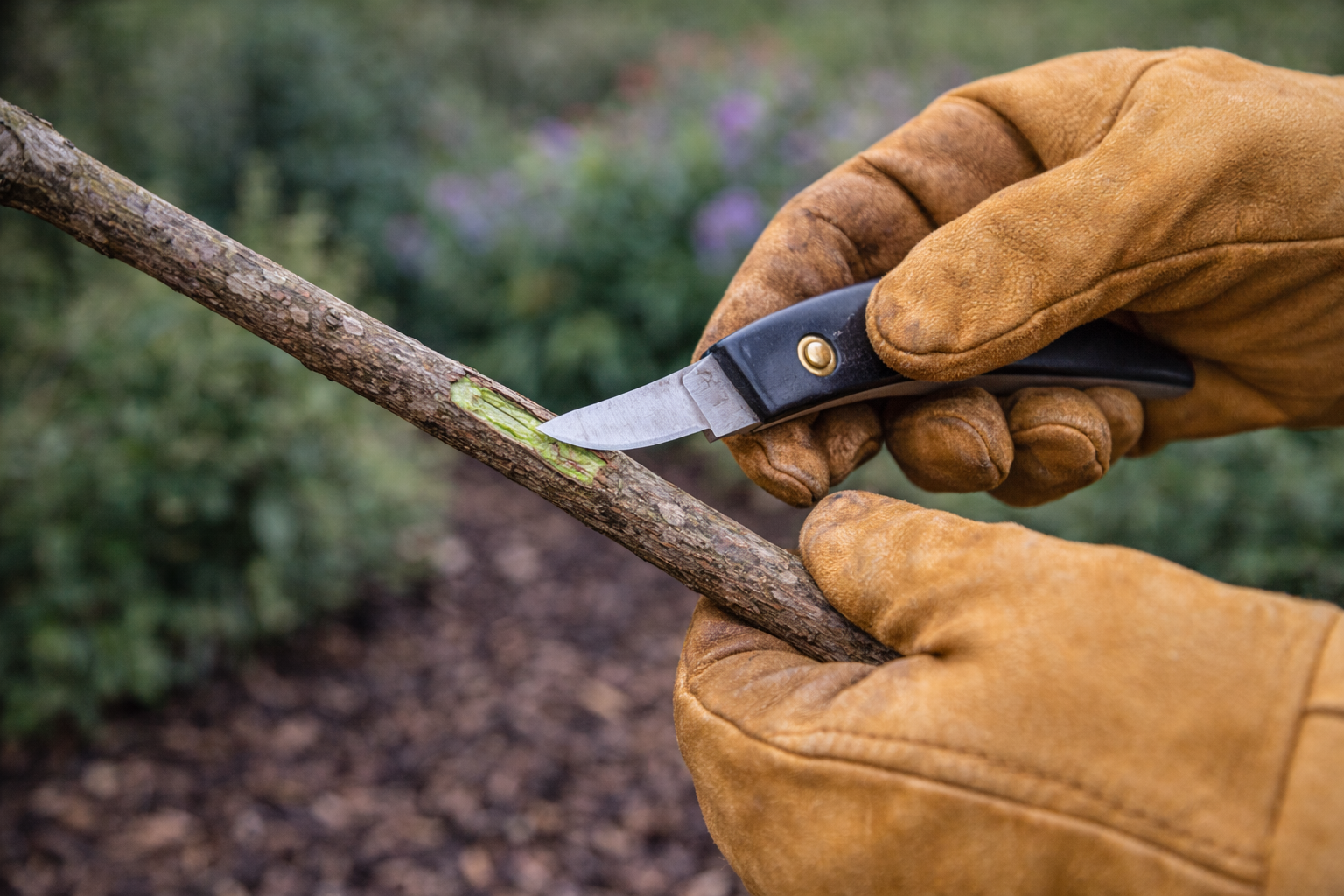
Before cutting aggressively, lightly scratch a stem:
- Green underneath = alive
- Brown and brittle = dead
When in doubt, wait a week or two.
Tools Matter More Than You Think
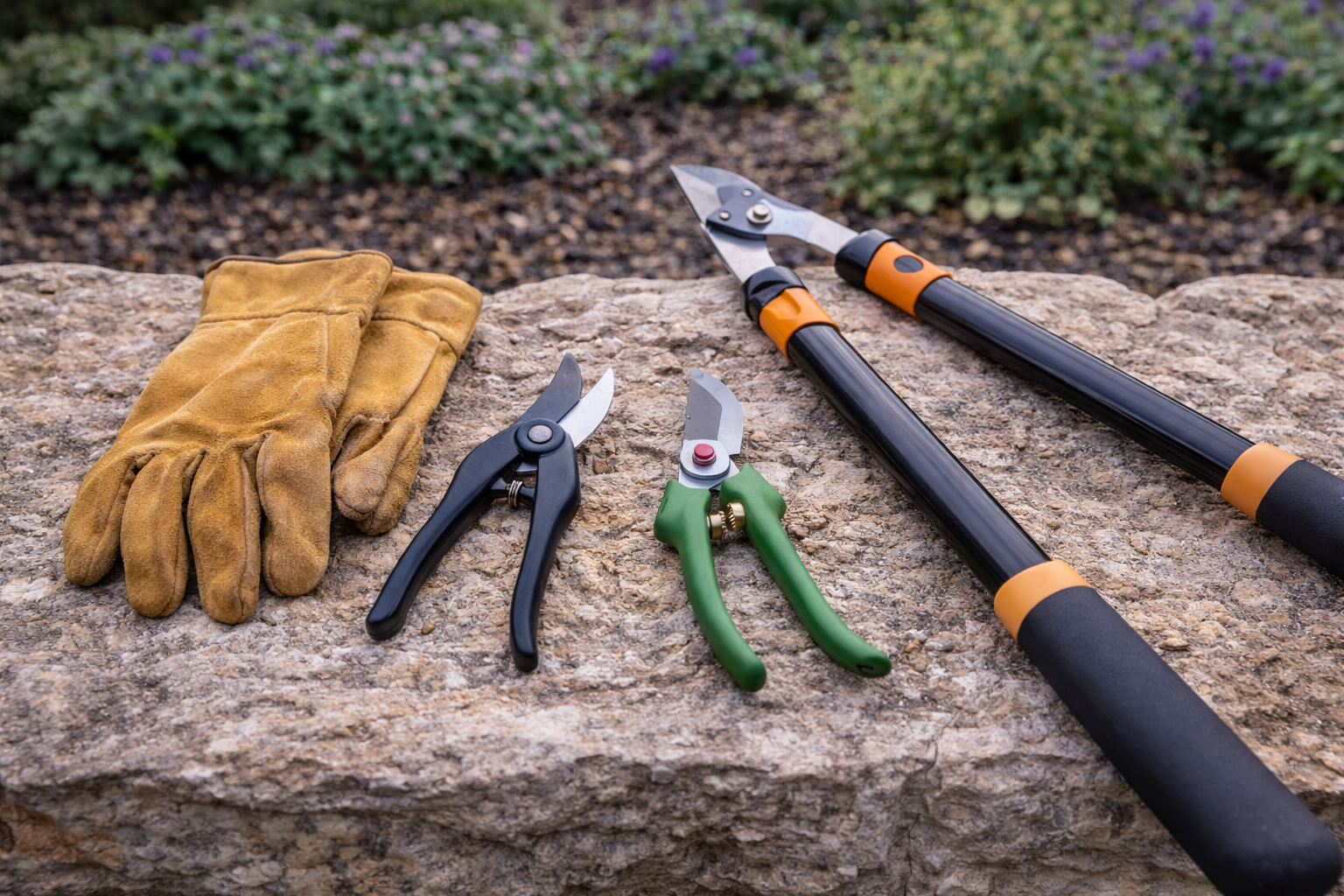
Clean, sharp tools reduce stress and prevent disease.
Timing Matters More Than Perfection
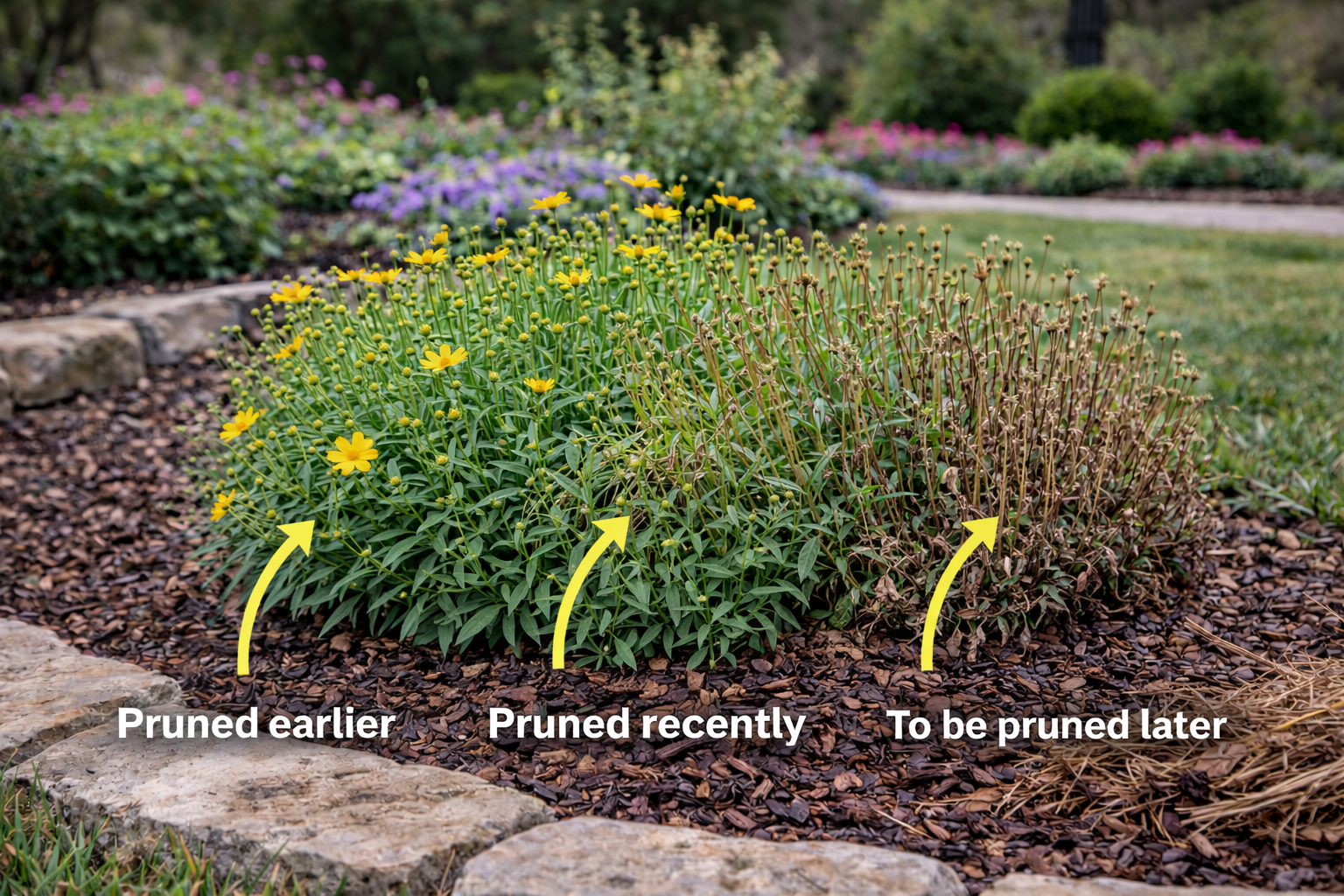
You don’t need to prune everything on one perfect day. Staggered pruning often works best in North Texas.
Final Thoughts: Less Is More

Spring pruning in North Texas isn’t about forcing plants into shape—it’s about working with the climate.
Most perennials don’t need aggressive cuts. With proper timing, light pruning, and patience, you’ll see healthier growth and better blooms all season long. If you’d like guidance on spring pruning in North Texas or want a professional eye on your landscape, feel free to reach out to our team. Contact Greenform Landscapes